We've all been there, right? You spritz on your favourite perfume in the morning, feeling all confident and put-together, only to find that by lunchtime, it's completely vanished. It’s super frustrating when you spend a bit of money on a nice scent, and it just doesn't seem to stick around. So, why doesn’t perfume last on me? We've been digging into this a lot, and it turns out there are quite a few reasons why our favourite fragrances seem to disappear so quickly. It’s not just you; there’s actually a science and a bit of an art to making your scent last.
Key Takeaways
- The concentration of perfume matters a lot; things like perfume oils and Eau de Parfum have more fragrance in them and will naturally last longer than lighter options like Eau de Toilette.
- Our skin type plays a bigger part than we might think. Dry skin tends to lose scent faster because it doesn't hold onto the oils as well as oily skin does.
- How and where you put your perfume on makes a difference. Applying it to pulse points like your wrists and neck helps the scent warm up and last longer, but avoid rubbing them together!
- The actual notes in a perfume are important. Base notes, like woods and musks, tend to stick around for ages, while lighter, fresher notes like citrus might fade more quickly.
- You can actually build up your scent! Layering with matching body washes, lotions, and even a light mist on your clothes can help your perfume stay with you all day.
Understanding perfume concentrations and their impact
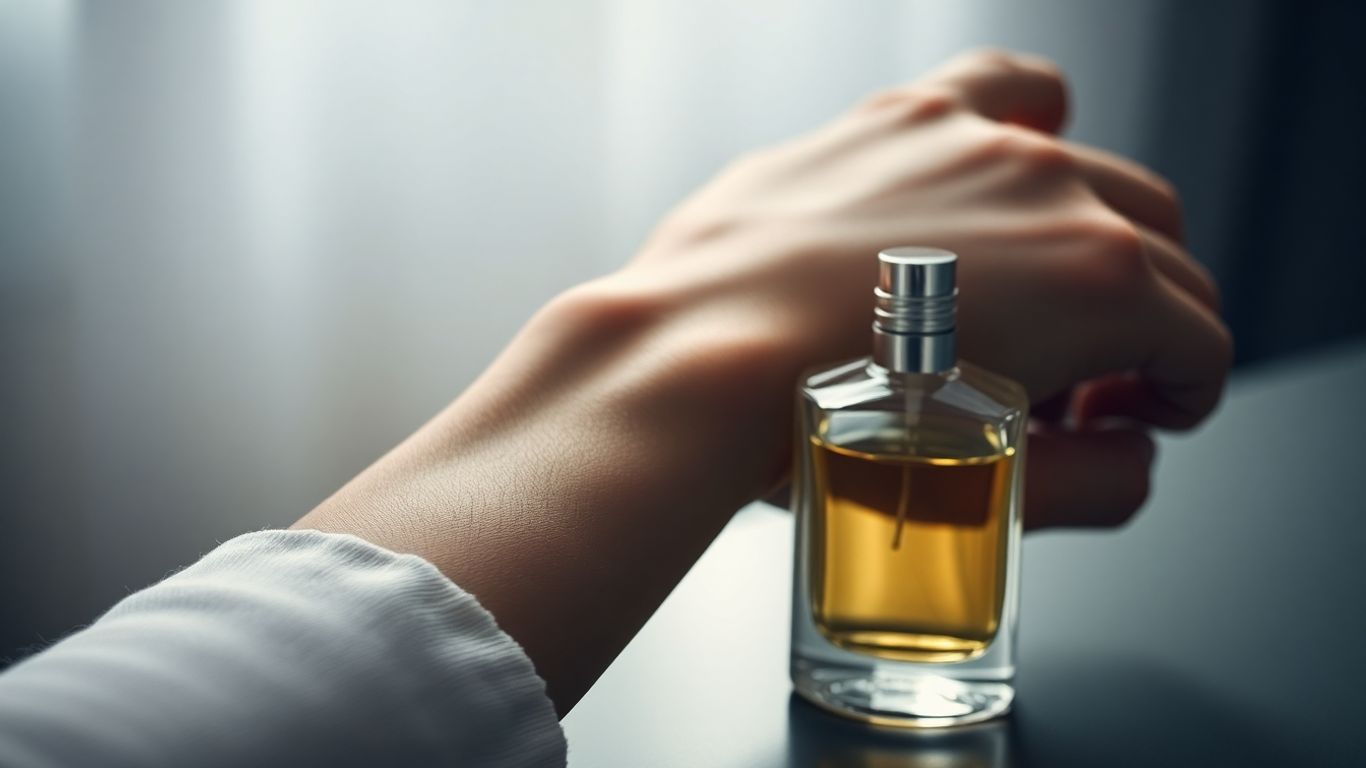
Ever found yourself wondering why your favourite scent seems to vanish into thin air after just a couple of hours? We've all been there, spritzing away and then feeling a bit disappointed when the lovely aroma fades too quickly. A big part of this puzzle lies in the different types of fragrances available and how much actual perfume oil they contain. It’s not just about the smell itself, but the strength of that smell.
The difference between perfume oils, eau de parfum, and eau de toilette
When we talk about perfume, it's actually a bit of a catch-all term. What we're really dealing with are different concentrations of fragrance oils mixed with alcohol and water. The main players you'll see on the shelves are usually:
- Perfume Extract (or Parfum): This is the heavyweight champion. It has the highest concentration of fragrance oils, typically ranging from 20% to 40%. Because of this, it's the most potent and usually lasts the longest on the skin.
- Eau de Parfum (EDP): A very popular choice, EDP usually contains between 15% and 20% fragrance oils. It offers a good balance of strength and longevity, often lasting for a solid 6-8 hours, sometimes even more.
- Eau de Toilette (EDT): This is lighter, with fragrance oil concentrations typically between 5% and 15%. It's great for a more subtle scent that doesn't overpower, but it generally won't last as long as an EDP.
- Eau de Cologne (EDC): The lightest of the bunch, EDC usually has only 2% to 4% fragrance oils. It's meant to be refreshing and is often applied more liberally, but its scent is fleeting, usually lasting only a couple of hours.
- Eau Fraiche: Even lighter than cologne, these have a very low oil concentration (1% to 3%) and a lot of water. They're more like a scented mist.
Why higher concentrations mean longer-lasting scents
It really is quite straightforward: the more perfume oil in the bottle, the longer the scent tends to stick around. Think of it like paint. A thin wash of watercolour will dry quickly and might not cover as well as a thick layer of oil paint, which takes longer to dry but provides a much more durable finish. The fragrance oils are the 'colour' in our perfume analogy. They're the molecules that give the scent its character and body. When there are more of these oil molecules, they evaporate more slowly from your skin, meaning the scent is released over a longer period. So, if you're looking for a fragrance that will see you through a whole day or evening without needing a top-up, you'll want to lean towards those higher concentration options like Eau de Parfum or even Parfum itself.
The concentration of fragrance oils directly dictates how long the scent will linger. Higher percentages mean more aromatic molecules are present, which take their time to evaporate, giving you a more enduring fragrance experience.
Choosing the right product type for your needs
So, how do you pick the right one? It really depends on what you're after. If you want a scent that's noticeable and lasts all day, an Eau de Parfum is probably your best bet. It’s a solid all-rounder for most situations. For something a bit lighter, perhaps for everyday wear or when you don't want your fragrance to be too strong, Eau de Toilette is a great choice. It’s often more affordable too, which is a nice bonus. Eau de Cologne and Eau Fraiche are perfect for hot weather or when you just want a subtle, refreshing hint of scent that doesn't stick around too long – think of them as a quick mood booster. We often find ourselves reaching for an EDT in the morning for a gentle start to the day, and then maybe an EDP for an evening out when we want something a bit more substantial.
The science behind scent and your skin
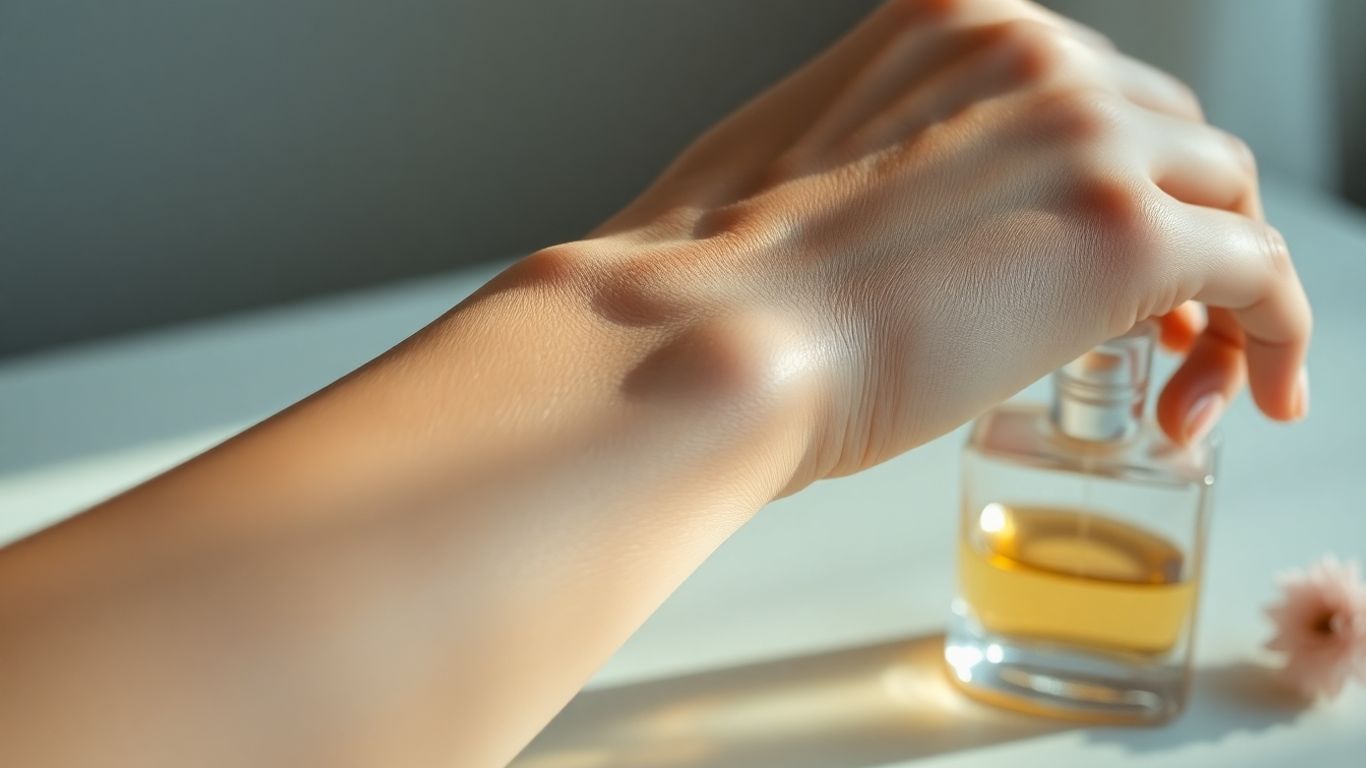
How skin type affects fragrance longevity
So, we've all experienced it, right? You spray on a gorgeous perfume, and it smells divine for about an hour, then poof! Gone. It's super frustrating, and often we blame the perfume itself. But honestly, a big part of the puzzle is actually our own skin. Our skin isn't just a canvas for scent; it's an active participant. Think of it like this: different skin types react differently to fragrance molecules, affecting how they evaporate and how long they stick around.
Generally speaking, if you have oilier skin, you're in luck! Your skin naturally produces more sebum, which is like a sticky base for perfume. This oil helps to hold onto the fragrance molecules, slowing down their evaporation. So, that lovely scent you've applied? It's likely to linger for much longer compared to someone with drier skin. It’s not magic, it’s just chemistry!
On the flip side, if your skin tends to be on the drier side, you might find that perfumes disappear more quickly. Dry skin lacks that natural oily barrier, meaning the fragrance evaporates faster. It’s not that the perfume is bad; it’s just that your skin doesn't have as much to hold onto. Don't despair though, there are ways to combat this, which we'll get to later.
Here's a quick rundown:
- Oily Skin: Tends to hold onto fragrance for longer due to natural oils. This is often why perfumes last longer on some people than others.
- Dry Skin: Fragrance can evaporate more quickly as there's less natural oil to anchor it.
- Normal/Combination Skin: Offers a fairly balanced base, but results can vary.
The role of natural oils and hydration
Building on the skin type point, let's talk about what's actually in our skin that makes such a difference. It really comes down to two main things: your skin's natural oils and how hydrated it is. These two factors work hand-in-hand to influence how long your perfume lasts.
As we touched on, those natural oils, or sebum, are key. They create a sort of natural primer on your skin. When you apply perfume, the fragrance oils mix with your skin's oils. This blend helps to slow down the release of the scent into the air. It’s like giving the perfume something to cling to, preventing it from just vanishing into thin air after a short while. So, if your skin is naturally a bit more on the oily side, you've got a head start on fragrance longevity.
Hydration is equally important. Think about it: when your skin is well-moisturised, it's plump and supple. This means it can better absorb and hold onto the fragrance molecules. If your skin is dehydrated, it's often drier and more porous, allowing those scent particles to escape more easily. Applying perfume after a shower, when your skin is still slightly damp and has had its moisture replenished, can make a noticeable difference. It’s like giving the perfume a nice, hydrated surface to settle into.
Using a good, unscented moisturiser before you apply your perfume can really help to create a better base, especially if you have dry skin. It's a simple step that can make a world of difference to how long your favourite scent stays with you throughout the day.
Why your skin's pH matters for perfume
Now, this is where things get a little more scientific, but it's still pretty straightforward. Your skin has a natural pH level, which is essentially how acidic or alkaline it is. This pH level can actually change how a perfume smells and how long it lasts on you. It’s one of those subtle factors that makes a scent smell completely different from one person to another.
Most people have a slightly acidic skin pH, usually somewhere between 4.5 and 5.5. This slightly acidic environment is generally good for the skin, helping to keep it healthy and protected. However, this acidity can interact with the fragrance oils in your perfume. Different notes within a fragrance will react differently to your skin's specific pH.
For example, some fragrances might smell sharper or more intense on skin with a lower (more acidic) pH, while others might smell softer or even slightly sweeter on skin with a higher (more alkaline) pH. It’s not just about longevity; it’s about the actual scent profile. This is why a perfume that smells amazing on your friend might not quite hit the same way on you. Your unique skin chemistry, including your pH, is playing a role in how those scent molecules are being interpreted and released.
It's a bit like baking – the same ingredients can turn out differently depending on the oven temperature and humidity, right? Your skin's pH is like that variable in the perfume equation. While you can't easily change your skin's natural pH, understanding that it's a factor can help you appreciate why some scents work better for you than others, and why reapplication might be necessary.
Maximising your fragrance with smart application
So, we've picked out the perfect scent, but how do we make sure it actually sticks around? It turns out, how we apply our perfume is just as important as the perfume itself. We've all been there, spritzing away and then, a couple of hours later, wondering where it's gone. Let's get into some simple tricks that can make a real difference.
Where to apply perfume for the best results
Think of your body as a map of scent hotspots. These are places where your skin is naturally warmer, which helps to gently diffuse the fragrance throughout the day. We're talking about the classic spots: your wrists (but more on that later!), the base of your throat, behind your ears, and even the insides of your elbows. If you're wearing a dress, the back of your knees can also be a surprisingly effective spot. The idea is to apply it where blood flow is closer to the surface, giving your perfume a little boost.
The importance of not rubbing your wrists
This is a big one, and honestly, it took me a while to break this habit. When we spray perfume on our wrists and then rub them together, we're essentially crushing the delicate fragrance molecules. This doesn't just make the scent fade faster; it can actually change the scent profile, making it smell a bit 'off' or muddled. Instead, just let the perfume dry naturally. A gentle dab is fine, but avoid that vigorous rubbing action.
How to use clothing and hair to extend scent
While our skin is the primary canvas for fragrance, our clothes and hair can act like scent sponges. A light mist over your clothes can hold onto a fragrance for ages, especially on natural fibres like wool or cotton. Just be mindful of delicate fabrics that might stain. For hair, a very light spritz from a distance can work wonders, but be careful not to overdo it, as alcohol can dry out your strands. Some people even like to spray their scarf or the lining of their coat for a subtle, lingering aroma.
Here's a quick rundown of application spots:
- Pulse Points: Wrists, neck, behind ears, inner elbows.
- Lower Body: Back of knees, ankles (especially if wearing skirts or dresses).
- Clothing: Scarves, coat linings, natural fibre garments (test first!).
- Hair: A very light mist from a distance, or sprayed onto a brush first.
Applying perfume is a bit of an art, and it's not just about dousing yourself. Thinking about where you apply it, and how you treat the scent after application, can seriously change how long your favourite fragrance lasts. It's all about working with the perfume, not against it.
The influence of fragrance notes on staying power
We've all been there, right? You spritz on a lovely scent in the morning, only for it to vanish by lunchtime. It’s frustrating, but often, the culprit isn't your skin or how you applied it, but the actual building blocks of the perfume itself: its notes. Think of a fragrance like a song; it has different parts that play out over time.
Why base notes are key to longevity
When we talk about fragrance notes, we usually mean top, middle (or heart), and base notes. The top notes are what you smell first – they're usually light and zesty, like citrus or fresh herbs. They disappear pretty quickly, which is normal. The middle notes come next, forming the main body of the scent, perhaps floral or spicy. But the real stars of the show when it comes to lasting power are the base notes. These are the deep, rich scents like woods (sandalwood, cedarwood), amber, musk, vanilla, or patchouli. They're the slowest to evaporate and stick around the longest, often for many hours. If you want your perfume to last, you absolutely need to look for fragrances with a strong, prominent base.
How citrus and fresh notes differ from woody and musky scents
It’s a simple science, really. Lighter molecules evaporate faster. That’s why those bright, airy citrus notes (think lemon, bergamot, grapefruit) and fresh green notes tend to be fleeting. They give you that initial burst of freshness, but don't expect them to hang around all day on their own. On the flip side, heavier, more complex molecules found in woody, oriental, or musky scents are much more substantial. They don't evaporate as easily, clinging to your skin and releasing their aroma gradually. So, a perfume heavy on lemon and mint will likely fade much faster than one built around sandalwood and amber.
Here’s a rough guide to how long different note families tend to last:
| Note Family | Typical Longevity | Examples |
|---|---|---|---|
| Citrus/Fresh | Short (1-3 hours) | Bergamot, Lemon, Mint, Green Tea |
| Floral | Medium (3-6 hours) | Rose, Jasmine, Lavender, Ylang-Ylang |
| Spicy | Medium-Long (4-8 hours) | Cinnamon, Clove, Pepper, Cardamom |
| Woody | Long (6-10+ hours) | Sandalwood, Cedarwood, Vetiver, Patchouli |
| Oriental/Amber | Long (6-10+ hours) | Vanilla, Musk, Amber, Incense, Tonka Bean |
Selecting notes that complement your skin
This is where it gets personal. While base notes are generally longer-lasting, how they interact with your unique skin chemistry is still a factor. Sometimes, a woody scent that smells amazing and lasts for ages on your friend might smell a bit different or fade faster on you. It’s always a good idea to test a fragrance on your skin and see how it develops over several hours. Pay attention to which notes are listed in the base of the perfume. If you find yourself drawn to warmer, deeper scents, you're probably already picking fragrances with good staying power. Don't be afraid to explore those richer, more complex profiles – they're often the ones that will see you through the day (and night!).
The structure of a perfume is designed to unfold over time. The initial impression is fleeting, designed to capture attention, while the heart notes provide the main character. It's the base notes, however, that provide the lasting foundation, the lingering memory of the scent. Understanding this pyramid structure helps us appreciate why some fragrances endure while others disappear.
Layering techniques for an enduring aroma
Sometimes, just one spritz isn't enough, is it? If you find your favourite scent disappears faster than a free biscuit at a tea break, we need to talk about layering. It’s like building a scent from the ground up, making it stick around for much longer. Think of it as giving your perfume a helping hand to stay put.
Building a fragrance foundation with body wash and lotion
Before you even think about reaching for your perfume bottle, let's get your skin ready. The best way to start is with your shower routine. Using a body wash that smells similar to your perfume, or at least complements it, creates a subtle base layer. After showering, while your skin is still a bit damp, apply a moisturiser. If you can find one that matches your perfume's scent, brilliant! If not, a plain, unscented lotion is perfectly fine. This step is really important because perfume clings much better to hydrated skin. Dry skin is like a sponge that just soaks up scent and lets it go quickly.
Combining different product types for a personalised scent
This is where things get really interesting. Layering isn't just about using the same scent in different forms; it's about mixing and matching. You could start with a scented body lotion, then apply an Eau de Parfum (which has a higher concentration of fragrance oils), and maybe even finish with a tiny bit of a matching perfume oil on your pulse points. The key is to choose products that have notes that work well together. For example, if your perfume has vanilla and sandalwood notes, you might try layering it with a body lotion that also features warm, woody scents. It’s all about creating a scent that’s uniquely yours and has more depth.
Creating a richer, longer-lasting effect
So, how do we make sure this layered scent actually lasts? It’s all about the concentration and where you apply it. Products like perfume oils and Eau de Parfum are generally stronger and will last longer than an Eau de Toilette or a body mist. When layering, try to use your stronger products on your skin and perhaps a lighter mist on your clothes or hair (just be careful with delicate fabrics!).
Here’s a simple way to think about it:
- Base Layer: Scented body wash or unscented moisturiser.
- Middle Layer: Eau de Parfum or a scented body lotion.
- Top Layer: Perfume oil or your main fragrance spray.
Remember, the goal is to build scent gradually. Don't go overboard with too many strong products at once, or you might end up with something overpowering. It's a bit of an art, and sometimes it takes a little trial and error to find the perfect combination that lasts all day.
Another trick is to use fragrance hair mists. They can add a lovely subtle scent that follows you around without being too heavy. Just a light spritz is usually enough.
Beyond application: other factors affecting perfume
The impact of environmental conditions on scent
So, we've talked about what you put on your skin, but what about the world around you? Turns out, the weather can be a bit of a diva when it comes to our favourite scents. Hot, humid days can make a fragrance bloom beautifully, but they can also make it evaporate quicker. It’s like the scent is having a grand old time, but then gets tired and fades away too soon. On the flip side, cooler temperatures might make your perfume hang around a bit longer, but it might not project as strongly. It’s a bit of a balancing act, really.
How quality and storage preserve your fragrance
This is a big one, and honestly, something we often overlook. Not all perfumes are created equal, are they? The quality of the ingredients and how the fragrance was made really does make a difference to how long it lasts. Cheaper stuff might smell nice initially, but it often disappears faster. And how we store our precious bottles matters too. Keep your perfumes away from direct sunlight and heat – think a cool, dark cupboard, not the bathroom windowsill where it gets steamy. Heat and light can actually break down the fragrance molecules over time, turning your lovely scent into something a bit… meh.
Considering samples before committing to a full bottle
Before we even get to the application and storage, there's the whole decision-making process. We’ve all been there, right? Falling head over heels for a scent in the shop, only for it to vanish within an hour of getting home. It’s a bit of a gamble sometimes. That’s why trying samples is such a smart move. You can wear it for a full day, see how it interacts with your skin, and how long it actually lasts on you. It saves so much disappointment (and money!) in the long run. It’s like test-driving a car before you buy it, but for your nose.
Here’s a quick rundown of what to consider:
- Quality of Ingredients: Higher-quality oils and fixatives generally mean a longer-lasting scent.
- Storage Conditions: Cool, dark places are best. Avoid bathrooms and sunny spots.
- Environmental Factors: Heat can speed up evaporation, while cold might mute projection.
- Skin Interaction: Always test on your own skin, as it reacts differently to everyone.
Trying a fragrance on your skin for a few days is the best way to know its true staying power. What smells amazing on a paper strip or on a friend might behave completely differently on you. It’s all part of the fun of finding your signature scent, but it pays to be a little patient.
So, What's the Deal with Our Fading Scents?
Right, so we've gone through all sorts of reasons why our favourite smells seem to disappear faster than a free biscuit at a coffee shop. It turns out it's not just us being forgetful or our noses playing tricks. From the type of perfume we choose – like going for an Eau de Parfum instead of a lighter spray – to how we put it on, like moisturising first and dabbing instead of rubbing, it all makes a difference. Even our skin type plays a part! It's a bit of a science, really. But now we know, we can try out these little tricks and hopefully enjoy our chosen scents for much longer. No more constantly reapplying throughout the day, hurrah!
Frequently Asked Questions
Why does my perfume disappear so quickly?
We've all been there! Sometimes it feels like our favourite scent just vanishes into thin air. This can happen for a few reasons. Your skin might be a bit dry, meaning the perfume doesn't have much to hold onto. Also, how much perfume oil is in the bottle makes a big difference – lighter sprays don't stick around as long as richer ones. Plus, how we put it on matters too!
Does having oily or dry skin really affect how long perfume lasts?
Absolutely! Think of your skin like a canvas. If it's oily, it has natural oils that help the perfume stick around longer, like a good glue. But if your skin is dry, the perfume can evaporate more easily, making it fade faster. So, keeping our skin a bit moisturised can really help our scent stay put.
What's the difference between Eau de Parfum and Eau de Toilette?
It all comes down to how much perfume oil is mixed in. Eau de Parfum (EDP) has more oil, usually between 15-20%, which means it’s stronger and lasts way longer, often for most of the day. Eau de Toilette (EDT) is lighter, with less oil (around 5-15%), so it’s great for a quick burst of scent but won't stick around for ages.
Are there certain smells that last longer than others?
Yes, there are! Scents with 'base notes' like woods, vanilla, or musk tend to hang around for a long time because they're heavier. Lighter smells, like citrus or fresh floral notes, are more delicate and tend to disappear faster. If you want your perfume to last, look for ones with those rich base notes.
How can we make our perfume last longer without reapplying all the time?
There are a few tricks! Try putting your perfume on after a shower when your skin is still a bit damp – it helps the scent cling. Also, applying it to your pulse points (like your wrists, neck, and behind your ears) is key because your body heat helps the scent spread. And whatever you do, don't rub your wrists together after spraying; just let it dry naturally!
Is it worth it to try samples before buying a whole bottle?
Definitely! It's like going on a few mini-dates before committing to a relationship. Perfume can smell different on everyone's skin, and what smells amazing in the shop might be different on you later. Trying a sample lets you see how it lasts throughout the day and if it truly suits you, saving you money and disappointment in the long run.