We’ve all wondered why some perfumes seem to cling to us all day, while others fade away after just a few hours. It’s a question that often comes up when we compare the scents we love. Today, we're going to chat about why Middle Eastern perfumes seem to have that extra staying power compared to many Western fragrances. It’s not magic, but a blend of tradition, ingredients, and how they’re made.
Key Takeaways
- Middle Eastern perfumes often skip alcohol, using pure oils instead, which means they don't evaporate as quickly and stick around longer on your skin.
- Ingredients like oud and amber are naturally deep and rich, giving these scents a solid foundation that lasts for ages.
- There's a long history of perfume making in the Middle East, with traditions focused on quality and slow processes that contribute to scent longevity.
- Because they're oil-based, these perfumes blend with your natural body scent, creating a unique and evolving aroma throughout the day.
- The focus on high-quality, often natural, and potent ingredients means the scent is more concentrated and therefore lasts much longer.
The fundamental difference in fragrance formulation
When we first start looking into why Middle Eastern perfumes seem to stick around for ages, while some Western ones fade faster, it really comes down to how they're made. It’s not just a little difference; it’s a pretty big one, right from the start.
Alcohol-free versus alcohol-based compositions
Most of the perfumes you find in Western department stores are built on an alcohol base. Think of alcohol as the main carrier – it helps the scent evaporate off your skin and project outwards. It’s great for that initial burst of fragrance, that immediate impression. But because it evaporates so quickly, the scent doesn't have much to hold onto. It’s like a quick hello rather than a long chat. On the other hand, many traditional Middle Eastern perfumes, often called attars, are made without alcohol at all. They use oils as their base instead. These oils don't evaporate in the same way; they sit on the skin and release their scent more slowly and steadily. This oil base is a key reason why these fragrances tend to linger for so much longer.
The role of carrier oils in scent longevity
So, what's the deal with these carrier oils? Well, they're not just there to dilute the potent scent ingredients. They actually become part of the fragrance's journey on your skin. Unlike alcohol, which just disappears, these oils bind with your skin's natural chemistry. This creates a more intimate and personal scent that develops over time. The oils themselves can have a subtle scent, adding another layer to the perfume. They also help to anchor the more volatile aromatic compounds, preventing them from escaping too quickly into the air. It’s this interaction between the oil, the scent molecules, and your skin that gives Middle Eastern perfumes their impressive staying power.
Concentration and purity of Middle Eastern oils
Another big factor is how concentrated these Middle Eastern oils are. Often, they are made with a much higher percentage of pure fragrance oils compared to their Western counterparts, which might have more alcohol and less actual scent. We're talking about really potent, high-quality essential oils and absolutes. Sometimes, these are used in their undiluted form, or with just a very small amount of a neutral carrier oil. This purity and concentration mean there are simply more scent molecules present to begin with, and they are of a higher quality, which naturally leads to a scent that lasts much, much longer. It’s less about a quick spray and more about a rich, enduring experience.
The way a perfume is constructed makes a huge difference to how long it lasts. Using oils instead of alcohol, and packing in more pure scent ingredients, means the fragrance has a better chance of sticking around. It’s a simpler, more direct approach to scent.
Here's a quick look at the typical bases:
| Fragrance Type | Base Ingredient | Evaporation Rate | Longevity | Typical Use |
|---|---|---|---|---|
| Middle Eastern Attar | Carrier Oils (e.g., Jojoba, Sandalwood) | Slow | Very Long | Skin application |
| Western Perfume | Alcohol | Fast | Shorter | Spray application |
Signature ingredients contributing to lasting power
When we talk about why Middle Eastern perfumes stick around, we really have to look at what goes into them. It’s not just about a pleasant smell; it’s about ingredients that have been used for centuries because they last. Think of it like building a house – you need strong foundations and quality materials if you want it to stand the test of time.
The enduring allure of oud and amber
Oud, for instance, is a big one. It’s this really deep, woody, almost smoky scent that comes from a specific type of tree resin. It’s not something you find in many Western perfumes, partly because it can be quite expensive and difficult to source. But when it’s in a fragrance, it just anchors the whole thing, giving it this incredible staying power. Then there’s amber. Now, amber in perfumery isn’t usually the fossilised tree resin you might be thinking of. It’s more of a blend, often featuring labdanum, vanilla, and benzoin, which creates this warm, rich, slightly sweet, and leathery aroma. Both oud and amber are known for their tenacity, meaning they cling to the skin and fabric for ages. They create this warm, inviting sillage – that scent trail you leave behind – that just doesn’t fade quickly.
The depth provided by exotic spices
Beyond the heavy hitters like oud and amber, Middle Eastern perfumery often incorporates a whole host of spices. We’re talking about things like saffron, cardamom, cinnamon, and cloves. These aren’t just thrown in for a bit of warmth; they add a complex, multi-faceted layer to the fragrance. Spices have a certain aromatic intensity that helps them project and last. They interact with the base notes, like oud and amber, creating a scent that evolves throughout the day rather than just disappearing. It’s this layering of rich, potent spices that gives the perfumes their character and their staying power.
Natural extracts versus synthetic compounds
This is a pretty significant point. Many Western fragrances rely heavily on synthetic compounds to create their scents. These can be cheaper and easier to produce, but they often lack the depth and longevity of natural ingredients. Middle Eastern perfumery, on the other hand, has a long tradition of using high-quality, natural extracts. Think of pure essential oils, resins, and absolutes. These natural materials are often more complex on a molecular level, which means they interact with our skin differently and tend to evaporate much more slowly. The focus is on the purity and potency of these natural elements, which naturally leads to a longer-lasting fragrance experience. It’s about quality over quantity, and using ingredients that have stood the test of time, both in nature and in perfumery.
Centuries of olfactory tradition and craftsmanship
A heritage of perfumery excellence
We've got to hand it to the Middle East; they've been at this perfume game for a seriously long time. We're talking centuries, long before many Western fragrance houses even existed. Perfume wasn't just an occasional luxury; it was woven into the fabric of daily life, used during prayer, after bathing, and for all sorts of celebrations. It’s a heritage that’s been passed down, refined, and cherished.
Traditional making procedures and slow maceration
This deep-rooted tradition means that the way these perfumes are made is quite different. Forget quick, mass-produced scents. Here, it's all about patience and quality. A key part of this is a process called maceration, where ingredients are left to mature for extended periods. This isn't a rushed affair; it's a slow, deliberate method that allows the natural components to meld and deepen.
Here's a simplified look at the traditional approach:
- Ingredient Selection: Only the finest natural materials are chosen.
- Extraction: Essential oils are carefully extracted.
- Maceration: The oils are left to mature, often for months or even years.
- Blending: Artisans meticulously blend these matured oils.
- Dilution (if any): Minimal or no alcohol is used, preserving the oil's integrity.
This careful, unhurried process is a big reason why the scents are so rich and complex.
The cultural significance of scent in the Middle East
In the Middle East, scent is more than just a pleasant smell; it's deeply tied to culture, identity, and hospitality. Offering someone a beautiful fragrance is a sign of respect and welcome. It's used to mark important life events and is considered an integral part of personal grooming and spiritual practice. This profound connection means that perfumes are crafted with immense care and intention, aiming to create something truly meaningful and lasting, not just a fleeting aroma.
How Middle Eastern perfumes interact with the skin
Blending with Natural Body Chemistry
When we apply a traditional Middle Eastern perfume, especially those that are oil-based, something quite special happens. Unlike alcohol-based Western fragrances that tend to sit more on the surface and evaporate, these oil-based scents really meld with our skin. It’s like they become a part of us. The oils in these perfumes interact with our natural body oils, creating a scent that’s uniquely ours. This intimate connection is a big reason why they smell so personal and last so long. It’s not just a fragrance on your skin; it’s a fragrance that’s become your skin's scent, amplified.
The Intimate Scent Aura Created by Oils
Because they blend so well with our skin, Middle Eastern perfumes don't usually project outwards in a huge cloud. Instead, they create a more personal, intimate aura. Think of it as a subtle, lingering presence rather than a loud announcement. This means the scent is most noticeable when someone is close to you, which can feel quite sophisticated and personal. It’s a scent that draws people in rather than pushing them away. This closeness is a hallmark of these traditional oil-based fragrances.
Scent Evolution Throughout the Day
One of the most fascinating aspects of these perfumes is how they change over time. Because they aren't evaporating quickly like alcohol-based sprays, the scent evolves. It’s not a static smell; it’s a journey. You might notice different notes appearing and fading as the hours go by. This slow release and transformation mean the fragrance remains interesting and complex from the moment you apply it until much later in the day. It’s a dynamic scent experience that keeps you engaged with your own fragrance.
The impact of ingredient quality and sourcing
Rarity and potency of natural elements
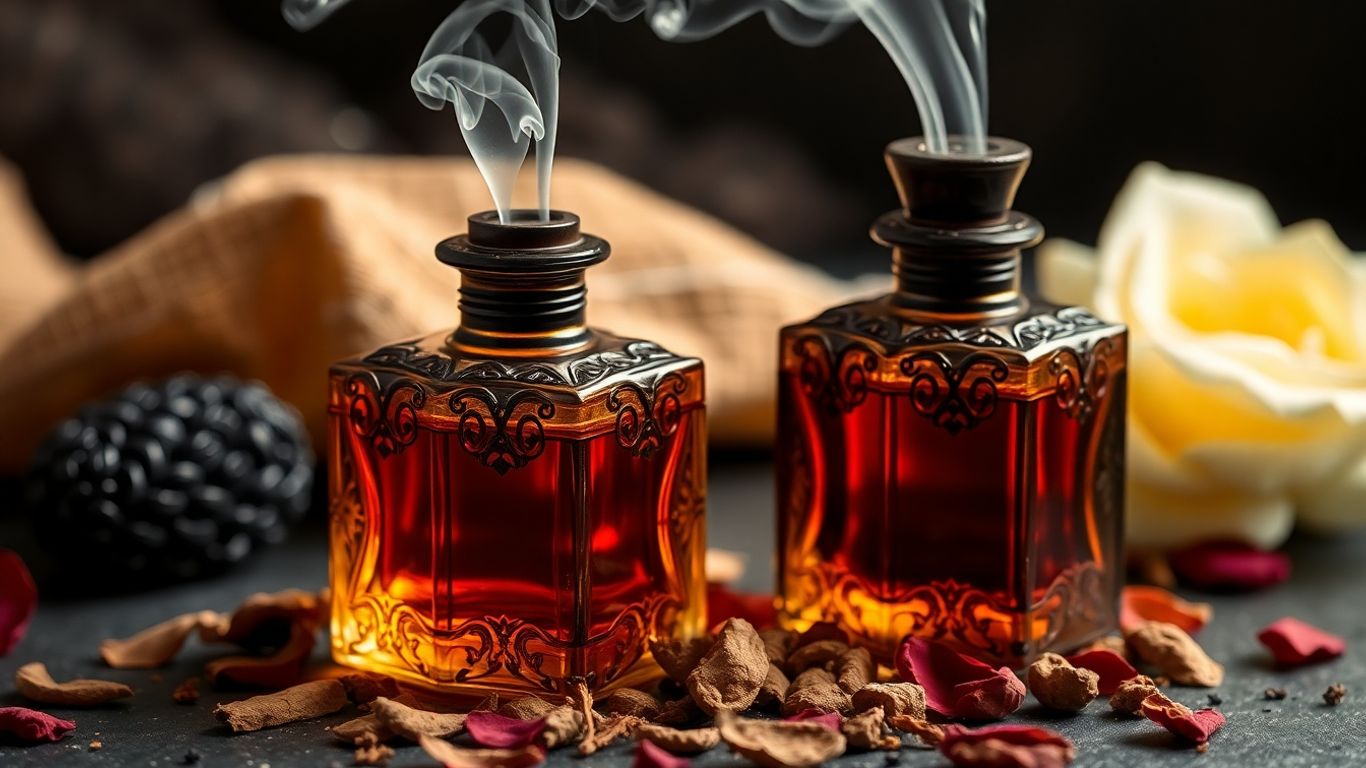
We've noticed that a big part of why Middle Eastern perfumes stick around is down to the ingredients they use. Think about things like oud, which comes from a special type of tree resin. It's not exactly easy to find, and getting good quality oud is a whole process. The same goes for other natural bits and pieces – they're often rare and have to be sourced carefully. This means the perfumes aren't just made with whatever's cheapest; they're built with materials that have a natural strength and depth to them. This focus on using potent, natural elements is a major reason for their lasting power.
The value of pure, undiluted components
When we look at how these perfumes are put together, it's clear that purity matters. Unlike many Western fragrances that might use a lot of alcohol or synthetic fillers to stretch the scent and lower costs, Middle Eastern perfumes often stick to the pure oils. This means you're getting a much more concentrated hit of the actual fragrance. It’s like comparing a watered-down juice to a freshly squeezed one – the undiluted version is always going to be richer and last longer on your skin. We find that this lack of dilution means the scent doesn't just disappear after an hour or two; it really settles in.
Artisanal craftsmanship in scent creation
Beyond just the ingredients themselves, there's a real sense of craft involved. Many of these scents are made using traditional methods that have been passed down through generations. This isn't mass production; it's more like art. They might let the oils mature for a long time, which helps to blend the notes together and create a really complex, enduring smell. We see this dedication to the old ways as a key factor. It’s about patience and skill, not just churning out bottles. The result is a perfume that feels more personal and has a story behind it, which we think adds to its overall appeal and longevity.
The care taken in sourcing rare materials and the commitment to using pure, undiluted components, combined with time-honoured crafting techniques, creates a perfume that is not only beautiful but also remarkably persistent. It’s a testament to the value placed on quality over quantity.
Understanding the scent profile and intensity
Complex and Multi-Layered Fragrance Structures
When we first experience a Middle Eastern perfume, it's easy to think they're just really strong. But honestly, it's more about how they're built. They're not just one single smell; they're like a story that unfolds over time. You get these initial notes, which might be bright or fresh, but then they settle down and reveal deeper, richer layers. It’s this complexity that makes them so captivating and, well, long-lasting.
The Perception of Overpowering versus Rich Scents
It's a common misconception that Middle Eastern fragrances are simply 'too much'. What some might perceive as overpowering, we often find to be incredibly rich and nuanced. Think of it like comparing a simple sketch to a detailed oil painting. The painting has more depth, more colours, more textures – it takes longer to appreciate fully. Similarly, these perfumes have a density that can be mistaken for loudness, but it's actually a sign of their intricate composition and the quality of the ingredients used. They don't just hit you; they invite you in.
A Symphony of Notes That Reveal Themselves Gradually
One of the most beautiful aspects of these perfumes is how they evolve on our skin. Unlike some Western scents that might fade quickly or change drastically, Middle Eastern perfumes tend to develop slowly. They're crafted with a blend of notes that interact with our individual body chemistry, creating a scent that is uniquely ours. It’s a gradual reveal, a slow dance of aromas that can last for hours, changing subtly as the day goes on. It’s not about a single, loud statement, but a continuous, evolving presence.
Here’s a little breakdown of how we often experience this evolution:
- Initial Impression: Often a bright, sometimes citrusy or floral opening, but usually with an underlying warmth.
- Heart Notes Emerge: As the top notes soften, the core of the fragrance appears – think spices, richer florals, or woody elements.
- Base Notes Linger: The deep, enduring foundation of the scent, often featuring oud, amber, musk, or resins, which provides that incredible longevity.
So, What's the Takeaway?
Well, there you have it. It really boils down to a few key things, doesn't it? We've seen how the pure, alcohol-free nature of Middle Eastern perfume oils means they just hang around on your skin for ages, unlike their Western counterparts that can vanish surprisingly quickly. Plus, those rich, deep ingredients like oud and amber? They're built to last. It’s not just about smelling good for a bit; it’s about a scent that tells a story throughout the day. So next time you're pondering a new fragrance, maybe give those long-lasting Middle Eastern scents a closer look. You might just find your new signature scent that sticks around.
Frequently Asked Questions
Why do Middle Eastern perfumes smell stronger for longer?
It's mostly because they use pure oils instead of alcohol. Think of it like this: alcohol evaporates really quickly, taking the scent with it. But oils stick around on your skin, slowly releasing their amazing smells all day long. Plus, they often use really rich ingredients that just naturally last ages.
What are those special ingredients that make them last so long?
Loads of them use things like oud, which is a super deep and woody scent, and amber, which is warm and cosy. They also mix in exotic spices and natural plant extracts. These aren't like the fake smells you sometimes get in Western perfumes; they're the real deal and have a lot more staying power.
Is it true that Middle Eastern perfumes have been around for ages?
Absolutely! People in the Middle East have been making perfumes for hundreds and hundreds of years, way before it was a big thing in the West. They've got this incredible tradition of making scents, using old-school methods that really focus on getting the best out of natural ingredients. It's a real craft.
How do these oil-based perfumes work with our skin?
Because they're oils, they kind of blend with your natural body scent. It's not just a smell sitting on top of your skin; it becomes part of you. This makes the fragrance really unique to you and means it changes and develops throughout the day, smelling different as time goes on.
Does the quality of the ingredients really make a difference?
Oh, definitely! Middle Eastern perfumes often use rare and really potent natural stuff. When you get pure, undiluted ingredients, they're naturally stronger and last much, much longer than synthetic copies. It's like comparing a fresh apple to apple-flavoured candy – the real thing is always better and lasts longer.
Are Middle Eastern perfumes always super strong and overpowering?
Not necessarily! While some are indeed rich and intense, which is part of their charm, there's a huge variety. They're often built in layers, so the scent slowly unfolds rather than hitting you all at once. Think of it like a story that gets more interesting as you read it, rather than just a loud shout.