Ever sprayed on a perfume and loved it, only for it to smell completely different on your friend? We've all been there! It's a bit of a head-scratcher, isn't it? Why does perfume smell different on different people? It turns out there's a whole bunch of fascinating reasons why that scent transforms from one person to another. It’s not just in your head; it’s science, and it’s pretty cool.
Key Takeaways
- Our skin's unique chemistry, including its pH level and natural oils, plays a big role in how a fragrance develops.
- The way your skin interacts with perfume means it can smell different depending on whether your skin is oily or dry.
- Things like what you eat, the weather, and even how stressed you are can change how a perfume smells on you.
- Our noses and brains process smells differently, and genetic variations mean we all perceive scents in our own way.
- Perfumes are made of different notes (top, middle, base) that interact with your body, creating a scent that's uniquely yours.
Understanding your unique body chemistry
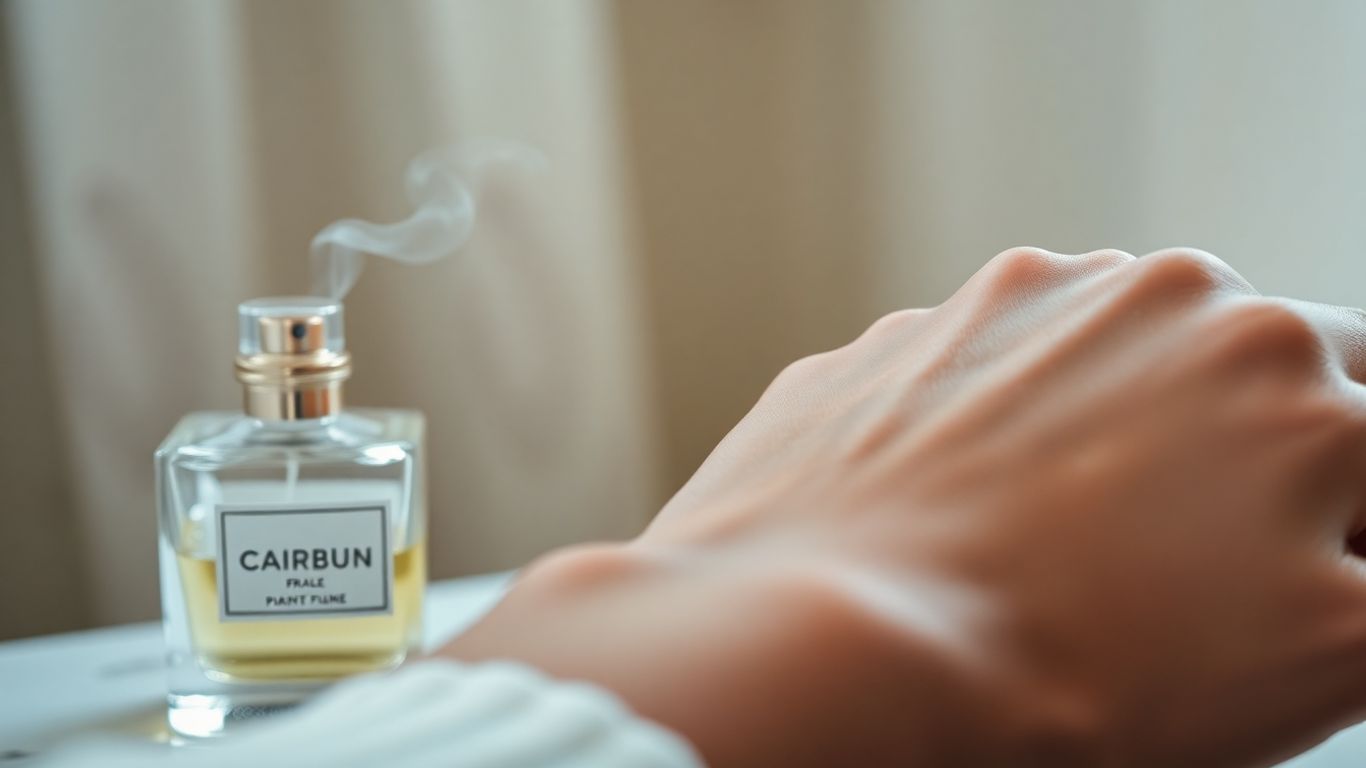
We all have our own special blend of biological traits, and it turns out, this is a big reason why perfumes don't smell the same on everyone. Think of your skin as a unique canvas; it's not just a surface, but a living, breathing thing that interacts with everything you put on it, including your favourite scent.
The influence of skin pH levels
Our skin's pH level is a measure of its acidity or alkalinity. This can vary quite a bit from person to person, and even change throughout the day. A more acidic skin pH might make certain fragrance notes, like citrus or floral ones, seem brighter and more pronounced. On the other hand, skin that's a bit more alkaline might alter how the scent molecules evaporate, potentially making the fragrance last longer but perhaps changing its initial character. It's a subtle but significant factor in how a perfume settles.
How natural oils affect fragrance
We all produce natural oils, often called sebum, and the amount and type of these oils can differ. If your skin tends to be on the oilier side, these natural oils can act like a sort of fixative for perfume. This means the fragrance might stick around for longer, and the oil can sometimes amplify certain notes, making the scent richer. For those with drier skin, the oils are less abundant, which can mean the perfume evaporates more quickly, and the scent might be lighter.
The role of hormones and genetics
Our hormones are constantly fluctuating, and these changes can subtly influence our body odour and, by extension, how a perfume smells. Think about puberty, pregnancy, or even just monthly cycles – these can all cause shifts. Then there's genetics. Our genes play a part in how our bodies function, including how our olfactory receptors work. This means that even if two people smell the exact same perfume molecule, their brains might interpret the scent slightly differently. It's a fascinating biological lottery!
How your skin interacts with perfume
Ever wondered why that gorgeous scent on your friend smells… well, a bit different on you? It’s not your imagination! Our skin is like a unique canvas, and perfume is the paint. The way it interacts with our individual biology is fascinating, and honestly, a little bit magical.
The process of fragrance evolution on skin
When you first spritz a perfume, you're getting the initial impression. But that's just the start of the story. As the fragrance settles onto your skin, it begins to mingle with your natural body chemistry. This isn't a static thing; it's a dynamic process. The alcohol in the perfume evaporates first, leaving behind the complex blend of aromatic compounds. These molecules then start to react with the oils and proteins on your skin. Think of it like a slow dance – some notes might bloom, others might soften, and new nuances can emerge over time. This is why a perfume can smell one way when you first apply it and quite another a few hours later. It's literally evolving with you.
Why oily skin holds scent differently
If you tend to have oilier skin, you might find that perfumes stick around for ages. That's because the natural oils produced by your skin can act as a sort of binder for the fragrance molecules. These oils help to slow down the evaporation rate of the perfume. So, instead of zipping off into the air, the scent molecules cling to the skin for longer. This can mean that certain notes, particularly the deeper, base notes, might feel more pronounced and last significantly longer on oily skin compared to drier types. It’s a bit like how oil can make colours appear richer and deeper.
The impact of dry skin on longevity
On the flip side, if your skin is on the drier side, you might notice that your favourite scent seems to fade away much faster. Dry skin lacks the natural oils that help to anchor fragrance molecules. This means the perfume can evaporate more quickly, taking those lovely scent notes with it. It’s not all bad news, though! Sometimes, on dry skin, the lighter, more volatile top notes can shine through more clearly before they disappear. To help with longevity on dry skin, we often suggest applying a fragrance-free moisturiser to the skin before you spritz, or even applying perfume to pulse points that are naturally warmer, like the insides of your elbows or behind your knees. It gives those scent molecules something to hold onto.
The interplay between perfume and skin isn't just about chemistry; it's a personal experience. What one person perceives as a strong, lasting scent, another might find fleeting. It's a reminder that scent is subjective and deeply tied to our individual biology and environment.
Environmental and lifestyle factors
Diet and its effect on body odour
Ever thought about what you eat and how it might affect your perfume? It’s more connected than you might think. Our diet can actually change the composition of our body odour, which then interacts with the fragrance we've applied. For instance, eating a lot of garlic or spicy foods might subtly alter how a perfume smells on your skin. It's like adding an extra, unexpected ingredient to the mix. So, that lovely floral scent might pick up a slightly different nuance after a particularly flavourful meal.
Humidity and temperature's influence
We all know that the weather can change how we feel, but it can also change how our perfume behaves. In humid conditions, scents tend to diffuse more, meaning they can smell stronger and perhaps a bit more overwhelming. On the other hand, in dry heat, the fragrance might evaporate more quickly, making it seem like it doesn't last as long. Think about it: a perfume sprayed on a cold, dry winter day will likely perform differently than the same one on a warm, muggy summer afternoon. It’s all about how those scent molecules dance in the air around us.
Stress and its olfactory impact
This one might surprise you, but stress can actually play a role in how your perfume smells. When we're stressed, our body chemistry shifts. This can affect our natural scent, and in turn, influence the fragrance. Some people find that certain perfumes smell sharper or more intense when they're feeling tense. It’s a subtle effect, but it adds another layer to why our signature scent can sometimes feel a bit different depending on our mood and how we're feeling physically and mentally.
It's fascinating how many external elements can subtly tweak the way a fragrance unfolds on our skin. From the food we eat to the air we breathe, these factors contribute to the unique scent journey each of us experiences.
The science behind scent perception
How our nose detects fragrance molecules
Ever wondered how we actually pick up on smells? It's a pretty neat process, really. When we breathe in, tiny particles, or molecules, from whatever smells are around us get drawn into our noses. Inside our nasal cavity, there's this special lining, sort of like a damp membrane. This is where the magic happens – the scent molecules get absorbed here. Then, these little hair-like things called cilia get to work, sending signals zipping off to the part of our brain that's all about smell.
The brain's processing of smells
Once those signals reach the brain, it's like a whole team gets involved. Different areas handle different jobs. One part figures out what the smell actually is, like 'ah, that's rose' or 'hmm, that smells like freshly baked bread'. Another bit connects that smell to memories – you know, how a certain scent can instantly take you back to your childhood or a specific holiday. And then there are the parts that deal with emotions, linking smells to how we feel, whether it's happy, sad, or even a bit anxious. It's quite amazing that our brains can sort through over a trillion different smells!
Genetic variations in olfactory receptors
Now, here's where things get really interesting and explain why we don't all smell things the same way. We all have these things called olfactory receptors, and the specific types and how they're arranged can be a bit different from person to person, thanks to our genes. Think of it like having slightly different keys that fit into scent molecules. So, a molecule that fits perfectly into one person's receptor might not quite fit the same way for someone else. This means that even though we're smelling the same perfume, our brains might be interpreting those scent signals in subtly different ways. It’s a bit like having a unique code for each of us, which is why that perfume your friend raves about might just smell okay, or even a bit odd, to you. It's not you, it's your genes!
The composition of fragrances
When we talk about perfume, we're really talking about a carefully constructed blend of different aromatic compounds. It's not just one single smell; it's more like a symphony of scents designed to unfold over time. Think of it like a musical piece, with different notes playing at different moments.
Understanding top, middle, and base notes
Perfumes are typically built in three layers, or 'notes', that you experience as the fragrance develops on your skin. It's this structure that gives a perfume its journey.
- Top notes: These are the first scents you notice right after you spray the perfume. They're usually light and fresh, like citrus or light florals. They don't last very long, maybe 15 minutes or so, but they make that initial impression.
- Middle notes: Once the top notes fade, the heart of the fragrance emerges. These are often richer, like spices or heavier florals. They form the main character of the perfume and can last for a few hours.
- Base notes: These are the deepest, longest-lasting scents. Think woods, musk, or vanilla. They appear as the middle notes start to fade and provide the foundation for the entire fragrance, often lingering for many hours.
The blend of aromatic compounds
These notes are made up of various natural and synthetic ingredients. Perfumers, or 'noses' as they're sometimes called, are experts at combining these elements. They might use things like essential oils from flowers, fruits, woods, and spices, or they might use lab-created molecules to achieve specific effects. The art is in balancing these ingredients so they work together harmoniously.
How different scent families interact
Perfumes are often grouped into 'families' based on their dominant scents, like floral, oriental, woody, or fresh. When you wear a perfume, these different families don't just sit there; they interact with each other and, more importantly, with your own unique body chemistry. For example, a woody scent might become warmer on one person, while a floral scent might take on a greener edge on another. It's this interplay that makes each perfume smell so personal.
The way these aromatic compounds are put together is a bit like a recipe. You can have the same ingredients, but the proportions and the way they're mixed can lead to vastly different results. This is why even perfumes within the same scent family can smell quite distinct on different individuals.
Embracing your personal scent journey
So, we've talked a lot about why perfumes do their own thing on different people. It's all down to our unique body chemistry, the environment, and even how our noses work. But really, the most important part of all this is how you feel about a scent.
Finding a fragrance that feels like 'you' is a bit like finding your favourite jumper or the perfect pair of jeans. It should just feel right. Don't be afraid to experiment! What smells amazing on your friend might not be your cup of tea, and that's perfectly okay. In fact, it's brilliant!
Here are a few pointers to help you on your way:
- Get to know scent families: Perfumes are grouped into categories like floral, oriental, woody, and fresh. Trying out a few from each can give you a better idea of what you naturally gravitate towards. Do you love the smell of roses and jasmine, or are you more drawn to warm, spicy notes like vanilla and cinnamon?
- Test on your skin: Never buy a perfume just because it smells good on a tester strip or on someone else. Your skin chemistry is unique, and the scent can change quite a bit. Give it a few hours on your wrist to see how it develops.
- Consider the occasion: A light, zesty scent might be perfect for a casual day out, while a richer, more complex fragrance could be just the thing for an evening event. Think about where and when you'll be wearing it.
- Don't dismiss 'masculine' or 'feminine' labels: Honestly, these are just marketing terms. If you love a scent, wear it! The best perfume is the one that makes you feel good.
Ultimately, the goal isn't to find the most popular or the most expensive perfume. It's about discovering a scent that makes you feel confident, happy, and authentically yourself. It's your personal signature, a way to express yourself without saying a word.
Think of your perfume choice as a personal statement. It's a reflection of your personality, your mood, and your style. So, go forth, explore, and find that special scent that makes you feel like the best version of yourself. It's a fun journey, and the destination is a fragrance that's uniquely, wonderfully you.
So, What's the Takeaway?
Right then, after all that, it’s pretty clear why that fancy scent on your mate smells totally different on you. It’s not magic, it’s just us! Our skin, what we eat, even how stressed we are – it all plays a part in how a perfume settles. So, next time you try a new fragrance, don't be surprised if it's a bit of a surprise. It just means you're wearing something that's truly, uniquely yours. Pretty cool, eh?
Frequently Asked Questions
Why does the same perfume smell different on me compared to my friend?
It's all down to our unique body chemistry! Think of your skin like a tiny lab. The natural oils, your skin's natural acidity (pH), and even your genes all play a part in how a perfume smells. So, when the perfume mixes with your skin, it creates a scent that's totally yours, which is why it won't smell exactly the same on everyone.
Does what I eat affect how perfume smells on me?
Absolutely! What we eat can change our body's natural scent, and this can definitely influence how a perfume smells. Things like spicy foods or even certain vitamins can make a difference. It's like adding a secret ingredient to the mix!
Does my skin type (oily or dry) change the perfume's smell?
Yes, it does! If you have oilier skin, it tends to hold onto scents for longer, making them last and sometimes smell a bit richer. On the flip side, if your skin is drier, the perfume might not stick around for as long and could smell a little fainter because it evaporates more quickly.
How do things like the weather or my mood change a perfume's scent?
The weather can be a big factor! On a hot, humid day, scents tend to be stronger and spread out more. In cooler weather, they might be more subtle. And believe it or not, stress can even change how your body chemistry works, which can subtly alter a fragrance.
What are those 'notes' in perfume, and why do they matter?
Perfumes are built in layers, like a song! You've got the 'top notes' that you smell first – they're usually light and fresh. Then come the 'middle notes' or heart of the perfume, which appear after the top ones fade. Finally, there are the 'base notes', the deep, lasting scents that linger. How these notes blend with your skin is key to the final smell.
So, is there a 'right' way to find a perfume that suits me?
The best way is to try it on your own skin! Don't just smell it from the bottle or on a tester strip. Wear it for a few hours to see how it changes and if you love how it smells on *you*. It's all about finding a scent that makes you feel great and is uniquely yours. Embrace your personal scent journey!