Ever spritz on a new perfume, only for it to vanish into thin air barely an hour later? We've all been there, wondering why do some perfumes disappear quickly while others seem to stick around all day. It's a bit of a puzzle, isn't it? We're going to try and figure out what's going on with our favourite scents and why they don't always last as long as we'd like.
Key Takeaways
- Perfumes have a structure called a fragrance pyramid, with top, middle, and base notes. The lighter top notes disappear fast, while the heavier base notes stick around longer.
- Your own skin chemistry, like its pH and oiliness, really changes how a scent behaves and how long it lasts. It's why a perfume smells different on you than on someone else.
- Things like what you eat, the weather (hot and humid days make scents fade faster), and even your stress levels can affect how your perfume performs.
- The actual science of scent involves different molecules evaporating at different speeds. Heat speeds this up, and perfumes generally last longer on fabric than on skin.
- To make your perfume last longer, try applying it to moisturised skin, hitting the right spots like your wrists and neck, and avoid rubbing your wrists together after spraying.
Understanding the fragrance pyramid
Ever wondered why some perfumes smell amazing for hours, while others seem to vanish after a coffee break? It often comes down to how they're built, and that's where the idea of a 'fragrance pyramid' comes in. Think of it like a musical composition or a layered cake; it has different stages that reveal themselves over time.
The fleeting nature of top notes
These are the first things you notice when you spray a perfume. They're usually light, bright, and zesty – think citrus fruits like lemon or bergamot, or maybe some fresh herbs. They make that initial 'wow' impression. But, and it's a big but, they're also the most volatile molecules. This means they evaporate really quickly, usually within 5 to 15 minutes. So, that burst of freshness you get right after spraying? That's your top notes doing their thing before they disappear.
The enduring heart of the fragrance
Once the top notes have done their vanishing act, the middle notes, or 'heart notes', start to take centre stage. This is where the main character of the perfume really shines through. You'll often find florals here, like rose, jasmine, or lavender, but sometimes spices or fruits too. These notes are a bit more robust than the top notes and tend to last for a few hours. They form the core of the scent, the part that most people will recognise and remember.
The lasting impression of base notes
Finally, we get to the base notes. These are the deep, rich scents that linger the longest. Think woody aromas like sandalwood or cedar, musky notes, or warm, sweet smells like vanilla and amber. They're the foundation of the perfume, providing depth and longevity. Base notes can stick around for many hours, sometimes even a full day, especially on clothes. They're the slow burners, the ones that give a perfume its staying power and create that lasting impression long after the initial spray has faded.
Your unique skin chemistry plays a role
Ever wondered why that perfume smells absolutely divine on your friend but just… okay on you? It’s not just in your head; our skin is a surprisingly active participant in how a fragrance develops. Think of it like a tiny, personal laboratory.
How skin pH affects scent evaporation
Our skin has a natural pH level, and this can really change things up. Generally, skin tends to be slightly acidic. If your skin is more on the acidic side, it might make brighter, zesty notes, like citrus, pop a bit more. On the flip side, if your skin is a bit more alkaline, it can sometimes make fragrances evaporate faster. It’s a subtle difference, but it can shift the whole balance of a scent.
The impact of body oils and hydration
This is a big one. If you have oilier skin, you'll probably find that perfumes tend to stick around for longer. That natural moisture acts like a bit of a binder, slowing down how quickly the scent molecules disappear. Dry skin, however, doesn't hold onto fragrance quite as well, leading to quicker evaporation. So, keeping your skin hydrated, perhaps with an unscented moisturiser before you apply your perfume, can make a real difference.
Genetic variations in scent perception
Beyond just how long a scent lasts, our genes actually play a part in how we perceive smells. We all have different olfactory receptors, the tiny things in our noses that pick up scent molecules. This means that what smells like a beautiful rose to one person might smell slightly different, or even less appealing, to someone else. It’s why perfume recommendations can be so hit-or-miss – we’re all wired a little differently when it comes to our sense of smell.
Environmental and lifestyle influences
So, we've talked about the perfume itself and our skin, but what else can mess with how long that lovely scent sticks around? Turns out, quite a bit. Our daily lives, what we eat, and even the weather can play a surprisingly big part.
Diet and its effect on fragrance
It might sound a bit odd, but what we put into our bodies can actually change how our perfume smells and lasts. Think about it: our diet affects our sweat, and sweat mixes with the perfume. Spicy foods, for example, can sometimes make scents seem to project more, while other foods might dull them down. It's all about how those food compounds interact with our body's natural chemistry.
Humidity and temperature considerations
This is a big one. On a really hot, humid day, your perfume might seem to vanish faster. The heat makes the scent molecules evaporate more quickly. On the flip side, in dry, cool air, it might hang around a bit longer, but it might not project as much. It's a bit of a balancing act.
- Hot weather: Faster evaporation, scent might seem stronger initially but disappear quicker.
- Cold weather: Slower evaporation, scent might last longer but be less noticeable.
- Humidity: Can sometimes amplify scent, but also contribute to faster evaporation in heat.
The role of stress and body temperature
When we're stressed, our body temperature can go up. Just like with heat, a higher body temperature can speed up how quickly your perfume evaporates. So, if you've got a stressful day ahead, don't be surprised if you need to reapply your favourite scent. It's not just in your head; your body's internal thermostat really does make a difference.
Our personal environment and daily habits are not just background noise; they actively interact with the fragrance we wear, altering its journey from initial spritz to final fade. It's a dynamic relationship, not a static one.
The science behind scent evaporation
Volatility of different scent molecules
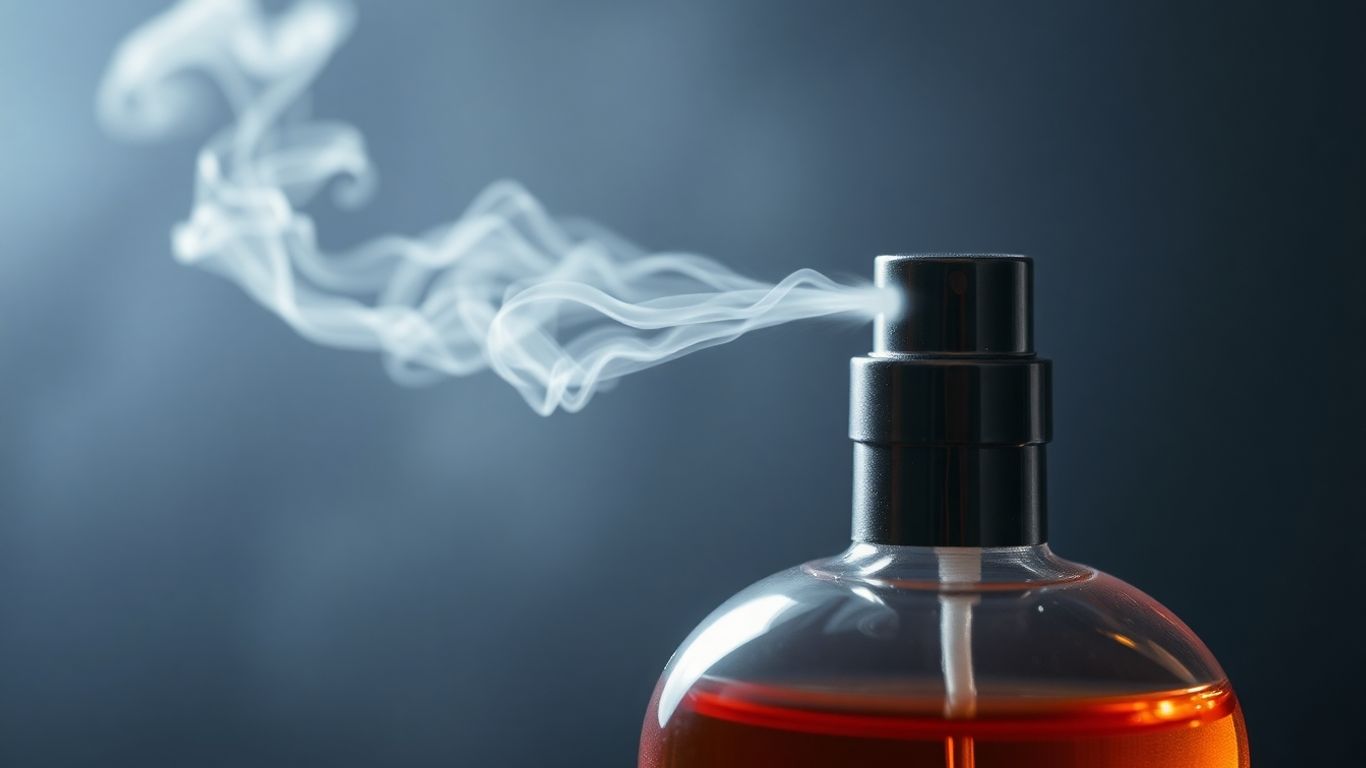
Ever wondered why some perfumes seem to vanish into thin air almost as soon as you've sprayed them? It all comes down to the volatility of the tiny scent molecules that make up a fragrance. Think of it like boiling water – some things evaporate much faster than others. In perfumery, these molecules are categorised by how quickly they turn into vapour and drift into the air, which is essentially how we smell them. Lighter, smaller molecules, often found in citrusy top notes, are super volatile. They jump into the air quickly, giving you that initial burst of scent, but they also leave just as fast. Heavier molecules, like those in woody or resinous base notes, are much less volatile. They hang around for ages, providing the lasting foundation of a perfume. It’s a bit like a race: the sprinters (top notes) are off and gone in a flash, while the marathon runners (base notes) keep going and going.
How heat accelerates fragrance loss
Heat is a perfume's worst enemy when it comes to longevity. When you spray perfume onto your skin, your body heat starts to warm those scent molecules. This warmth gives them the energy they need to escape into the air more quickly. The warmer your skin, the faster your perfume will evaporate. This is why perfumes often seem to fade more quickly on a hot summer day or after a workout. It’s not that the perfume is
Maximising your perfume's staying power
Right, so we've talked about why some scents vanish faster than a free biscuit at a tea break. Now, let's get down to how we can make our favourite fragrances stick around for the long haul. It's not magic, just a few clever tricks.
The benefits of moisturised skin
Think of your skin like a sponge. If it's dry, it's going to soak up that lovely perfume and then let it evaporate pretty quickly. But if your skin is nicely moisturised, it's like a damp sponge – it holds onto things better. Applying an unscented moisturiser before you spritz is a game-changer. It creates a smoother surface for the fragrance molecules to cling to, giving them a much better chance of lasting longer. If you want to go the extra mile, an oil-based moisturiser or even a dab of petroleum jelly on your pulse points before applying perfume can really help lock in that scent.
Strategic application points for longevity
Where you put your perfume actually makes a difference. We're talking about your pulse points – those spots where your blood is closest to the skin's surface, generating a bit of warmth. This gentle heat helps to diffuse the fragrance throughout the day. So, where are these magical spots?
- Inside your wrists
- The base of your throat
- Behind your ears
- The crook of your elbows
- Behind your knees
Spritzing these areas means the scent will gradually warm up and release its notes over time, rather than just disappearing in a puff.
Avoiding common application mistakes
We've all done it, haven't we? That classic move of rubbing our wrists together after applying perfume. It feels like you're helping the scent sink in, but you're actually doing the opposite. This friction breaks down the delicate fragrance molecules, especially those lovely top notes, making them fade much faster. It can even alter the scent itself. So, resist the urge! Another common error is spraying perfume into the air and walking through it. While it might feel luxurious, most of the perfume just dissipates into the air, wasting your precious juice. A direct spritz onto your skin or clothing (after a patch test, of course!) is far more effective for lasting fragrance.
Applying perfume right after a shower is another top tip. Your skin is clean and slightly damp, which is the perfect canvas for fragrance. Just let it dry naturally for a minute or two before getting dressed to avoid transferring scent onto your clothes.
Concentration matters for lasting fragrance
We’ve all been there, right? You spritz on a lovely scent in the morning, feeling all put-together, only for it to vanish by lunchtime. It’s frustrating, but often, the culprit isn't just your skin or the weather – it’s the actual concentration of the perfume itself. Think of it like diluting juice; the more water you add, the weaker the flavour. Fragrance works in a similar way.
Understanding perfume, eau de parfum, and cologne
When you look at a perfume bottle, you’ll often see terms like Parfum, Eau de Parfum (EDP), Eau de Toilette (EDT), and Eau de Cologne (EDC). These aren't just fancy names; they tell us how much pure fragrance oil is mixed with alcohol and water. This ratio is the main reason why some scents stick around for hours, while others fade away surprisingly fast.
Higher concentrations mean longer wear
Generally, the more concentrated the fragrance, the longer it’s going to last on your skin. It’s pretty straightforward, really. The higher the percentage of perfume oil, the more robust the scent molecules are, and the slower they evaporate.
Here’s a rough guide:
- Parfum (or Extrait de Parfum): This is the heavyweight champion. It typically contains 20-40% perfume oil. A good Parfum can easily last 8 hours, sometimes even 12 or more if your skin is well-moisturised.
- Eau de Parfum (EDP): A popular choice, EDP usually has 15-20% perfume oil. Expect it to last around 4-6 hours.
- Eau de Toilette (EDT): This is lighter, with about 5-15% perfume oil. It’s great for a subtle scent that lasts 2-3 hours.
- Eau de Cologne (EDC): The lightest of the bunch, EDC typically has only 2-5% perfume oil. Its staying power is usually just 1-2 hours.
The impact of pure perfume oil
So, if you’re serious about a fragrance that lingers, you’ll want to look for Parfums or high-quality EDPs. These are formulated with a much higher percentage of the actual scent compounds. It means you’re getting more of the complex notes that make up the fragrance, and they’re delivered in a way that allows them to unfold gradually throughout the day, rather than disappearing in a flash. It’s an investment, sure, but when you want your scent to be a lasting impression, it’s definitely worth considering the concentration.
The concentration of fragrance oil is the most significant factor in how long a perfume will last. Higher concentrations mean more scent molecules are present, leading to a slower evaporation rate and a more enduring aroma on the skin.
So, What's the Deal with Vanishing Scents?
Right then, we've had a good look into why some of our favourite scents seem to pack their bags and leave our skin way too soon. It turns out it's not just us imagining things! It's a whole mix of things, really – how our skin behaves, the actual ingredients in the perfume, and even stuff like the weather. So, next time your perfume doesn't stick around as long as you'd hoped, don't get too miffed. It's just your unique body chemistry doing its thing, or maybe the perfume itself is just made of lighter stuff. We've picked up a few tricks along the way, like moisturising first or trying different application spots, which might just help things along. But honestly, sometimes you just have to accept that some fragrances are fleeting, and that's okay. It just means we get to try out new ones!
Frequently Asked Questions
Why does my perfume smell different on me compared to someone else?
It's all down to our unique skin chemistry! Think of it like baking a cake; the same ingredients can turn out slightly different depending on your oven. Our skin's natural oils, its pH level, and even how hydrated it is can all change how a perfume smells. Plus, our genes play a part in how we actually sense smells, meaning what smells lovely to one person might be just 'okay' to another.
What are these 'notes' I hear about in perfumes?
Perfumes are often described using a 'fragrance pyramid'. At the very top, you have the 'top notes' – these are the first scents you smell, super light and fresh, but they vanish pretty quickly, like a fleeting hello. Then come the 'heart notes', the main character of the perfume that shows up after the top notes fade. Finally, the 'base notes' are the deep, lasting scents that linger for ages, like a warm hug goodbye.
Why do some perfumes seem to disappear after just an hour?
This usually happens with perfumes that have a lot of 'top notes'. These are the lightest scent molecules, like citrus or fresh herbs, and they're naturally the most volatile, meaning they evaporate into the air really fast. If a perfume is mostly made of these quick-evaporating notes, it won't stick around for long.
Does what I eat or drink affect how my perfume smells?
Believe it or not, yes! Things like spicy foods or even your daily diet can subtly change your body's natural scent, which in turn can influence how a perfume develops on your skin. It's another layer to the whole skin chemistry puzzle.
How can I make my perfume last longer throughout the day?
A great trick is to apply your perfume to moisturised skin. Dry skin doesn't hold onto scents as well. Using an unscented lotion before you spritz can make a big difference. Also, try applying it to pulse points like your wrists, behind your knees, or your neck – these areas are a bit warmer and help diffuse the scent.
Is there a difference between 'Perfume', 'Eau de Parfum', and 'Cologne'?
Definitely! It all comes down to how much pure perfume oil is in the bottle. 'Perfume' (or Parfum) has the highest concentration, meaning it's the strongest and lasts the longest, sometimes for 8 hours or more. 'Eau de Parfum' (EDP) is next, followed by 'Eau de Toilette' (EDT), and then 'Cologne', which is the lightest and fades the quickest. So, a higher concentration generally means a longer-lasting scent.