We're going to take a look at the history and art of perfumery, from how it all started way back when to the fancy bottles you see today. It’s a pretty fascinating journey, really, involving ancient rituals, clever chemists, and some seriously talented noses. We’ll explore how scents have been used for everything from religious ceremonies to making a personal statement, and how the way we make and appreciate perfume has changed so much over the centuries. It’s more than just smelling nice; it’s a whole cultural thing.
Key Takeaways
- Perfume’s roots are deep in ancient history, used for sacred rituals and daily life across cultures like Egypt, Greece, and Rome.
- The Middle Ages saw significant advancements, especially with Arabic alchemists perfecting distillation, making perfumes symbols of status.
- During the Renaissance, perfumery blossomed into an art form, with intricate blends and beautifully crafted bottles becoming highly prized.
- The Industrial Revolution brought chemical advances, introducing synthetic ingredients and expanding the perfumer's creative options.
- Today, perfumery balances artistry and science, with legendary perfumers shaping its evolution, and the future focusing on bespoke scents and sustainability.
Ancient origins of perfumery
We're kicking off our journey into the world of scents by looking way, way back. It turns out, people have been fascinated with fragrance for thousands of years, long before fancy bottles and department stores.
Perfume as a sacred offering
Honestly, the very first perfumes weren't really about smelling nice in the way we think of it today. The word 'perfume' itself comes from the Latin 'per fumum', which means 'through smoke'. This gives us a big clue: many of the earliest scented substances were burned. Think of it as an offering to the gods or a way to purify spaces during important ceremonies. We're talking about burning fragrant woods, resins like frankincense and myrrh, and aromatic herbs. It was a way to connect with the divine, to make prayers rise up with the smoke.
Fragrance in Egyptian rituals
When we look at ancient Egypt, perfume was absolutely central to life, both the living and the dead. They were masters at extracting scents from flowers, spices, and resins to create fragrant oils and balms. These weren't just for personal adornment; they were used extensively in religious ceremonies and, quite importantly, in the mummification process.
Here’s a little peek at what they might have used:
- Lotus Flower: Known for its beautiful scent and symbolic meaning.
- Myrrh and Frankincense: Resinous tree saps, prized for their deep, complex aromas and preservative qualities.
- Cinnamon and Cardamom: Spices brought from afar, adding warmth and richness.
It's said that even Cleopatra herself was a big fan of fragrant oils, using them to enhance her presence. The Egyptians really understood how scent could influence mood and create an atmosphere.
Greek and Roman olfactory traditions
The Greeks and Romans certainly picked up the scent baton from the Egyptians and ran with it. They loved fragrance just as much, but perhaps with a slightly different focus. For the Greeks, it was tied up with mythology and healing. They believed certain scents had medicinal properties, and physicians like Hippocrates even used aromatic substances in their treatments. The Romans, however, really took it to an extravagant level. They used perfumed oils not just on their bodies but also in their baths, to scent their homes, and even to anoint their horses and weapons.
The Roman Empire's vast reach meant that exotic ingredients from all over the known world flowed into Rome, fuelling this love affair with scent. It was a clear marker of wealth and a way to indulge the senses.
So, from sacred smoke to luxurious baths, the ancient world laid down the foundations for everything we associate with perfume today.
The Middle Ages and the fragrant renaissance
Right, so after the Roman Empire sort of fizzled out, things got a bit quiet on the perfume front in Europe for a while. But over in the Islamic world, things were really kicking off. Think of the Middle Ages as this period where perfume went from being a bit of a religious thing to something much more sophisticated, especially thanks to some clever folks in the Middle East.
Arabic alchemists and distillation
We owe a massive debt to the Arabic alchemists, honestly. They were the ones who really got to grips with distillation. This wasn't just about making a nice smell; it was a scientific breakthrough. By perfecting distillation, they could extract the pure essence, the essential oils, from flowers, spices, and herbs much more effectively than before. This meant they could create more potent and complex fragrances. They also started using alcohol as a base, which was a game-changer for how perfumes were made and how they lasted on the skin. It’s basically the foundation of the perfumes we use today.
Perfumes as symbols of status
As these amazing new scents started to travel, particularly along trade routes, they made their way back into Europe. And let me tell you, the wealthy and the royalty absolutely loved them. Perfume wasn't just a nice smell anymore; it was a serious status symbol. Having access to these exotic ingredients and the know-how to create these complex fragrances showed you had money and influence. It was all about displaying wealth and sophistication. You can imagine the courts of Europe, suddenly smelling much more interesting!
European apothecaries and bespoke blends
Back in Europe, the people who really kept the perfume flame alive were the apothecaries. These weren't just doctors; they were also skilled chemists and herbalists. They started experimenting with these new techniques and ingredients, often creating perfumes for specific clients. It was the beginning of bespoke perfumery, where you could get a scent made just for you. These weren't mass-produced things; they were carefully crafted, often with medicinal properties in mind too, blending the practical with the luxurious. It was a really exciting time for scent development.
Perfumery as an art during the Renaissance
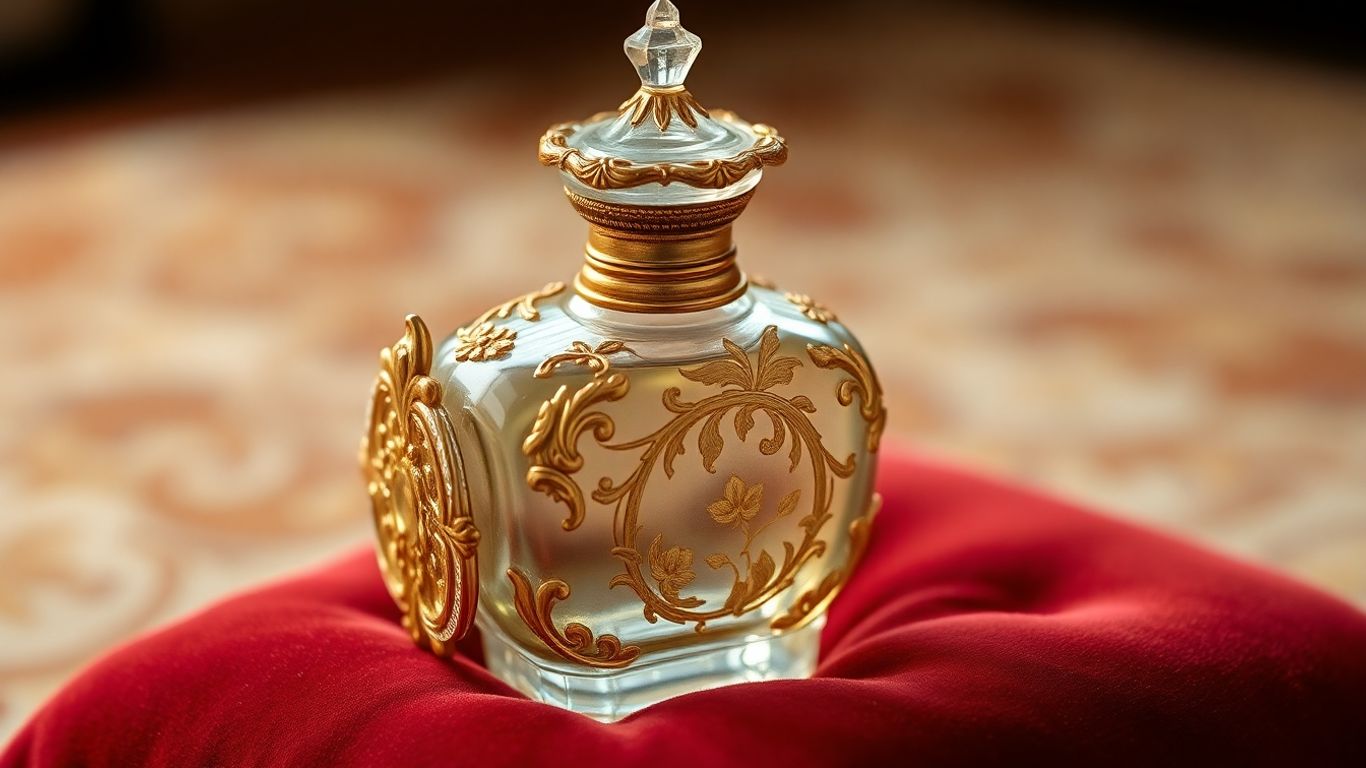
Right, so after the Middle Ages, things really started to get fancy with perfume. We’re talking about the Renaissance now, and honestly, it felt like perfume went from being a practical thing, maybe for medicine or just smelling nice, to a proper art form. Italy and France were really leading the charge here. You see, perfume started becoming this big status symbol. If you were royalty or, you know, super rich and important, you had the best perfumes. It’s said that Catherine de’ Medici, when she moved to France, brought her own perfumers with her, which really helped get things going over there.
It wasn't just about the smell, either. The bottles themselves became these incredible works of art. Think intricate designs, precious stones – proper display pieces. The courts, especially in France, were absolutely drenched in scent. They called the court of Louis XIV the 'perfumed court', and Versailles was apparently quite something. It’s also around this time that Grasse, in France, really became the heartland for growing all the aromatic plants we still use today.
Master perfumers and intricate blends
During this period, we started seeing perfumers who were more than just blenders; they were becoming true artists. They were experimenting with more complex combinations, drawing inspiration from everything around them – art, literature, even the natural world. It was about creating a signature scent, something that told a story or evoked a specific feeling. We’re talking about really carefully put-together fragrances, not just random smells.
Perfume bottles as objets d'art
Seriously, the bottles were as important as the juice inside. They weren't just containers; they were designed to be beautiful objects in their own right. Imagine these ornate glass bottles, sometimes decorated with gold, silver, or even enamel. They were often made by skilled glassblowers and jewellers, making them highly collectible and a reflection of the owner's wealth and taste. It was all part of the whole luxury experience.
Courtly fragrances and royal favour
The royal courts were the epicentre of perfume culture. Having a unique and exquisite fragrance was a way to show off your status and influence. Kings and queens would commission special scents, and having a favoured perfumer was a sign of prestige. These fragrances were often rich and complex, using expensive ingredients that only the elite could afford. It was a way for the aristocracy to distinguish themselves and add an extra layer of glamour to their already lavish lives.
The industrial revolution and modern perfumery
Right, so the 19th century really shook things up for perfume. It was all thanks to the Industrial Revolution and some clever chemists figuring out how to make scents in a lab.
Chemical advances and fragrance production
Before this, we were pretty much stuck with what nature gave us – flowers, spices, that sort of thing. But then, boom! Scientists started creating synthetic ingredients. Think things like vanillin, which smells like vanilla, or coumarin, which has a sweet, hay-like scent. This was a massive deal because it meant perfumers weren't limited anymore. They could create entirely new smells that didn't even exist in nature, and it also made perfumes a bit more affordable as they didn't have to rely solely on expensive natural ingredients.
The introduction of synthetic ingredients
These new synthetic molecules were like a whole new box of crayons for perfumers. Suddenly, they had access to a much wider range of smells, from the powdery softness of violets to the rich warmth of amber. It really opened up the possibilities for creating complex and unique fragrances.
Expanding the perfumer's palette
It wasn't just about new smells, though. The ability to produce these ingredients consistently and in larger quantities meant that perfume started to become more accessible to everyone, not just the super-rich. Paris, as you might expect, became the epicentre of this new perfume world, with famous houses really starting to make their mark. It was a time of real innovation, moving perfume from something quite exclusive to something much more widespread.
The role of the perfumer: poetry meets chemistry
The perfumer as artist and scientist
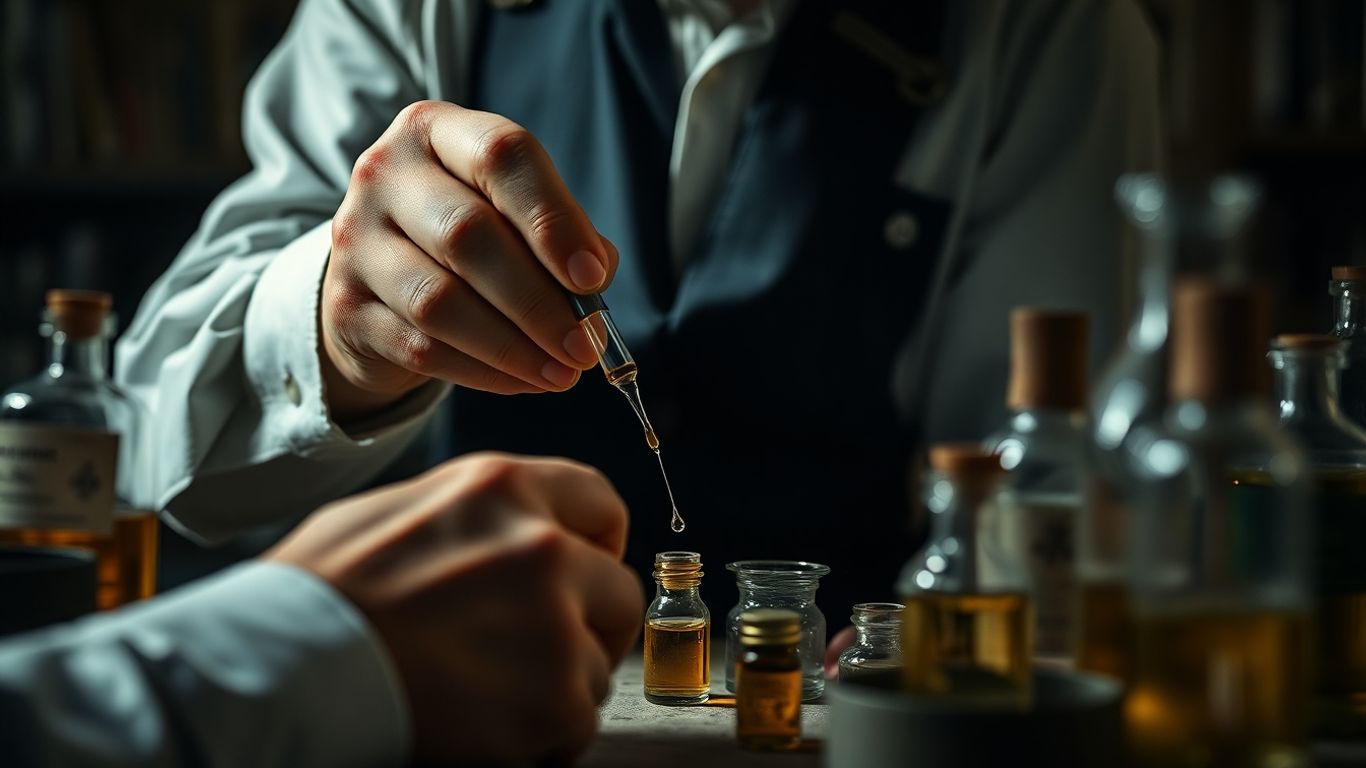
We often think of perfumers as these mystical figures, right? Like artists who just feel what smells good. And sure, there's a huge amount of creativity involved, a real knack for putting scents together in a way that makes you feel something. But honestly, it's also incredibly scientific. It’s not just about sniffing flowers; it’s about understanding how different molecules interact, how they evaporate, and how they change on your skin. It’s a bit like being a chef, but instead of taste, you’re working with smell, and instead of recipes, you’ve got chemical formulas.
Expertise in raw materials and extraction
Getting the ingredients right is a massive part of the job. We spend ages learning about where things come from – is this jasmine from Grasse or Egypt? Does it matter? Yes, it really does. The origin, the harvest, the way it’s processed – all of it affects the final smell. Then there are the extraction methods. We’ve got things like distillation, where we steam plant materials to capture their oils, or enfleurage, an old-school method using fat to absorb delicate floral scents. Each technique pulls out something slightly different, and knowing which one to use for which ingredient is key. It’s a constant learning curve, really.
Balancing chemical equations in fragrance
Think of a perfume as a complex chemical equation. You’ve got top notes, middle notes, and base notes, and they all need to work together. It’s not just about making them smell nice individually, but how they blend and evolve over time. We’re constantly tweaking ratios, trying to get that perfect balance. Sometimes, a tiny change in the amount of one ingredient can completely alter the scent. It’s a delicate dance between art and precision, trying to create something that’s both beautiful and stable. We have to consider things like:
- Volatility: How quickly do the scent molecules evaporate?
- Fixation: How well do certain ingredients hold the scent in place?
- Reactivity: Will certain ingredients react badly with each other or with the air?
It’s a bit like composing music, but with invisible notes. You want a melody that flows, harmonies that complement each other, and a lasting impression. Getting that structure right, so the scent unfolds beautifully and lasts, is where the real challenge lies. It takes patience, a lot of trial and error, and a nose that’s been trained for years.
We also use a mix of natural and synthetic ingredients. Naturals give us those rich, complex scents we love, but synthetics are amazing for creating new smells or making certain notes stronger and more consistent. It’s about using the best of both worlds to create something truly unique.
Legendary masters who shaped perfumery
François Coty and democratised fragrance
We can't talk about modern perfume without mentioning François Coty. He was a real game-changer, believing that beautiful scents shouldn't just be for the super-rich. He made perfumes accessible, which was pretty revolutionary back then. Plus, his bottles were often works of art themselves, not just containers. His fragrance "L’Origan" really shook things up with its bold scent profile.
Jean-Paul Guerlain's olfactory storytelling
Then there's Jean-Paul Guerlain, who really knew how to tell a story with scent. His creations, like the iconic "Shalimar," are just so sensual and deep. It’s like wearing a memory or a whole exotic journey. His approach was all about crafting fragrances that stick with you, leaving a lasting impression.
Edmond Roudnitska's natural inspiration
Edmond Roudnitska was a bit of a visionary, drawing so much inspiration from the natural world. He’s the nose behind Dior's "Eau Sauvage," and it really set a new standard for modern, clean, yet impactful perfumes. He showed us that sometimes, less is more, but it has to be done perfectly.
Jacques Polge and Chanel's elegance
For over four decades, Jacques Polge was the main perfumer at Chanel, and honestly, he just got the brand. He created scents like "Coco," which perfectly captured this idea of a woman who is bold and free but always, always elegant. He really defined a new era for Chanel fragrances.
The present and future of perfume
Luxury brands and niche artisans
It feels like just yesterday we were talking about how perfume was becoming more accessible, and now look at us! We've got these massive luxury houses churning out iconic scents that everyone knows, but at the same time, there's this whole other world of niche perfumers. These smaller places are doing really interesting, often quite artistic, things. They’re not trying to appeal to everyone, which is kind of refreshing, isn't it? You can find some truly unique creations if you look around.
The rise of bespoke and unisex scents
We're definitely seeing a big shift towards wanting things that are just for us. People are asking for bespoke fragrances, which means getting a scent made specifically for them. It’s like having a signature tune, but for your nose. And then there's the whole unisex thing. It’s great because it means scents aren't really pigeonholed into 'for men' or 'for women' anymore. Anyone can wear what they like, which feels much more modern and inclusive.
Sustainability and ethical sourcing
This is a big one for us, and I think for a lot of people. We're all becoming more aware of where things come from and how they're made. So, with perfume, it means looking at things like:
- Are the ingredients sourced responsibly?
- Is the packaging eco-friendly?
- Are the companies cruelty-free?
It’s not just about smelling good anymore; it’s about feeling good about what we’re buying too. It’s about making choices that are kinder to the planet and everyone on it.
The way we think about perfume is changing. It’s not just a nice smell; it’s a statement about who we are and what we care about. This move towards more personal, thoughtful, and responsible fragrance choices feels like a really positive step forward for the whole industry.
A Lasting Impression
So, there we have it. From ancient times when scents were used for everything from religious rites to, well, smelling nice, right up to today’s incredibly complex creations, perfume has really been on quite a journey. It’s fascinating how something as simple as a smell can connect us to history, to different cultures, and even to our own memories. We’ve seen how it’s gone from sacred offerings to a status symbol, and now, it’s this incredibly personal form of expression. It makes you wonder what’s next, doesn't it? But one thing’s for sure, this art of scent isn't going anywhere.
Frequently Asked Questions
How did people first start using perfumes?
We started using perfumes way back in ancient times, like thousands of years ago! Initially, folks used fragrant plants and resins, often burning them in religious ceremonies to honour gods or during special rituals. It was also common to use scented oils for things like embalming or just to smell nice in daily life.
What was the big deal with perfumes in the Middle Ages?
During the Middle Ages, especially in the Arab world, people got really good at making perfumes using a method called distillation. This let them capture the lovely smells from flowers and spices. Back in Europe, having nice-smelling perfumes showed you were wealthy and important, and people would even get custom scents made for them.
When did perfumes become like art?
The Renaissance period was a real turning point. Perfumers started creating super complex scents, almost like composing music. They also made beautiful bottles that were like little works of art themselves. Royal courts loved these fancy perfumes, and having the best scents was a sign of favour.
How did factories change perfume making?
The Industrial Revolution brought big changes! Thanks to new science and machines, making perfumes became easier and cheaper. Scientists even figured out how to create smells using chemicals, which meant perfumers had a much wider range of scents to play with, leading to all sorts of new fragrances.
What does a perfumer actually do?
Think of a perfumer as a bit of an artist and a bit of a scientist. They need to know a lot about different natural ingredients and how to get their scents out. Then, they mix these ingredients together, kind of like balancing a recipe, to create a beautiful and unique smell that makes people happy.
Are there famous perfumers we should know about?
Oh, definitely! People like François Coty made perfumes more accessible to everyone, not just the super-rich. Jean-Paul Guerlain was amazing at telling stories with his scents, like with 'Shalimar'. And Edmond Roudnitska was inspired by nature, creating fresh scents like 'Eau Sauvage'. Jacques Polge also created many iconic Chanel fragrances.