We've all been there, right? You spray on your favourite perfume in the morning, and it smells amazing. Then, a little while later, maybe after your first coffee, you catch a whiff and think, 'Wait, is that the same scent?' It’s a common experience, and it actually makes perfect sense when you think about it. Perfume isn't just a single smell; it's more like a story that unfolds over time. So, why does perfume smell different after a few minutes? Let's break it down.
Key Takeaways
- Perfumes are structured in layers: top, heart, and base notes, each with a different evaporation rate.
- The initial scent (top notes) is fleeting, giving way to the more complex heart notes, and finally settling into the lasting base notes.
- Our skin chemistry, body temperature, and even the environment can alter how a fragrance develops and smells over time.
- Ingredients like woods, resins, musks, and amber are often used to help a scent last longer by acting as fixatives.
- To get the most out of your fragrance, apply it to pulse points, avoid rubbing, and consider layering with matching products.
Understanding the layered nature of fragrance
When we first spray a perfume, it’s not just a single scent that hits our nose. Instead, think of it like a carefully composed piece of music, or perhaps a story that unfolds over time. Fragrances are built in distinct layers, each with its own character and lifespan. This layered structure is what gives perfumes their complexity and allows them to evolve on our skin throughout the day.
The fleeting top notes
These are the very first scents we experience right after application. They're designed to be bright, attention-grabbing, and often light. Think zesty citrus fruits like bergamot or lemon, or perhaps fresh herbs. They create that initial 'wow' factor, but don't get too attached – they're the most volatile molecules, meaning they evaporate quickly. We're talking minutes, maybe up to an hour at most, before they start to fade.
The emerging heart notes
Once the top notes begin to dissipate, the heart, or middle, notes start to make their appearance. This is often considered the core of the fragrance, where the perfume's main character truly shines. You'll find more rounded scents here, like florals (rose, jasmine), spices (cinnamon, pepper), or even fruits that are a bit richer than the opening ones. These notes typically last for a few hours, bridging the gap between the initial burst and the deeper foundation.
The enduring base notes
Finally, we reach the base notes. These are the foundation of the perfume, the scents that linger the longest. They're usually richer, deeper, and heavier molecules designed to provide warmth, depth, and longevity. Think woods (sandalwood, cedarwood), resins (amber, frankincense), or musks. These are the notes that can stay with you for many hours, sometimes even into the next day, and they help to anchor the entire fragrance, preventing it from disappearing too quickly.
Why does perfume smell different after a few minutes?
So, you've just spritzed on your favourite scent, and it smells amazing. But then, after a little while, you notice it's changed. It's not quite the same as that initial burst. Why does this happen? Well, it's all down to how perfumes are built and how they interact with us.
The evaporation rates of different scent molecules
Perfumes aren't just one single smell. They're actually a carefully crafted blend of different scent molecules, each with its own weight and volatility. Think of it like a musical chord; different notes play at different times. The ones you smell first are the top notes. These are usually light and zesty, like citrus or fresh herbs. They're designed to grab your attention straight away, but because they're so light, they evaporate pretty quickly – often within 5 to 15 minutes. This rapid disappearance is the main reason why the initial scent doesn't stick around.
How skin chemistry influences scent evolution
Then, as those top notes fade, the middle notes, or heart notes, start to come through. These are often more floral or spicy and form the main character of the perfume. They're a bit heavier than the top notes and tend to last for a few hours. Finally, you get to the base notes. These are the deepest, richest scents, like woods, resins, or musk. They're the slowest to evaporate and are what give a perfume its staying power, lingering for many hours. The way these different molecules evaporate at different speeds is what creates that evolving scent profile we experience.
The role of body temperature and environment
Our skin plays a surprisingly big role in how a perfume develops. Things like your skin's natural oiliness and pH can affect how the scent molecules interact and how long they last. For instance, if you have oilier skin, the fragrance might stick around longer because the oils help to hold onto the scent. Conversely, drier skin might absorb the perfume more quickly, making it fade faster. Your body temperature also makes a difference; heat can speed up the evaporation process, making the scent unfold more rapidly. So, the same perfume can smell slightly different on two different people, or even on you at different times, depending on these factors. Even the environment matters – a humid day might make a scent seem stronger, while a windy day could disperse it more quickly.
The science behind scent transformation
So, we've all experienced it, right? You spritz on a new perfume, and it smells one way, then a little while later, it's completely different. It's not magic, though it can feel like it sometimes! It's all down to how fragrances are built and how they interact with us.
How top notes give way to the heart
When you first spray a perfume, you're hit with the top notes. These are usually light, zesty, or fresh scents – think citrus fruits or light herbs. They're designed to grab your attention immediately. But because they're so volatile, they evaporate really quickly. We're talking minutes, maybe an hour at most. As these top notes start to fade, the middle notes, or heart notes, begin to emerge. This is where the real character of the perfume starts to show. You might notice more floral, spicy, or even fruity elements here. It's like the perfume is slowly revealing its true self.
The gradual emergence of base notes
After the heart notes have had their moment, the base notes start to make their appearance. These are the deep, rich scents that stick around the longest. We're talking woods, resins, musk, and amber. They act as the foundation of the fragrance, giving it depth and longevity. These base notes are what you'll likely smell hours after you've applied the perfume, and they're responsible for that lingering scent that makes a fragrance memorable.
The concept of olfactory fatigue
Sometimes, you might think your perfume has disappeared, but in reality, your nose has just gotten used to it. This is called olfactory fatigue. Our sense of smell is amazing, but it can also adapt very quickly. After being exposed to a scent for a while, our brain stops registering it as intensely, even though other people can still smell it perfectly well. It's a bit like how you stop noticing the hum of the fridge after a while. So, even if you can't smell it anymore, chances are, it's still there, just waiting for someone else to catch a whiff.
Factors affecting fragrance longevity
Concentration of essential oils
The amount of fragrant oils in a perfume is probably the biggest clue to how long it'll stick around. Think of it like this: more concentrated means more 'stuff' to evaporate, so it'll take longer. We usually see perfumes labelled in a few ways, and these tell us a lot about their staying power.
Here's a quick rundown:
- Eau de Cologne (EDC): This is the lightest, with only about 2-4% essential oils. It's lovely for a quick spritz but usually fades within an hour or two. Perfect for a warm day when you don't want anything too heavy.
- Eau de Toilette (EDT): A bit more presence, with 5-15% oils. You can expect this to last for about 3-5 hours. It’s a good middle ground for everyday wear.
- Eau de Parfum (EDP): This is where things get more serious, typically containing 15-20% oils. EDPs are known for their staying power, often lasting 5-8 hours, sometimes even longer.
- Parfum Extract (or Pure Perfume): This is the heavyweight champion, with concentrations from 20% all the way up to 40% or more. If you want a scent that lasts all day and into the night, this is your best bet.
So, if you're looking for a fragrance that won't disappear after your morning coffee, definitely check the label for its concentration.
Skin type and hydration levels
Our skin is like a canvas for perfume, and just like different canvases take paint differently, our skin interacts with fragrance in unique ways. It's not just about the perfume itself; it's also about how our skin supports it.
- Oily skin: This is actually a bit of a superpower for perfume longevity. The natural oils (sebum) on your skin create a sort of barrier that helps to hold onto the fragrance molecules. Scents tend to stick around longer and develop more gradually on oily skin.
- Dry skin: On the flip side, dry skin doesn't have as much natural oil to help anchor the scent. This means fragrance molecules can evaporate more quickly, making it seem like the perfume disappears fast. The trick here is to moisturise! Applying a fragrance-free lotion before your perfume creates a smoother, more hydrated surface for the scent to cling to.
- Hydration is key: Regardless of whether your skin is naturally oily or dry, keeping it well-hydrated is a good idea. Well-moisturised skin provides a better base for perfume to adhere to, helping it last longer.
It's fascinating how our own biology can influence something as seemingly simple as how long a perfume lasts. It really highlights that perfume is a personal experience, not just a product.
Environmental conditions like humidity and wind
Even the best-formulated perfume can be affected by the world around us. The weather and your surroundings play a surprisingly big role in how long a scent lingers.
- Humidity: In very humid conditions, like a tropical climate or on a rainy day, the air is already saturated with moisture. This can sometimes make it harder for the perfume molecules to evaporate properly, potentially making the scent seem a bit flatter or less dynamic. On the other hand, very dry air, like in a desert or a heated room in winter, can cause the lighter, more volatile notes to diffuse very quickly, making the perfume seem like it's vanishing too soon.
- Wind and Airflow: Wind is a natural diffuser. If you're out on a breezy day, or even sitting near an open window or an air conditioning vent, the airflow can speed up the evaporation of your perfume. It's like a gentle, constant breeze helping the scent molecules escape into the air faster.
So, if you're heading out into a windy or very humid environment, you might want to consider applying your perfume a little more liberally, or perhaps choosing a more concentrated fragrance to begin with. Sometimes, applying a bit to your clothes (especially natural fabrics) can help too, as they tend to hold onto scent a bit longer than skin in these conditions.
The impact of ingredients on scent development
The role of woods and resins as fixatives
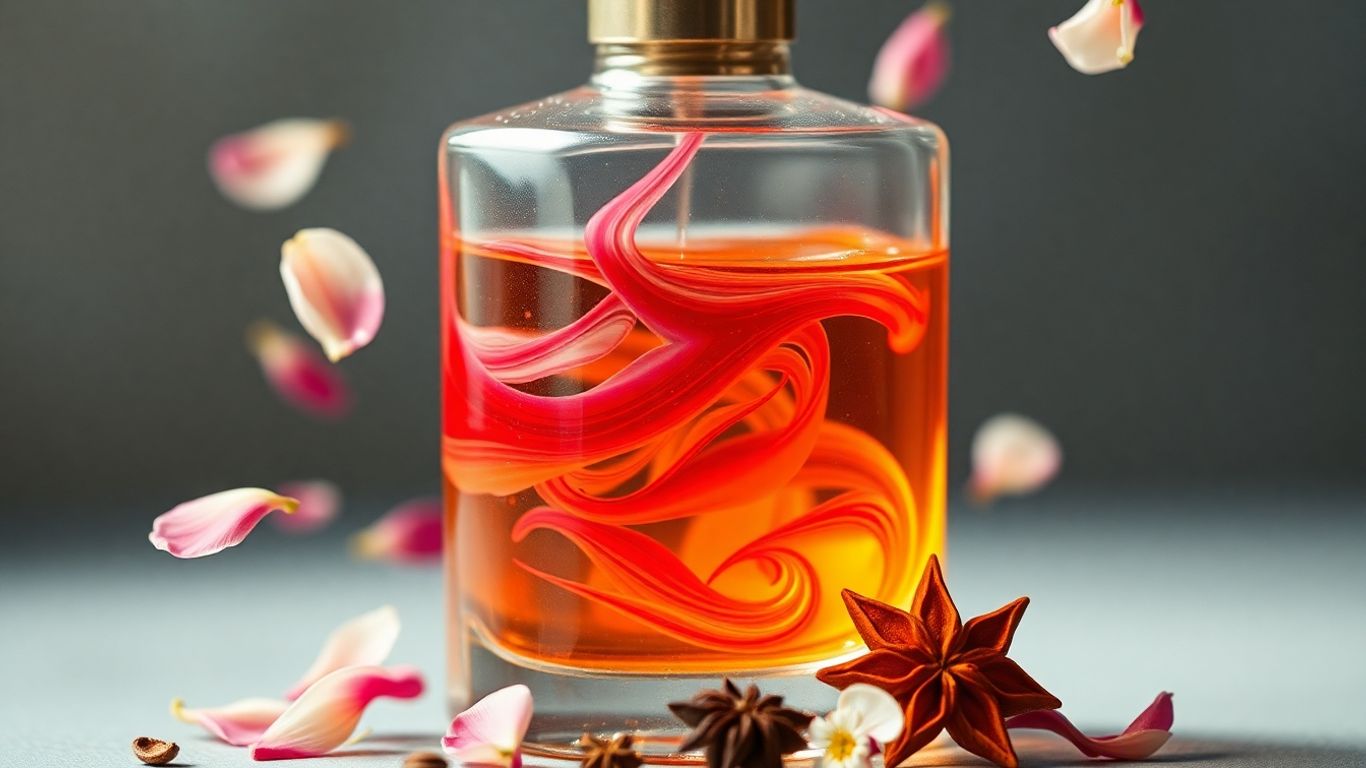
When we spray a perfume, it's not just a single smell that hits us. It's a whole composition, and the ingredients used play a massive part in how that scent changes over time. Think of it like a band – you've got the lead singer, the backing vocals, and the rhythm section, all working together. Some ingredients are like the rhythm section, providing a steady, long-lasting foundation. These are often woods and resins. They're heavier molecules, meaning they don't evaporate as quickly as lighter scents. This is why they're called fixatives. They help to anchor the more fleeting notes, stopping the whole fragrance from disappearing in a puff of smoke after just a few minutes. Woods like sandalwood and cedar, or resins like frankincense and myrrh, add depth and a certain richness that lingers. They're the reason why a perfume can still be detected hours after you've applied it.
How musks and amber contribute to persistence
Then we have musks and amber. These are another group of ingredients that are brilliant at making a scent stick around. Musks, which used to come from animals but are now mostly created synthetically, have a soft, powdery, and sometimes slightly animalic smell. They blend really well with our skin's natural oils, creating a scent that feels personal and lasts for ages. Amber, often a blend of labdanum, vanilla, and benzoin, is warm, sweet, and resinous. It's like a comforting hug for your nose. Both musks and amber are fantastic at smoothing out the transition between the initial burst of scent and the deeper notes that emerge later. They help to create a more rounded and enduring fragrance profile, making sure the perfume doesn't just vanish but evolves gracefully.
Why fresh scents may fade faster
On the flip side, you'll notice that perfumes that are heavy on fresh, zesty, or aquatic notes tend to fade more quickly. This is because these scents are usually made from lighter molecules. Think of citrus fruits like lemon and bergamot, or light florals like lily of the valley. These notes are wonderful for that initial 'wow' factor – they're bright, uplifting, and grab your attention straight away. However, their very nature means they evaporate much faster. They're the first to greet you, but also the first to say goodbye. It's not that they're 'bad' ingredients; they're just designed to be ephemeral, creating that initial sparkle before the more substantial notes take over. It’s a trade-off: you get that immediate burst of freshness, but you might need to reapply if you want that specific scent to last all day.
Maximising your perfume experience
So, we've talked about how perfumes change over time, but how can we actually make them last longer and smell their best on us? It's not just about the perfume itself; a few simple tricks can make a big difference.
Applying fragrance to pulse points
We all know about spraying perfume on our wrists and neck, right? These are called pulse points because the blood vessels are closer to the skin's surface, meaning they generate a bit more heat. This warmth helps to gently diffuse the scent throughout the day. Think of your wrists, the hollows of your elbows, behind your ears, and the base of your neck. Even the backs of your knees can be a good spot, especially if you're wearing a dress or skirt.
The importance of not rubbing wrists
This is a big one, and something many of us do without thinking. When you spray perfume on your wrists and then rub them together, you're actually breaking down those delicate scent molecules. It can make the fragrance fade faster and even alter how it smells. So, the best advice? Just let it dry naturally. If you want to spread the scent a bit, a gentle tap with the other wrist is much better than a vigorous rub.
Layering scents for extended wear
Want your fragrance to really stick around? Try layering. This means using a few different scented products from the same range, or at least ones that complement each other. Start with a matching shower gel, follow up with an unscented or matching body lotion (moisturised skin holds scent better, you see!), and then finish with your perfume. You can even use a matching deodorant. It builds up the fragrance, creating a more persistent and complex scent profile that lasts much longer than a single spray.
So, What's the Takeaway?
It turns out that the way our favourite scents change on our skin isn't some kind of magic trick. It's all about those different layers, the top, heart, and base notes, each playing their part as they evaporate at their own pace. Plus, our own body chemistry and even the weather can have a say in how a fragrance settles. So, the next time you notice your perfume smelling a bit different after a few hours, don't think it's gone – it's just evolving, telling a new part of its story. It’s pretty cool when you think about it, really.
Frequently Asked Questions
Why does my perfume smell different after a little while?
It's all down to how perfumes are made! They're like a layered cake of smells. First, you get the light, zesty top notes that vanish pretty quickly. Then, the heart notes, usually floral or spicy, start to show up and stick around for a bit longer. Finally, the base notes, like woods or musk, come out and are the ones that last for ages. So, as the top notes fade, the middle and base notes become more noticeable, making the whole scent change.
Do the first smells just disappear?
Not really! They just don't hang around as long. Think of them as the opening act for the main performance. They grab your attention initially, but the real show, the deeper and longer-lasting smells, comes from the heart and base notes that emerge as the perfume warms up on your skin.
Why can't I smell my perfume after a while, but others can?
This is a funny trick our noses play on us called 'olfactory fatigue'. Our sense of smell gets used to a scent after a while, so our brain stops noticing it, even though it's still there. It's like when you're in a room with a strong smell; after a bit, you don't notice it anymore, but someone new walking in definitely will!
Does my skin affect how perfume smells?
Absolutely! Our skin is unique. Things like how oily or dry it is, its temperature, and even its natural pH can change how perfume molecules react. This means the same perfume can smell slightly different on you compared to your friend.
How can we make our perfume last longer?
A few simple tricks help! Try spraying perfume on your pulse points – like your wrists, neck, or behind your ears – where your body heat helps the scent develop. Also, avoid rubbing your wrists together after spraying, as this can break down the scent molecules. Moisturising your skin before applying perfume can also make it stick around for longer.
Why do some perfumes smell stronger or last longer than others?
It often comes down to the ingredients and how concentrated they are. Perfumes with heavier base notes like woods, resins, or musks tend to last longer because these molecules are bigger and don't evaporate as quickly. Also, the more concentrated the perfume (like an Eau de Parfum or Parfum Extract), the stronger and longer-lasting it will usually be compared to a lighter Eau de Toilette.