Ever find yourself staring at your favourite perfume bottle, wondering, "How many sprays of perfume should I use?" We've all been there. It’s a bit of a mystery how many spritzes are just right – not too little, not too much. We're going to break down how to figure out the perfect amount for you, so you smell great without being overpowering.
Key Takeaways
- The number of sprays you need really depends on the perfume's strength (like EDT or EDP) and how strong the sprayer is. Some bottles just mist more than others.
- You can get a good idea of how many sprays are in your bottle by either counting every single spray until it's empty, or by trying to measure how much liquid comes out with each spray.
- Keep an eye on how long the scent lasts on you and how far it projects. This helps you know if you're using enough, or maybe too much.
- Think about where you're going. A few sprays might be fine for the office, but you might want more for a night out or if you're outside in the wind.
- Writing down when you start and finish a bottle, and how many sprays you used, can help you track your usage and figure out what works best for you long-term.
Understanding the factors influencing your perfume's spray count
Right, so before we even start thinking about how many sprays we should be using, we need to get our heads around what actually affects that number. It's not as simple as just saying 'two sprays is always enough'. We've found that a few things can really change how much juice comes out of that bottle and how strong it is when it hits your skin.
The impact of nozzle design and sprayer mechanism
Have you ever noticed how some perfume bottles spray a really fine, wide mist, while others give you more of a direct, concentrated spritz? That's down to the nozzle design and the sprayer mechanism itself. A wider mist means more surface area is covered, but it might also mean less liquid is dispensed per spray compared to a more focused stream. The quality of the sprayer also plays a part; a well-made one will give you a consistent amount of fragrance each time you press it. A cheap or worn-out one might be a bit hit-and-miss, which can mess with your count.
How perfume concentration affects application
This is a big one, honestly. The concentration of fragrance oil in your bottle makes a huge difference to how potent the scent is and, therefore, how much you need to apply. We've broken it down a bit:
- Eau de Cologne (EDC): Usually around 2-4% fragrance oil. These are pretty light and refreshing, so you might find yourself reaching for more sprays.
- Eau de Toilette (EDT): This typically has 5-15% fragrance oil. It's a really common concentration, good for everyday wear without being overpowering.
- Eau de Parfum (EDP): With 15-20% fragrance oil, EDPs are stronger and tend to last longer. You'll probably need fewer sprays here.
- Extrait de Parfum (Pure Perfume): This is the heavy hitter, often 20-40% or even more fragrance oil. It's super concentrated, so you'll only need a tiny amount, maybe just one or two sprays.
Your personal spray technique matters
Honestly, how you press that little nozzle can make a difference. Are you giving it a full, firm press, or just a gentle tap? A full press usually dispenses more liquid than a half-hearted one. If you're trying to keep track of your sprays, being consistent with your technique is key. We've learned that even small variations in how we spray can add up over time.
It's easy to think of perfume application as just a quick spritz, but the physical act of spraying, the concentration of the liquid, and the design of the bottle's sprayer all combine to determine how much fragrance actually ends up on your skin. Paying attention to these details helps us use our favourite scents more effectively.
Determining how many sprays of perfume you should use
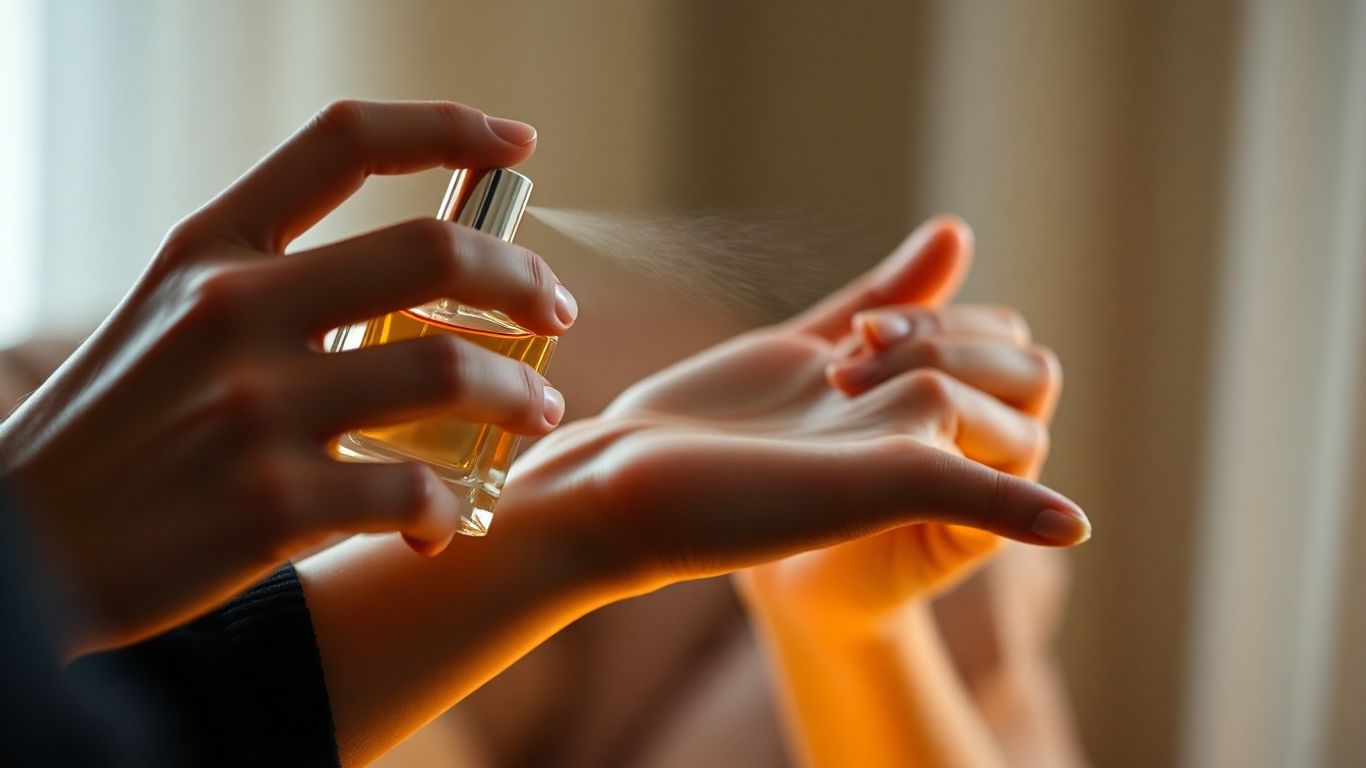
So, you've got your lovely new 30ml bottle of fragrance, and you're wondering just how many spritzes you'll get out of it. It's a fair question, and honestly, there isn't one single answer that fits everyone. We've got a couple of ways we can figure this out, depending on how much effort you want to put in.
The full bottle depletion method for accuracy
This is the most accurate way to know exactly how many sprays your specific bottle will give you. It's a bit of a marathon, not a sprint, but the results are definitive.
- Start fresh: Grab a brand new 30ml bottle. You need to start from the very beginning for this to work.
- Keep a tally: Every single time you spray the perfume, make a note. A simple tick on a piece of paper, a note on your phone, whatever works. Be super diligent – don't miss a single one, even if you're just doing a quick top-up.
- Be consistent: Try to spray the same way each time. If you usually do two full pumps on your neck, stick to that. This helps keep the volume per spray fairly consistent.
- Spray until it's empty: Keep going until the bottle literally won't spray any more liquid. It might sputter a bit at the end, but count those too if you can.
- Count it up: The final number on your tally is the total number of sprays you got from that 30ml bottle. This is your personal, accurate number.
Estimating spray count through volume measurement
If you don't have the patience for the full depletion method, or you just want a ballpark figure, this is a quicker option. It's not as precise, but it gives you a good idea.
- Get a small vial: You'll need an empty 1ml sample vial. If you don't have one, a precise pipette will do.
- Spray into the vial: Carefully spray your 30ml perfume into the 1ml vial. Count each spray as you do it. Keep going until the 1ml vial is full.
- Calculate sprays per ml: Let's say it took you 12 sprays to fill the 1ml vial. That means you get roughly 12 sprays per millilitre.
- Extrapolate: Since your bottle is 30ml, multiply your sprays per ml by 30. So, 12 sprays/ml x 30ml = 360 sprays. This is your estimated total for the bottle.
Remember, this method relies on you being consistent with your spraying and accurately measuring the 1ml. It's an estimate, so don't treat it as gospel.
Choosing the right method for your needs
Honestly, the best method depends on you. If you're a real data person and want to know exactly how many sprays you get, go for the full bottle depletion. It’s the most reliable. But if you just want a general idea so you can budget your perfume use or compare it to other bottles, the volume estimation method is perfectly fine. It’s all about what works for your personal fragrance journey.
Analysing your fragrance usage and longevity
Right, so we've figured out roughly how many sprays we're getting out of our bottles. Now, let's get a bit more granular and actually look at how we're using them and how long they stick around. It’s not just about the number of spritzes, is it? It’s about what those spritzes actually do.
Tracking daily application and scent duration
This is where we get a bit detective-like. For a week, or maybe even a month, just jot down how many sprays you're doing each day. Don't overthink it, just be honest. Then, make a note of when you first put it on and then, crucially, when you can still catch a whiff of it. Is it four hours? Eight? Maybe even longer? We're looking for patterns here. Some days you might go for three sprays, others just one, and that's perfectly fine. The goal is to see how your application changes and how that affects how long the scent actually lasts on you.
Assessing projection and sillage
This is a bit more subjective, but still important. Projection is basically how far the scent travels from your skin. Is it a subtle whisper that only you (and maybe someone very close) can detect, or does it create a noticeable aura around you? Sillage is similar, often referring to the 'trail' the scent leaves behind as you move. You can gauge this by asking a trusted friend or colleague for their honest opinion, or by paying attention to whether people comment on your fragrance. It’s about understanding if your chosen number of sprays is creating the scent bubble you want.
Correlating sprays to performance and diminishing returns
This is where we connect the dots. If you did two sprays yesterday and it lasted six hours, but today you did five sprays and it only lasted seven, you might be hitting a point of diminishing returns. It’s like adding too much sugar to your tea – at some point, it just doesn't make it any sweeter, it just makes it… well, too sweet. We want to find that sweet spot where you get good longevity and projection without drowning yourself or wasting perfume. It’s a balancing act, really.
We're not aiming for a precise science here, more of a practical guide. If you're getting a decent scent for a good chunk of the day with a few sprays, that's probably your sweet spot. Don't feel pressured to keep adding more if the performance isn't noticeably improving.
Here’s a little table to help you visualise:
| Day | Sprays Applied | Start Time | Last Noticed (Approx.) | Projection/Sillage Notes |
|---|---|---|---|---|
| Mon | 3 | 7:30 AM | 3:00 PM | Subtle, close to skin |
| Tue | 4 | 7:45 AM | 4:30 PM | Noticeable aura, friend commented |
| Wed | 2 | 8:00 AM | 1:00 PM | Very faint by midday |
Tailoring your application to the occasion
Right, so we've talked about how many sprays you can get, but now let's get real about how many you should be using depending on where you're off to. It's not a one-size-fits-all situation, is it? What works for a cosy night in is probably going to be a bit much for a stuffy office.
Adjusting for office environments
When we're heading into the office, the main thing to remember is that you're sharing a space with other people. Some folks are sensitive to smells, and you don't want your perfume to be the reason someone's got a headache. Less is definitely more here. Think subtle, a gentle whisper of scent rather than a shout. We're aiming for something that only someone standing quite close might notice, if anything.
- One to two sprays is usually plenty. Maybe one on the neck and one on the wrist, or just one discreet spray on your décolletage. The goal is a personal aura, not a scent cloud.
- Consider the concentration. If you're wearing an Eau de Parfum (EDP), you might only need one spray, whereas an Eau de Toilette (EDT) might take two.
- Think about the time of day. A lighter scent might be better for the morning, and if you're going straight from work to an evening event, you can always add a spray or two later.
The key in an office is to be considerate. You want to smell pleasant, not overpowering. It's about creating a subtle, personal signature that doesn't intrude on others' space.
Considering outdoor and climate influences
Outdoors, things get a bit more complicated. The open air means your scent is going to dissipate much faster than it would indoors. This is where you might need to be a bit more generous, but also mindful of the weather.
- Warm, humid weather: This is tricky. Heat makes scents project more, so you might think you need fewer sprays. However, humidity can also make a fragrance feel cloying or heavy. We'd suggest sticking to your usual amount, maybe one extra spray if you're out for a long time, but focus on lighter, fresher scents that don't feel too dense.
- Cool or dry weather: In cooler temperatures, scents tend to be more subdued. This is where you can afford to be a bit more liberal. Two to four sprays might be appropriate, especially if you're wearing a heavier, warmer fragrance. The cold air won't carry the scent as far, so you need a bit more oomph.
- Windy conditions: Wind is your scent's enemy. It'll just blow it away. If it's breezy, you might need to reapply or use a couple more sprays than you normally would, focusing on pulse points that are a bit more protected.
Optimising for evening events
Evening events are generally where you can let your fragrance shine a bit more. Whether it's a dinner date, a party, or a night out, the atmosphere is usually more relaxed, and scents can be richer and more complex.
- Two to four sprays is a good starting point. This allows for a noticeable presence without being overwhelming in a potentially crowded indoor space.
- This is the time to bring out those deeper, more opulent fragrances like rich orientals, gourmands, or heavy florals. They often have better longevity and a more pronounced sillage, so you don't need to go overboard.
- Consider applying to pulse points like your wrists, neck, and even behind your knees. The warmth from these areas helps to diffuse the scent throughout the evening.
- If you're going to be dancing or in a very warm environment, you might want to stick to three sprays to avoid feeling too heavy. It's all about balance.
Documenting your perfume's performance
Right then, once we've got a handle on how many sprays we're actually using, the next logical step is to keep a record of it all. It might sound a bit much, but honestly, it’s the best way to get a real feel for how long a bottle will last and how well your chosen scent performs. We're not talking about becoming a perfume accountant here, just keeping a few simple notes.
Recording start and finish dates
This is pretty straightforward. When you crack open a new bottle, jot down the date. Same goes for when you finally use it up. This gives us a clear timeframe for how long that particular bottle was in rotation. It’s a simple step, but it’s the foundation for everything else.
Calculating average sprays per day
Once we have our start and end dates, and we've hopefully been counting those sprays (remember the methods we talked about?), we can do some maths. If you used, say, 300 sprays in total over 60 days, that’s an average of 5 sprays a day. This number is super useful because it helps us see if our daily application is consistent or if we’re going a bit wild on some days and barely using any on others. It’s a good way to spot patterns in our own usage.
Summarising longevity and projection notes
This is where we get a bit more subjective, but still important. Alongside the numbers, we should be making notes about how long the perfume actually lasts on us and how far it projects. Did it disappear after two hours, or could we still catch whiffs of it after eight? Did it create a nice scent bubble, or was it more of a skin scent that only we could detect? Jotting these things down, perhaps with a little rating system or just a few words, helps us understand the performance of the fragrance itself, not just how much we're spraying.
Keeping these records isn't just about numbers; it's about building a personal library of how different scents behave on your skin and how your own habits affect their lifespan. It’s about getting the most out of your collection without feeling like you’re constantly reapplying or, conversely, drowning yourself in fragrance.
Here’s a little table we’ve found helpful for keeping track:
| Perfume Name | Concentration | Start Date | Finish Date | Total Sprays | Days Used | Avg. Sprays/Day | Longevity (Hours) | Projection Notes |
|---|---|---|---|---|---|---|---|---|
| "Midnight Bloom" | EDP | 2025-01-15 | 2025-03-20 | 450 | 65 | 6.9 | 6-8 | Moderate, noticeable |
| "Citrus Zest" | EDT | 2025-03-21 | 2025-04-10 | 380 | 21 | 18.1 | 3-4 | Close to skin |
| "Velvet Musk" | Extrait | 2025-04-11 | - | 120 | - | - | 10+ | Subtle, intimate |
Tips for consistent and effective perfume application
Right then, let's talk about making sure our favourite scents stick around and smell just right, without going overboard. It’s all about being a bit methodical, really.
The importance of consistency in your routine
We all have our morning routines, don't we? Adding perfume should be a natural part of that. Try to apply your fragrance in the same place and at the same time each day. This helps you get a feel for how much you're actually using. If you're just spraying randomly whenever you remember, it's easy to lose track. Think of it like brushing your teeth; you just do it without really thinking, and it becomes second nature. The same goes for your perfume. A consistent application means you're more likely to use the same number of sprays each time, which makes tracking your usage much simpler. Plus, applying to clean, moisturised skin right after a shower often helps the scent last longer, so that's a good habit to build in.
Proper storage to maintain fragrance integrity
Where you keep your perfume matters more than you might think. We’ve all seen those fancy perfume bottles displayed on dressing tables, catching the light. Turns out, that’s not ideal for the juice inside. Light, heat, and even drastic temperature changes can break down the fragrance molecules over time. This means your beloved scent might not smell as strong or last as long as it used to, even if you’re using the same number of sprays. It’s best to store your bottles in a cool, dark place, like a cupboard or a drawer. Keep them away from bathroom windows or direct sunlight. This helps preserve the fragrance's original composition and ensures that every spray you do counts for its intended effect.
Making informed decisions about your scent
Once you've got a handle on how many sprays you're using and how you're storing your perfume, you can start making smarter choices. It’s not just about how many sprays are in the bottle, but how those sprays perform for you. For instance, if you've noticed that after 4 sprays, the scent is already quite strong and lasts all day, then maybe 6 sprays is just overkill. You might be wasting perfume and potentially overwhelming those around you. On the flip side, if you're only doing 1 or 2 sprays and can barely smell it after an hour, it might be time to adjust your technique or consider if the perfume concentration is right for you. Keeping a little log, even just a mental note, of how long a scent lasts after a certain number of sprays can be really helpful. It stops you from just blindly spraying more and more.
Here’s a quick way to think about it:
- EDC (Eau de Cologne): Generally lighter, might need more sprays (e.g., 4-6).
- EDT (Eau de Toilette): A good middle ground, often 2-4 sprays work well.
- EDP (Eau de Parfum): Stronger, usually 1-3 sprays is plenty.
- Extrait de Parfum: Very potent, often just 1-2 sprays, or even a dab.
Remember, these are just starting points. Your skin chemistry, the specific notes in the perfume, and the environment all play a part. What works for one person might not work for another, so don't be afraid to experiment a little within these guidelines.
So, How Many Sprays Are We Talking?
Right then, we've gone through all the ins and outs of perfume sprays, and honestly, it's not as simple as just picking a number. We've seen how the type of scent, the bottle itself, and even how we spray it all make a difference. It really comes down to knowing your own perfume and what works for you. Don't be afraid to experiment a bit, maybe start with a couple of sprays and see how it goes. You'll figure out your sweet spot soon enough, and that's the best way to enjoy your favourite scents without going overboard. Happy spritzing!
Frequently Asked Questions
How do I know if I'm using too much perfume?
Well, if people start coughing when you walk by or you can still smell yourself strongly after eight hours, it might be a sign you've gone a bit overboard! It's all about finding that sweet spot where you can enjoy your scent without overwhelming others.
Does the type of perfume (EDT, EDP) really change how many sprays I need?
Absolutely! Think of it like this: Eau de Parfum (EDP) is like a strong coffee, packed with flavour, so you need less. Eau de Toilette (EDT) is more like a regular coffee, a bit lighter, so you might need a couple more sprays to get the same effect. The stronger the perfume, the fewer sprays we'll likely need.
What's the best way to count sprays from a bottle?
The most accurate way is the 'full bottle depletion' method. Basically, you start with a new bottle and keep a tally every single time you spray it until it's empty. It takes ages, but you'll know exactly how many sprays you get! A quicker, but less exact, way is to spray into a tiny vial and work it out from there.
How can I make my perfume last longer without reapplying?
Applying perfume to moisturised skin helps it stick around longer. Also, spraying on pulse points like your wrists and neck is a classic for a reason – they generate heat, which helps the scent diffuse. And don't rub your wrists together after spraying; it crushes the scent molecules!
Should I use the same number of sprays everywhere I go?
Nah, definitely not! We need to be a bit sneaky with our application sometimes. For the office, fewer sprays are usually better so we don't annoy colleagues. For a night out, we might go for a couple more to make a statement. And if it's super hot or windy outside, the scent might disappear faster, so we might need to adjust.
What if my perfume doesn't seem to last very long, even with a few sprays?
Sometimes, a fragrance just isn't designed to be a long-lasting powerhouse. It could be the concentration, or maybe it's a lighter scent. We should also check how we're storing it – keeping it out of direct sun and heat helps keep it fresh. If it's still not performing, it might just be the nature of that particular perfume.