We've all got our favourite scents, right? But have you ever stopped to wonder what actually goes into making them smell so good, and why some last longer than others? We've been looking into the world of perfumes, specifically the difference between those lovely oil-based ones and the more common alcohol-based sprays. It turns out there's quite a bit to unpack, from how they're made to how they feel on your skin.
Key Takeaways
- Perfumes use solvents to dissolve the scent ingredients. Alcohol is a common solvent that helps the scent spread and last, while oil-based perfumes use carrier oils.
- Essential oils come from plants and give perfumes their natural character, whereas synthetic ingredients are created in labs and can mimic natural scents or create entirely new ones.
- Alcohol helps a fragrance evaporate and project, meaning you smell it more strongly when you first apply it. Oil-based perfumes tend to sit closer to the skin and release their scent more slowly.
- The main difference between oil perfumes and alcohol-based perfumes lies in their base. Oil perfumes use a carrier oil, making them feel richer and often last longer on the skin, while alcohol-based perfumes use alcohol, which helps the scent diffuse more widely.
- Perfumers create scents by balancing top, middle, and base notes. These notes unfold over time, with top notes being the first impression, middle notes forming the heart of the fragrance, and base notes providing the lasting depth.
Understanding the fundamental components of fragrance
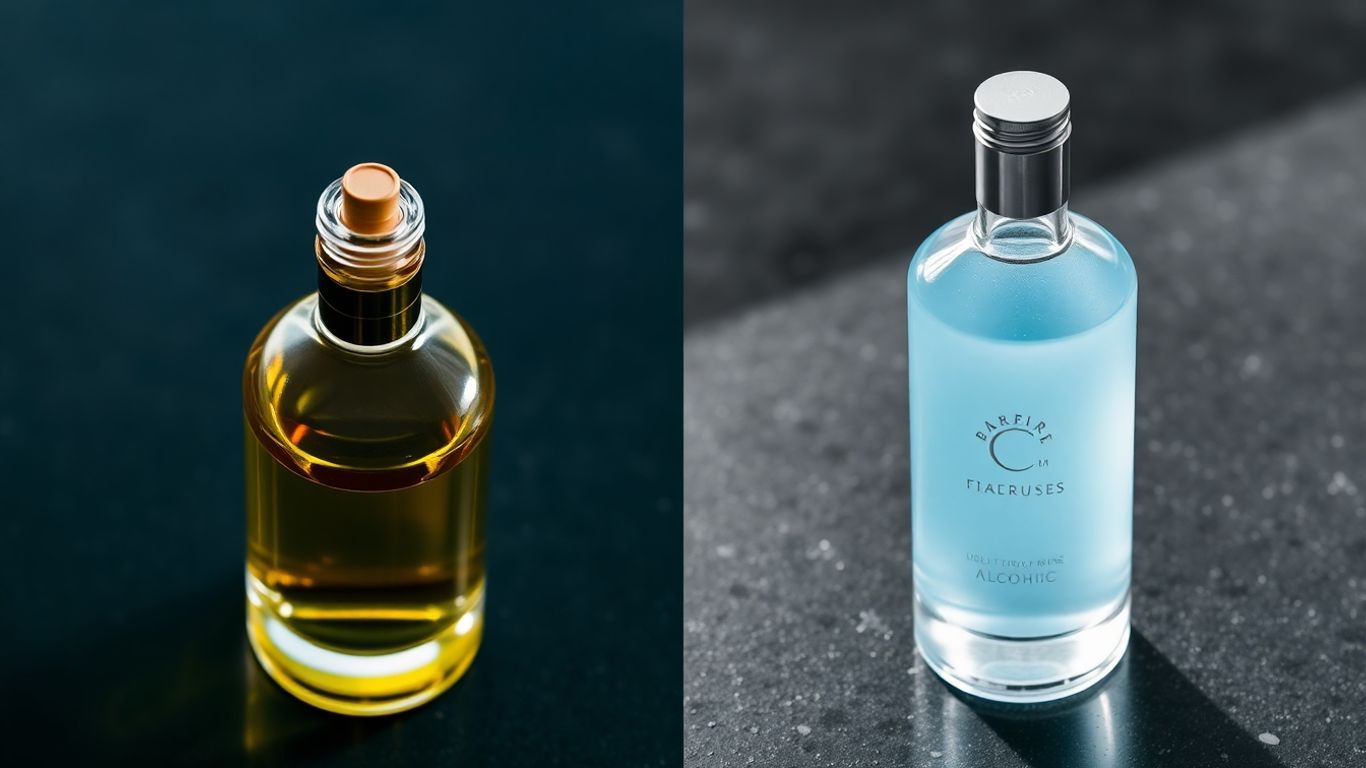
Right then, let's get down to the nitty-gritty of what actually makes a perfume smell the way it does. It's not just magic, you know, there are actual building blocks involved. We're talking about the stuff that dissolves the fragrant bits and helps them get into the air, and then the fragrant bits themselves. It's a bit like baking, really – you need your flour and your eggs, but then you've got your flavourings like vanilla or chocolate.
The role of solvents in perfume
So, first up, we've got the solvents. Think of these as the delivery system for the scent. They're there to dissolve all the lovely fragrant oils and make sure that when you spray or dab your perfume, it goes on evenly. The clever thing about most solvents is that they evaporate pretty quickly, leaving the scent behind without any sticky residue. The most common one you'll find is alcohol, which we'll chat more about later, but sometimes you'll see things like dipropylene glycol too.
Essential oils and their contribution
Now, onto the good stuff – the actual scent! Essential oils are basically the concentrated essence of plants. We're talking about things like lavender for a calming vibe, jasmine for something a bit more floral and romantic, or sandalwood for that warm, woody feel. Each one brings its own unique character to the party, and perfumers use them to create all sorts of different moods and feelings in a fragrance. They're what give a perfume its soul, really.
Synthetic versus natural fragrance ingredients
It's not all just flowers and trees, though. Nowadays, a lot of perfumes use synthetic ingredients too. These are basically man-made molecules that can either copy a natural scent or create something entirely new. They're often used because they can be more consistent, sometimes cheaper, and they give perfumers a wider palette to play with. Think of things like aldehydes, which can add a really bright, sparkling quality, or synthetic musks that give a fragrance a lovely, soft base. It's a bit of a mix-and-match situation to get the perfect scent profile.
Here's a quick rundown of what you might find:
- Natural Ingredients: Derived directly from plants, animals, or minerals. They can be complex but might vary in scent and cost.
- Synthetic Ingredients: Lab-created molecules that mimic natural scents or create new ones. They offer consistency and creative possibilities.
The world of fragrance is built on a foundation of carefully chosen components. Understanding these basic elements helps us appreciate the complexity and artistry that goes into creating the scents we love.
The impact of alcohol in fragrance formulation
When we talk about perfumes, alcohol is often the first thing that comes to mind as the main liquid base. And for good reason! It's not just there to make the liquid sprayable; it plays a pretty big role in how a fragrance behaves.
Alcohol as a key player in scent diffusion
Think of alcohol as the carrier that helps your scent travel. When you spray a fragrance, the alcohol evaporates quickly, taking the scent molecules with it into the air. This is what gives you that initial burst of fragrance you notice right after applying it. Without alcohol, the scent would just sit on your skin, not really projecting outwards.
How alcohol affects fragrance longevity
This is where things get interesting. While alcohol helps the scent diffuse, it also evaporates quite fast. This means that the initial strong scent might fade quicker than you'd expect. The concentration of alcohol and the other ingredients in the perfume really affect how long the scent lasts. Higher concentrations of fragrance oils mixed with alcohol can sometimes lead to a longer-lasting scent, but it's a balancing act.
The sensory experience enhanced by alcohol
Beyond just making the scent spread, alcohol also contributes to the overall feel of a fragrance. That slight cooling sensation you get when you spray perfume? That's the alcohol evaporating. It can also help to 'lift' the scent, making the different notes – the top, middle, and base – more distinct and easier to appreciate as the fragrance develops on your skin over time.
Exploring oil-based perfumes
Right then, let's chat about oil-based perfumes. These are a bit different from the ones you might be used to, and honestly, they offer a really unique experience. Instead of using alcohol as the main carrier, these fragrances rely on oils. Think of it like this: alcohol evaporates quickly, carrying the scent into the air. Oils, on the other hand, tend to sit closer to the skin and release their fragrance more slowly.
The nature of perfume oils
So, what exactly are these perfume oils? They're essentially concentrated fragrance compounds mixed with a carrier oil. This carrier oil is usually something light and odourless, like fractionated coconut oil, jojoba oil, or sweet almond oil. The magic happens because these oils don't evaporate as fast as alcohol. This means the scent profile of an oil-based perfume can feel more intimate and personal. It's less about projecting a scent cloud and more about a subtle, lingering aura that only those close to you might notice.
Concentration levels in oil-based scents
When we talk about concentration, oil-based perfumes often pack a punch. They typically have a higher percentage of fragrance oils compared to alcohol-based sprays. You'll often see them labelled as 'perfume oil' or 'attar', and they can range from around 15% to a whopping 40% or even more fragrance concentrate. This high concentration is a big reason why they tend to last longer on the skin. It's not uncommon for a good oil-based perfume to stay with you for a solid 8-12 hours, sometimes even longer, depending on the specific ingredients used.
Here's a rough idea of what you might find:
| Type of Fragrance | Typical Oil Concentration |
|---|---|
| Alcohol-Based Eau de Toilette | 5-15% |
| Alcohol-Based Eau de Parfum | 15-20% |
| Oil-Based Perfume | 15-40%+ |
The benefits of oil-based fragrances
There are quite a few reasons why people are drawn to oil-based perfumes. For starters, they're often a great choice for people with sensitive skin. Since they don't contain alcohol, they're less likely to cause dryness or irritation. Plus, as we've touched on, the longevity is usually pretty impressive. You apply it in the morning, and it's still there, subtly wafting, by the evening. It’s a more direct, skin-to-scent experience. You also get a really true-to-life rendition of the fragrance notes because there's no alcohol to alter or dilute them. It's just pure scent, delivered in a gentle, oily embrace.
We've found that the way oil-based perfumes interact with body chemistry can be quite fascinating. Because they meld with your skin's natural oils rather than just sitting on top, the scent can evolve uniquely throughout the day, becoming a truly personal signature. It's less about the fragrance dictating a scent and more about it becoming a part of you.
Comparing scent profiles and longevity
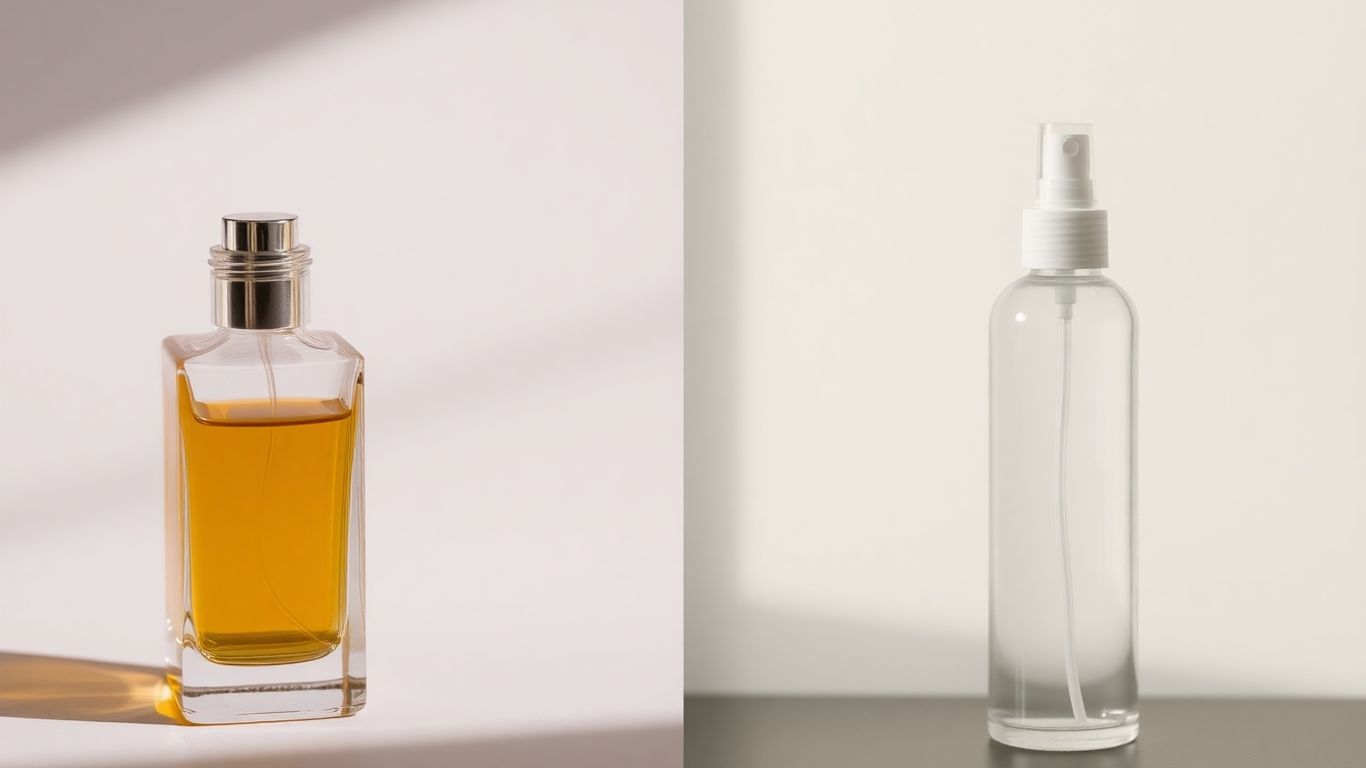
What is the difference between oil perfumes and alcohol-based perfumes?
So, we've talked about what goes into these scents, but how do they actually smell and how long do they stick around? It's a bit like comparing a watercolour painting to an oil painting, really. Alcohol-based perfumes tend to give you that initial burst of scent, that bright, airy opening. This is because the alcohol evaporates quickly, carrying the fragrance molecules with it into the air. It's a bit more of an immediate, sometimes even sharp, introduction to the fragrance.
Oil-based perfumes, on the other hand, are more subtle when you first apply them. They don't have that alcohol 'lift', so the scent develops more slowly on your skin. It's a more intimate experience, closer to you, and it tends to feel richer and smoother from the get-go. The main difference really comes down to how the scent is released and perceived.
How base, middle, and top notes differ
Every good fragrance is built on a structure of notes, kind of like musical notes creating a melody. We usually break these down into three stages:
- Top Notes: These are the first things you smell, the initial impression. They're usually light, fresh, and zesty, like citrus or light florals. They disappear the quickest, often within 15-30 minutes.
- Middle Notes (or Heart Notes): These come out once the top notes have faded. They form the core of the fragrance, the main character. Think heavier florals, spices, or fruits. These stick around for a few hours.
- Base Notes: These are the deep, rich scents that linger the longest. They provide the foundation and depth, like woods, resins, vanilla, or musk. They can last for many hours, sometimes even a whole day.
In alcohol-based perfumes, the alcohol helps to project these notes, especially the top ones, outwards. In oil-based perfumes, the notes tend to blend more seamlessly and develop more gradually on the skin, with the base notes often becoming more prominent over time due to the lack of alcohol's rapid evaporation.
The lasting power of different fragrance types
When we talk about how long a perfume lasts, we're talking about its longevity. Generally speaking, oil-based perfumes tend to have better longevity than alcohol-based ones, especially when comparing similar concentrations. This is because the oil acts as a fixative, meaning it helps to slow down the evaporation of the fragrance molecules. Alcohol, by its nature, evaporates quickly, taking some of the scent with it.
However, it's not quite that simple. The concentration of the fragrance oils is a huge factor. A highly concentrated alcohol-based Eau de Parfum will likely last longer than a very diluted oil-based perfume. It's a bit of a balancing act between the carrier (alcohol or oil) and the amount of actual fragrance in there.
Here's a rough idea:
| Fragrance Type | Carrier | Typical Concentration | Estimated Longevity |
|---|---|---|---|
| Eau de Cologne (EDC) | Alcohol | 2-5% | 2-3 hours |
| Eau de Toilette (EDT) | Alcohol | 5-15% | 3-5 hours |
| Eau de Parfum (EDP) | Alcohol | 15-20% | 5-8 hours |
| Parfum/Extrait | Alcohol or Oil | 20-40%+ | 8+ hours |
So, while oils often have an edge, a well-formulated alcohol-based perfume can still be a real powerhouse when it comes to lasting power.
The art and science of perfume creation
The perfumer's role in scent design
Creating a perfume is a bit like being a composer, but instead of notes, we're working with smells. It's a fascinating mix of creativity and technical know-how. We spend our days sniffing all sorts of raw materials, from flowers and fruits to woods and spices, and even some things that smell a bit abstract, like 'clean laundry' or 'old books'. The goal is to blend these into something that tells a story or evokes a feeling. It's not just about making something smell nice; it's about crafting an experience.
Crafting unique olfactory experiences
We think about how a scent will make someone feel. Will it be comforting and warm, like a hug? Or maybe fresh and invigorating, like a brisk walk in the morning? We play around with different combinations, trying to find that perfect balance. Sometimes, a tiny tweak can completely change the mood of a fragrance. It's a process of trial and error, but when you get it right, it's incredibly rewarding.
The balance of notes in a fragrance
Perfumes are often described using a structure of top, middle, and base notes. Think of it like a performance:
- Top notes: These are the first things you smell, usually light and fresh, like citrus or herbs. They disappear fairly quickly, maybe in 15-30 minutes.
- Middle notes (or heart notes): These come out after the top notes fade. They're the main body of the perfume, often floral or spicy, and they can last for a few hours.
- Base notes: These are the deep, rich scents that linger the longest, like woods, vanilla, or musk. They provide the foundation and can stay on your skin for many hours, sometimes even overnight.
Getting this pyramid right is key. We want a smooth transition between the stages, so it doesn't feel jarring. It's all about creating a scent that evolves beautifully over time.
The magic happens when we can take individual ingredients, each with its own character, and weave them together so they create something entirely new and more beautiful than the sum of their parts. It's a delicate dance between nature and imagination.
So, What's the Verdict?
Right then, we've had a good look at the differences between oil-based perfumes and those made with alcohol. It's pretty clear they're not quite the same, are they? Oil perfumes tend to stick around longer on your skin, giving you that scent all day, and they often feel a bit richer. Alcohol-based ones, though, they give you that initial burst and can feel lighter, which some people really like. Neither is really 'better' than the other, it just comes down to what you're after. Do you want something that lasts and lasts, or something that's a bit more fleeting and fresh? Think about your skin type too, and what feels good to you. We reckon it’s worth trying both to see which one fits your vibe best.
Frequently Asked Questions
What's the main difference between oil perfumes and alcohol-based ones?
Basically, it's what they're mixed with! Alcohol-based perfumes use alcohol to help the scent spread out and evaporate, giving you that initial burst. Oil perfumes, on the other hand, use oils as the base, which means they tend to stick closer to your skin and last longer without that initial alcohol 'hit'.
Do oil perfumes smell stronger?
Not necessarily stronger, but they can feel more intense because they sit closer to your skin and don't have the alcohol to 'lift' the scent initially. The concentration of the actual fragrance oils is usually higher in oil-based perfumes, so you get a richer, more direct smell.
How long do oil perfumes usually last compared to alcohol ones?
We find that oil-based perfumes generally stick around for a good while longer. Since the oil doesn't evaporate as quickly as alcohol, the scent stays with you for hours. Alcohol-based ones might give you a bigger scent cloud at first, but they tend to fade faster.
Can I wear oil perfumes if I have sensitive skin?
Often, yes! Because oil perfumes don't contain alcohol, which can sometimes be drying or irritating, they can be a gentler option for folks with sensitive skin. Plus, they usually have fewer ingredients overall.
What are 'top', 'middle', and 'base' notes in a perfume?
Think of it like a story. Top notes are the first things you smell – they're light and fresh, and they disappear quickly. Middle notes are the heart of the perfume, coming out after the top notes fade. Base notes are the deep, lasting scents that anchor the whole fragrance and stick around the longest.
Is it true that alcohol helps a perfume diffuse better?
Absolutely! Alcohol is a fantastic carrier. When you spray an alcohol-based perfume, the alcohol helps to atomise the fragrance oils, allowing them to travel through the air and create that scent bubble around you. It's why you get that immediate 'whoosh' of scent.