Trying to figure out how do I choose the right perfume for me? can feel like a massive task. We all want that one scent that just feels like *us*, you know? The one that makes us feel good, confident, and like we’ve got our whole life together. But with so many bottles on the shelves, where do we even start? We’re going to break down how we can all find that perfect fragrance, without getting too overwhelmed.
Key Takeaways
- We need to get to know what kind of smells we actually like. This means looking at perfume families and the specific notes, like florals or spices, and figuring out which ones make us happy and which ones we really don't enjoy.
- Our skin is unique! The way a perfume smells on someone else might be totally different on us because of our skin's natural chemistry, like its pH and how much moisture it has.
- You absolutely have to try before you buy. Just smelling a perfume from the bottle or a paper strip isn't enough. We need to put it on our skin and give it time to change and settle.
- Don't be afraid to look beyond the big brands. There are lots of smaller, independent perfume makers out there with really interesting and unique scents that might be more our style.
- Sometimes, asking for help is the best way forward. Talking to people who know about perfume, whether it's in a shop or in online groups, can give us great ideas and recommendations.
Understanding your personal scent preferences
Before we even think about spraying anything, we need to get to know ourselves a bit better. It sounds a bit deep, doesn't it? But honestly, picking a perfume is a lot like picking an outfit – it should feel right for you, for the occasion, and for your mood. We all have scents we naturally gravitate towards, even if we don't know the technical terms for them yet.
Researching perfume families and notes
Think of perfume families like different genres of music. You might love pop, but hate heavy metal, or vice versa. Perfumes are much the same. There are broad categories, like florals, orientals (which are often warm, spicy, and rich), fresh (think citrus and aquatic notes), and woody (earthy and grounding scents). Within these families are specific notes – the individual ingredients that make up the scent. These can range from common flowers like rose and jasmine to fruits, spices, woods, and even more abstract concepts like 'clean laundry' or 'sea breeze'. Learning these families and notes is like getting a basic vocabulary for talking about smells.
Identifying notes you love and dislike
This is where we start to get really personal. Have you ever smelled something and immediately thought, 'Ugh, no'? Or perhaps, 'Oh, that's lovely!'? Pay attention to those gut reactions. Maybe you adore the smell of vanilla, but can't stand anything too powdery. Or perhaps you love the crispness of lemon but dislike anything that smells too 'green'. Keep a mental (or even physical) note of these preferences. It's not about what's popular; it's about what makes you happy when you smell it.
- Floral: Do you enjoy the scent of roses, lilies, or violets?
- Fruity: Are you drawn to notes like berries, apple, or peach?
- Spicy/Oriental: Do warm notes like cinnamon, vanilla, or amber appeal to you?
- Fresh/Aquatic: Do you prefer scents that remind you of the sea, citrus, or clean air?
Exploring scent categories that appeal to you
Once you have a rough idea of the notes you like, you can start exploring the broader categories. If you love the smell of vanilla and cinnamon, you'll probably find yourself drawn to oriental or gourmand (food-like) scents. If you enjoy the smell of freshly cut grass and citrus fruits, fresh or green fragrances might be your thing. Don't be afraid to try things outside your comfort zone, but start with what you think you might enjoy. It's a journey of discovery, and the best place to start is with what already feels familiar and pleasant to your nose.
Your personal scent preferences are the foundation of finding a perfume you'll truly love. It's about tuning into your own senses and understanding what brings you joy, rather than just following trends.
The science of scent on your skin
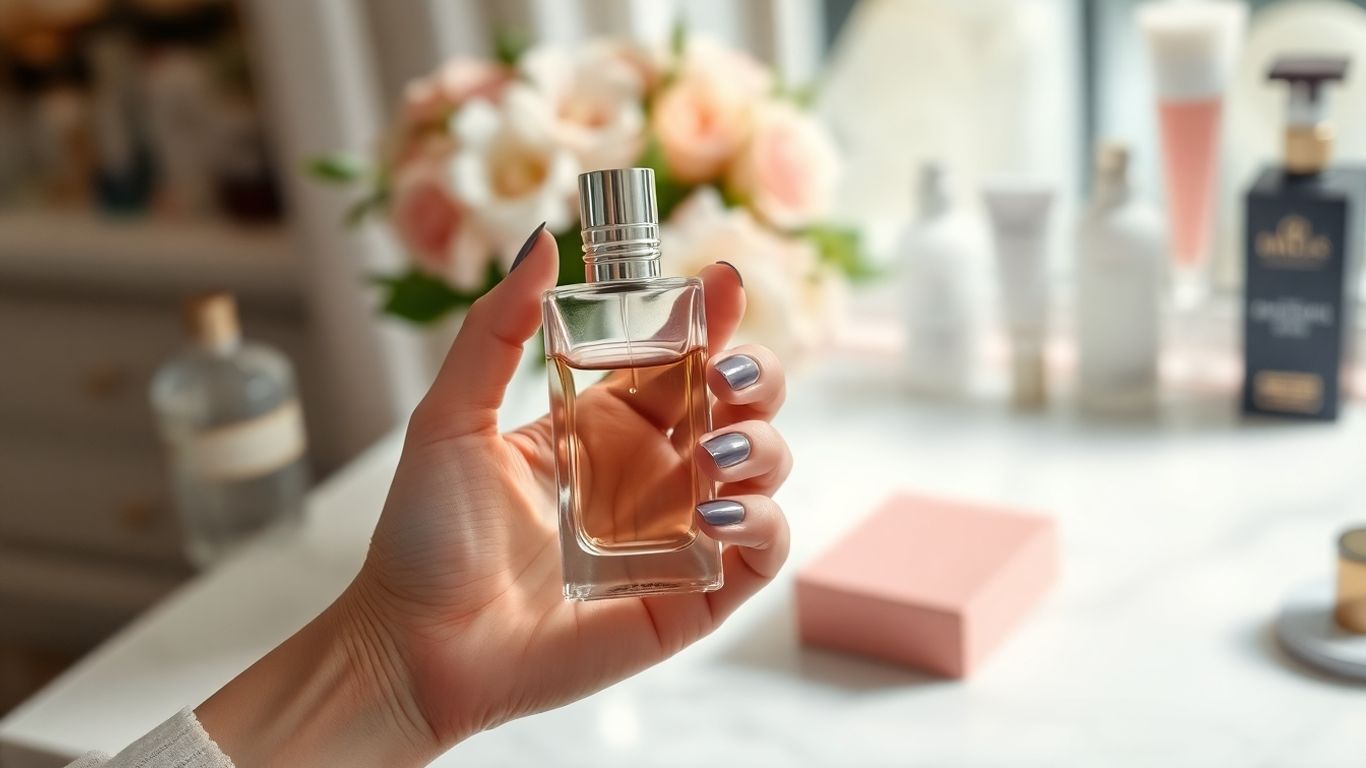
We've all been there, right? You smell an amazing perfume on a friend, you rush out to buy it, and then... it smells completely different on you. It's not magic, and it's not your imagination. Our skin is a bit of a chemistry lab, and it plays a huge part in how a fragrance settles.
How skin chemistry affects fragrance
Think of your skin as a unique canvas. It's covered in oils and has a certain pH level, and these things can really change how perfume molecules behave. When you spray a scent, it doesn't just sit there; it mixes with your skin's natural oils and acids. This interaction is what makes a perfume smell one way on one person and totally different on another. It's why that floral scent that smells like a garden on your mate might smell a bit sharp or even a bit sweet on you. It's all down to your personal skin chemistry.
The role of pH and moisture
Two big players in this skin chemistry game are your skin's pH level and how much moisture it has. Generally, skin that's a bit more acidic (lower pH) tends to make fragrances last longer, but they might smell a little richer. On the flip side, skin that's more alkaline (higher pH) can make scents fade faster and sometimes smell lighter. Moisture levels matter too. Dry skin doesn't hold onto fragrance as well as well-moisturised skin. This is why sometimes applying a bit of unscented lotion before your perfume can help it last longer. It gives the fragrance something to cling to.
Why a scent smells different on everyone
So, to sum it up, that perfume you love isn't actually changing; your skin is. It's a complex mix of your body's natural oils, your skin's pH, how hydrated your skin is, and even what you've eaten recently. All these factors create a unique environment for the perfume's molecules. It's this personal interaction that makes fragrance so individual. What smells like a warm hug on one person might smell like a completely different story on someone else. It’s a fascinating, if sometimes frustrating, part of finding your signature scent.
The art of perfume sampling
Right, so we've chatted about what we think we like, but now comes the really fun bit: actually trying things out. You wouldn't buy a pair of shoes without trying them on, would you? Perfume is much the same. Just sniffing a bottle or a little paper strip isn't going to tell you the whole story. The only way to know if a scent is truly 'you' is to see how it behaves on your skin.
Why testing is crucial before buying
Honestly, this is where so many people go wrong. They fall in love with a scent in the shop, buy a big bottle, and then it smells completely different once they get it home. That's because our skin chemistry is unique. Things like our pH levels and how much moisture our skin has can really change how a fragrance develops. What smells divine on your best mate might smell a bit… off on you. It’s not magic, it’s just science, and it means we all need to do a bit of personal testing.
How to properly sample fragrances
So, how do we do this testing thing properly? First off, make sure your skin is clean. No lotions or other perfumes beforehand, please. If you're testing at home, a quick wipe with an unscented cloth is a good idea. Then, apply the perfume. Don't be shy – put a decent amount on, maybe a spray or two on your wrist or the crook of your elbow. If you're in a shop, ask for a sample to take home. Trying it in your own environment, away from all the other competing smells, is much better.
Here’s a little guide:
- Clean Skin: Always start with a fresh canvas.
- Apply Generously: Don't just dab a tiny bit; give it some space to develop.
- Pulse Points: Wrists, elbows, or even the side of your neck are good spots.
- Avoid Rubbing: Once applied, let it be. Rubbing can break down the scent molecules.
Allowing scents to develop over time
This is the bit that requires patience. Perfumes don't just smell the same from the moment you put them on until they fade. They have 'notes' that come out in stages. You'll get the initial burst (the top notes), then the main body of the scent (the heart notes), and finally, the lingering base notes. If you decide you like or dislike a perfume within the first five minutes, you're probably missing the best part. Give it at least a few hours, ideally a full day, to see how it truly transforms on your skin. It might start off smelling one way and end up smelling completely different – and hopefully, much better!
Trying a perfume is like getting to know someone. You don't know their whole story after just a brief hello. You need time to see how they act in different situations, how they make you feel over time. A fragrance needs that same period of observation to reveal its true character and how it fits into your life.
Exploring beyond the mainstream
Once we've got a handle on the big names and the familiar scents, it's time to venture off the beaten path. We're talking about the world of niche and independent perfume houses. These aren't the brands you'll typically find at your local department store or even the big online beauty retailers. They're often created by smaller companies or even individual perfumers who are less constrained by market trends and more focused on artistic expression.
Discovering niche and independent brands
This is where things get really interesting. Niche brands often focus on unique ingredients, unusual scent combinations, and a more personal approach to fragrance creation. Think of it as the difference between a mass-produced t-shirt and a hand-knitted jumper – both serve a purpose, but one has a distinct character and story behind it. These houses might use rare materials, experiment with challenging notes, or simply have a very specific vision they want to bring to life. It’s a chance to find something truly unique that speaks to you on a deeper level, rather than just following what's popular.
Where to find unique fragrances
Finding these hidden gems can take a bit of detective work. Your usual shopping spots probably won't cut it. We often have to look online, seeking out specialist fragrance boutiques or the brands' own websites. Sometimes, you might stumble upon them at independent lifestyle stores or artisan markets. It's a treasure hunt, really, and part of the fun is the discovery itself.
The value of sample sites for rare scents
Because niche perfumes can be quite pricey and aren't readily available for testing, buying a full bottle blind is a big risk. This is where sample sites become our best friends. These services allow us to buy small decants or samples of various fragrances. It means we can try a scent on our skin, see how it develops over several hours, and decide if it's a love before committing to a larger purchase. It’s a smart way to explore without breaking the bank.
Here's a quick look at why samples are so useful:
- Cost-effective exploration: Try multiple scents for the price of one small bottle.
- Skin chemistry testing: See how a fragrance truly interacts with your unique skin.
- Scent development: Observe the full journey of a perfume from initial spray to dry-down.
- Discovering hidden gems: Access fragrances you'd never find otherwise.
Venturing into niche perfumery is like opening a door to a secret garden of scents. It requires a bit more effort, but the reward is finding a fragrance that feels truly yours, a personal signature that stands apart from the crowd.
Seeking expert advice and community insights
Sometimes, even after all our research and sniffing around, we can still feel a bit lost. That's where other people come in. We're not saying you need a personal scent guru, but getting a second opinion can be really helpful.
Consulting with perfume sales professionals
Pop into a department store or a dedicated perfume shop, and you'll find people who know their stuff. They've smelled countless fragrances and can often pick up on what you might like based on a few keywords or even just your general vibe. Don't be shy! Tell them what you've liked before, what you're looking for, or even what you definitely don't want. They can guide you towards brands or specific scents you might have overlooked. It's like having a personal shopper, but for your nose.
Learning from online fragrance communities
There's a whole world of perfume lovers online. Websites like Fragrantica and Basenotes have forums where people discuss everything from the latest releases to rare vintage finds. You can ask questions, read reviews, and see what others with similar tastes are enjoying. It’s a great way to discover new things and get honest opinions. Plus, you can often find people who are passionate about the same scent notes as you are.
The benefit of trusted recommendations
Think about your friends or family members whose perfume always smells amazing. Ask them what they're wearing! A recommendation from someone whose taste you trust is often a good starting point. They know you, and they might have a better idea than anyone of what would suit you. It’s often the personal connection to a scent, recommended by someone we know, that makes it feel truly 'ours'.
Here's a quick guide to getting the most out of advice:
- Be specific: Instead of saying "I want something nice," try "I like fresh, citrusy scents but not too sweet."
- Be open: Don't dismiss suggestions immediately. Give them a chance, even if they sound a bit different.
- Be patient: It might take a few tries to find the perfect recommendation.
Sometimes, the best way to find a scent you'll love is to let someone else guide you. Experts and fellow enthusiasts can point you in directions you might never have considered on your own, saving you time and a lot of sniffing.
Connecting scent with memory and mood
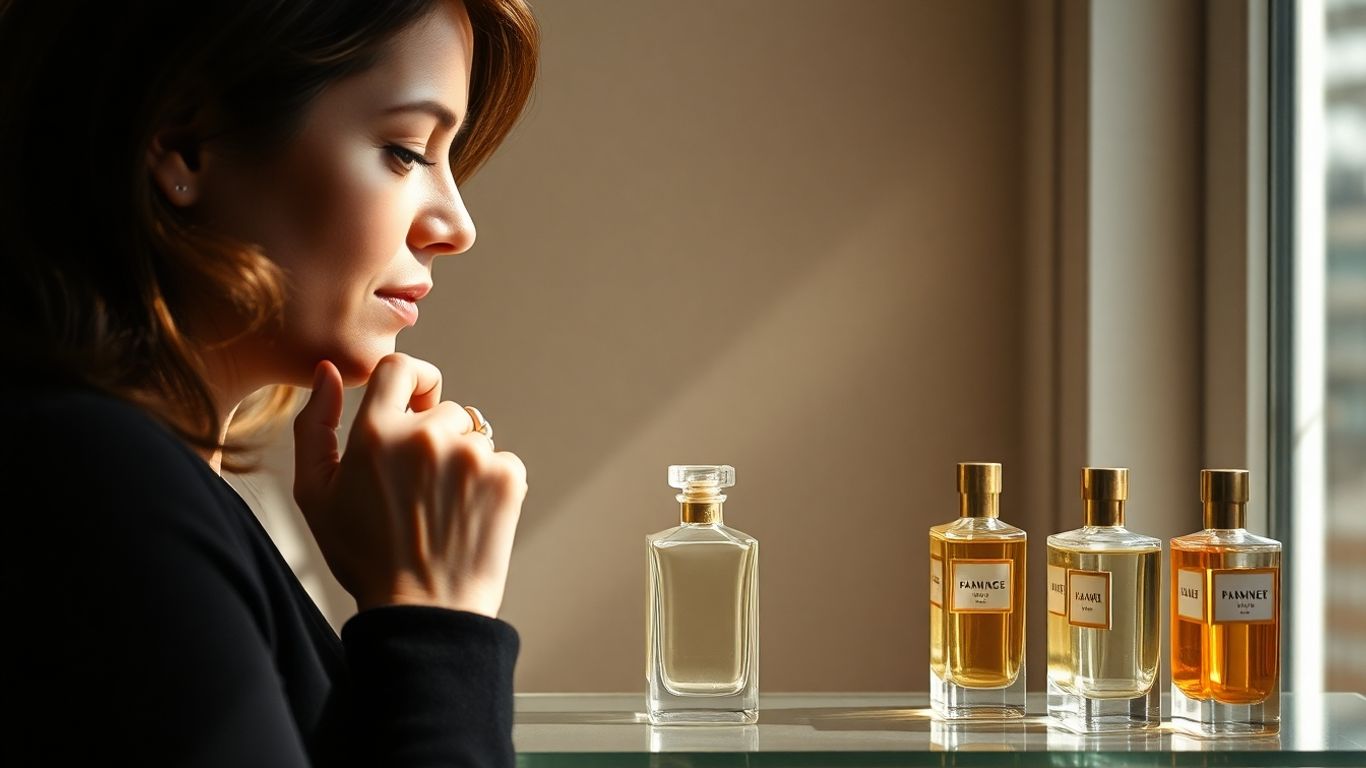
You know, it’s funny how a smell can just whisk you away, isn't it? One minute you’re standing in your kitchen, the next you’re back on that beach holiday from years ago, all thanks to a whiff of something familiar. Our noses are seriously powerful things, and they’re directly linked to the parts of our brain that handle memories and feelings. It’s not just a bit of poetic nonsense; there’s actual science behind it.
How fragrances evoke emotions
Think about it – certain smells just make you feel a certain way. A fresh, zesty scent might perk you up when you’re feeling a bit sluggish, while something warm and spicy could make you feel cosy and relaxed. It’s like having a mood ring, but for your nose! We often pick scents that match how we want to feel, or how we want others to perceive us. If you’re heading into an important meeting, you might choose a scent that makes you feel confident and in charge, perhaps something with a bit of woody depth. On a lazy Sunday, a lighter, more floral fragrance might just hit the spot.
Choosing scents that reflect your personality
Your perfume choice can really say a lot about you, can’t it? It’s like an invisible accessory that tells a story. Someone who loves a classic rose scent might be a bit of a romantic, while someone drawn to bolder, more complex oriental notes might be seen as more mysterious or dramatic. It’s not about putting people in boxes, of course, we’re all a bit more complicated than that! But the scents we gravitate towards often align with our general vibe. It’s about finding that fragrance that feels like an extension of yourself.
The power of scent to boost confidence
There’s something about putting on a perfume you love that just makes you feel… better. It’s like a little secret weapon. When you know you smell good, you tend to carry yourself a bit differently, don’t you? You might feel more put-together, more ready to face the day. It’s that final touch that can really make you feel like you’re ready for anything. It’s amazing how a simple spritz can have such a positive effect on how we feel about ourselves.
So, What's Next?
Right then, we've gone through quite a bit, haven't we? From figuring out what notes tickle our fancy to understanding how our own skin plays a part, it's a whole journey. Don't feel pressured to find 'the one' straight away. It's more about enjoying the process, trying new things, and learning what makes you feel good. Think of it like finding your favourite jumper – it takes a bit of searching, but when you find it, you just know. So, keep sniffing, keep experimenting, and most importantly, have fun with it. Your perfect scent is out there, waiting for you to discover it.
Frequently Asked Questions
How can we figure out what kinds of smells we actually like?
We can start by looking at different perfume families and the notes they use. Think of notes like ingredients in a recipe. Some smells, like vanilla or rose, are really common. We can try to remember if we've liked or disliked certain smells in the past. Maybe we love the smell of fresh laundry but can't stand anything too sweet. Jotting down what we like and don't like helps us build a scent profile.
Why does a perfume smell different on my friend than it does on me?
It's all down to our skin chemistry! Our skin has its own unique balance of oils and moisture, plus things like our body temperature and even what we eat can change how a perfume smells. So, a scent that smells amazing on one person might turn out totally different on another. It's like a secret handshake between the perfume and your skin.
Is it really that important to test perfumes before buying them?
Absolutely! Trying a perfume on your skin is super important. What you smell when you first spray it isn't the whole story. Perfumes change over time as they mix with your skin. We need to give them a few hours to see how they develop, from the first spritz to the lingering base notes. It's the only way to know if it'll be a long-lasting love.
Where can we find perfumes that aren't in every big shop?
We can explore niche and independent perfume brands. These often offer more unique and artistic scents that you won't find everywhere. Websites that sell samples are great for this, as they let us try smaller amounts of these special fragrances without committing to a full bottle, which can be pricey.
How can asking for help make choosing a perfume easier?
Chatting with perfume shop staff can be really helpful because they know a lot about different scents. Also, online communities and forums are full of people who love perfume and love sharing their thoughts. Getting recommendations from friends or people whose scent choices you admire can point us in the right direction too.
Can the perfume we wear actually change how we feel?
Definitely! Scents have a powerful link to our memories and emotions. Wearing a perfume that makes us feel good can totally lift our mood and even boost our confidence. It’s like putting on a scent that reminds us of happy times or makes us feel like the best version of ourselves.