Ever wondered why your favourite scent seems to disappear before lunchtime? Applying perfume correctly is actually a bit of an art, and it makes a huge difference to how long it lasts. It's not just about a quick spray as you dash out the door; there are specific ways to get your perfume to stick around. Knowing where to put it and how to do it can seriously boost your scent game. Whether you're off to work or meeting mates, getting this right means your fragrance works for you all day.
Key Takeaways
- Prep your skin by making sure it's hydrated, maybe with an unscented moisturiser or a dab of petroleum jelly on your pulse points. This gives the perfume something to hold onto.
- Apply your perfume to pulse points like your wrists, neck, behind your ears, and even behind your knees. These warm spots help the scent spread out nicely.
- Don't rub your wrists together after spraying! This can actually mess with the scent. Just let it dry naturally.
- Try layering your scents. Using a matching body wash or lotion before your perfume can make the fragrance last much longer.
- Be mindful of how much you're using. A couple of sprays is usually plenty, and remember to spray from a bit of a distance, not right up close.
Preparing your skin for fragrance
Right, before we even think about spritzing, we need to get our skin ready. It’s a bit like prepping a canvas before you paint, you know? If your skin is dry, that lovely scent you’ve chosen is just going to disappear into it like a ghost. So, let's make sure we're giving it the best possible chance to hold onto that fragrance.
The importance of hydrated skin
Honestly, this is probably the most overlooked step. Our skin naturally loses moisture throughout the day, and when it’s dry, perfume doesn't stick around for long. Think of it like trying to stick a sticker onto a dusty surface – it just won't hold. Hydrated skin, on the other hand, provides a much better surface for the fragrance molecules to cling to. It’s not just about smelling good; it’s about making that scent last.
Using unscented moisturisers
So, how do we get that hydration? The best way is with a good old-fashioned moisturiser. But here’s the trick: you want to use something unscented. If you slather on a heavily fragranced lotion, it’s going to clash with your perfume, and you’ll end up with a muddled, confusing smell. We’re aiming for a clean slate. A simple, fragrance-free body lotion or cream will do the job perfectly. Apply it all over, or at least on the areas where you plan to spray your perfume, and let it sink in for a few minutes before you move on.
Applying petroleum jelly as a base
For an extra boost of staying power, especially for those special occasions or if you know your skin tends to be on the drier side, consider a tiny dab of petroleum jelly. Just a small amount on your pulse points – we’ll get to those later – can create a fantastic barrier. It helps to trap the moisture in your skin and gives the perfume something to really grip onto. It’s like a little secret weapon for longevity. Just make sure it’s a very thin layer, you don’t want to feel sticky, just nicely prepped.
Strategic application points for lasting scent
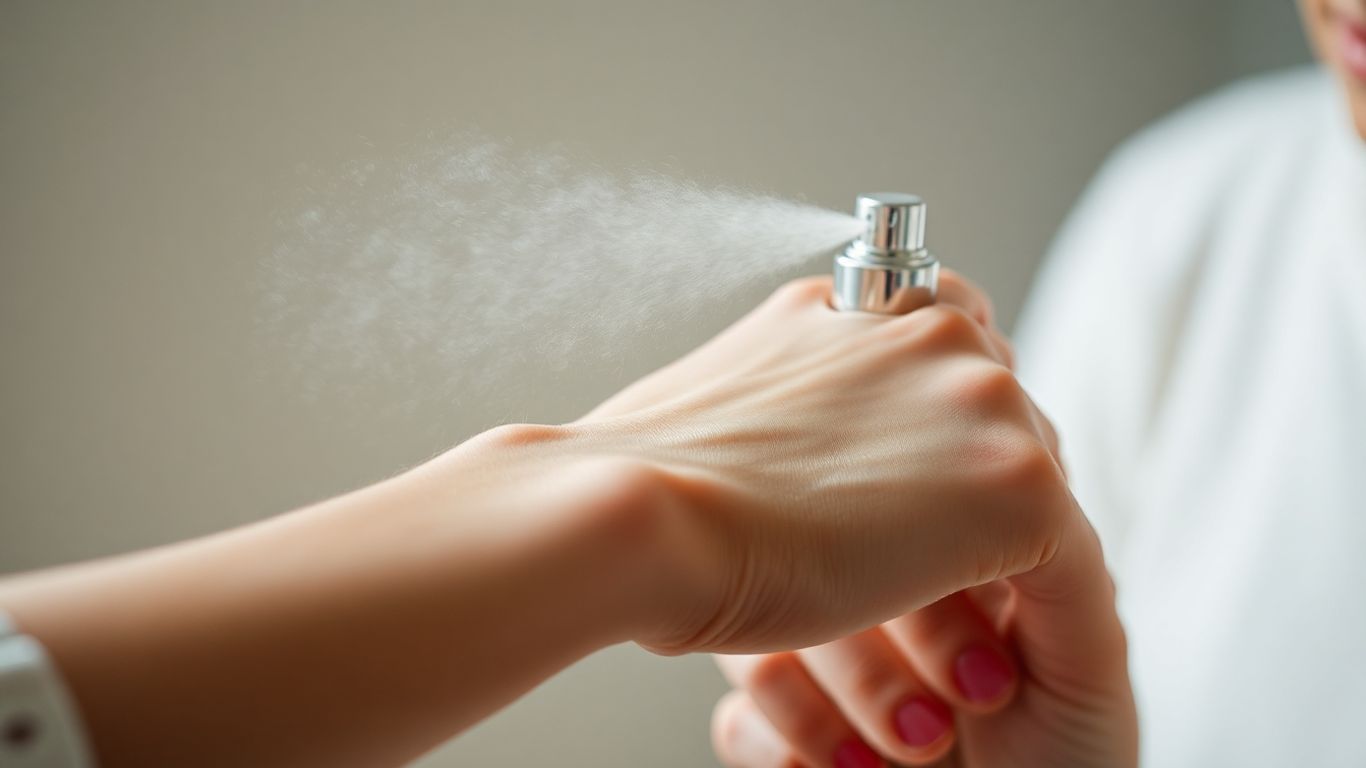
Right, so we've prepped our skin, and now it's time to get down to the nitty-gritty of where to actually put the stuff. It's not just about dabbing it on anywhere, you know. We want this lovely smell to stick around, and that means being a bit clever about it.
Understanding pulse points
Think about where your body naturally generates a bit of heat. These are our pulse points, and they're basically little radiators for our perfume. The warmth helps to gently diffuse the scent throughout the day. We're talking about the spots where you can feel your heartbeat close to the skin.
Applying behind the ears and neck
This is a classic for a reason. A little dab behind each earlobe, or a gentle mist along the nape of your neck, is a fantastic starting point. The skin here is thinner and warmer, which helps the fragrance bloom. Plus, when you move your head, it creates this lovely, subtle scent trail that people catch as they pass by. It’s not in your face, but it’s definitely there.
Utilising inner elbows and behind the knees
Don't forget these spots! When we bend our arms, the warmth from our inner elbows helps to release the scent. Similarly, applying a touch behind your knees means that when you walk or sit, the scent rises up. It’s a bit like a secret weapon for scent longevity. We often overlook these areas, but they make a real difference in how long our fragrance lasts and how it's perceived.
Techniques to enhance perfume longevity
So, you've picked out a scent that just screams 'you', but you're finding it's doing a disappearing act before lunchtime? We've all been there. Making your fragrance stick around isn't about dousing yourself; it's about being a bit clever with how and where you apply it. Let's look at some simple tricks to keep that lovely smell with you all day.
The correct spraying distance
When you spritz, don't hold the bottle right up against your skin. That's a common mistake that can actually make the scent fade faster. It concentrates the perfume too much in one spot, and the alcohol can damage the fragrance oils. Aim for about 15-20 cm away – think arm's length, roughly. This allows the perfume to mist evenly over a slightly larger area, settling into your skin and clothes without overwhelming any single point.
Avoiding the common wrist-rubbing mistake
This is a big one, and honestly, it's so tempting to do. After spraying your wrists, we often rub them together to 'distribute' the scent. Please, try not to. What you're actually doing is crushing the fragrance molecules. This breaks down the top notes too quickly and messes with the scent's intended development. Just let your wrists do their own thing after spraying; the scent will bloom naturally.
Allowing the fragrance to settle naturally
Once you've applied your perfume, give it a moment. Don't immediately start sniffing, touching, or rubbing. The fragrance needs time to meld with your skin's natural chemistry. This settling period, usually just a minute or two, allows the different notes – the top, middle, and base – to emerge in the way the perfumer intended. Rushing this process can alter the scent and shorten its lifespan.
Maximising your fragrance with layering
So, we've talked about applying perfume correctly, but what if you want your scent to last even longer, or perhaps create something totally unique? That's where layering comes in. It sounds fancy, but it's really just about using different scented products together to build up a more complex and enduring fragrance.
Combining complementary scents
This is where things get really interesting. You can actually mix and match different perfumes to create your own signature scent. The trick is to pick scents that play nicely together. Think about the notes – if you have a woody perfume, maybe try layering it with another scent that has some warm, earthy undertones. It's all about creating harmony, not a clash.
Using scented body products
This is probably the easiest way to start layering. Most perfume brands offer matching lotions, shower gels, or body oils. Using these before you apply your main fragrance creates a fantastic base. It's like painting on a canvas – the more prepared the surface, the better the final result. The scent from the body product acts as a subtle foundation, making your main perfume last much longer.
Layering within the same fragrance family
If you're new to this, sticking to the same fragrance family is a safe bet. For example, if you love floral scents, try using a floral body lotion and then a floral eau de parfum on top. They're designed to work together, so you're pretty much guaranteed a lovely, cohesive smell. It’s a simple way to boost longevity without risking a scent muddle.
Layering isn't just about making your perfume last longer; it's also a creative way to express yourself. By thoughtfully combining different notes and products, you can craft a scent that's uniquely yours, telling a story that unfolds throughout the day.
Common perfume application errors to avoid
We've all been there, haven't we? You've found your signature scent, you're ready to spritz, and then... well, you might be making a few common mistakes without even realising it. These little slip-ups can really mess with how your perfume smells and how long it lasts. Let's talk about what not to do.
Spraying too close or too far
Getting the distance right is more important than you might think. If you hold the bottle too close to your skin, you'll end up with a concentrated patch of fragrance that can be a bit much. On the flip side, if you spray from too far away, the perfume particles get dispersed too widely in the air and won't really land on you effectively. Aim for about 6 to 8 inches (15-20 cm) away from your skin. This allows the scent to settle evenly.
Applying directly onto clothing
It might seem like a good idea to spray your clothes to make the scent last longer, but it's actually not the best approach. Many perfumes contain oils that can stain fabrics, especially delicate ones like silk or chiffon. Plus, the scent might not develop properly on fabric the way it does on skin. Perfume is designed to interact with your body's natural chemistry, creating a unique aroma. When you spray it on clothes, you miss out on that personal touch and risk damaging your garments.
Overapplying your chosen scent
This is a big one. We love our perfumes, but sometimes we get a bit carried away. It's easy to think that more is better, but with fragrance, it's usually the opposite. Overdoing it can be overwhelming for you and everyone around you. It can even give you a headache!
Here's a quick guide to help you get the quantity right:
- Eau de Parfum (EDP): 1-2 sprays is typically enough.
- Eau de Toilette (EDT): 2-3 sprays might be needed.
- Eau de Cologne (EDC): You might need 3-4 sprays, as it's lighter.
Remember, the goal is to leave a subtle, pleasant impression, not to announce your arrival from across the room. Less is definitely more when it comes to perfume application.
Alternative methods for scent diffusion
Sometimes, we want our favourite scent to linger just a little bit longer, or perhaps we're looking for a more subtle way to wear our fragrance. While pulse points are great, there are other clever ways we can get our perfume to work for us. We've found that experimenting with where and how we apply our scent can make a real difference to its longevity and how it's perceived.
Scenting your hair with care
Our hair can be a fantastic carrier for fragrance, holding onto scent for ages. However, we need to be a bit careful here. Alcohol, a common ingredient in perfumes, can dry out your hair, so it's best to avoid spraying directly onto your locks. A good trick is to spray your perfume onto a brush before you comb your hair. This way, the scent gets distributed evenly without the harshness of direct alcohol contact. This method allows for a gentle diffusion that lasts throughout the day.
Applying fragrance to clothing
Clothing can hold onto scent for a surprisingly long time, sometimes even longer than skin. Think about how a favourite jumper might still smell of a particular perfume weeks after you last wore it. When applying to fabric, it's wise to keep a bit of distance – about 20-30 cm – to avoid any potential staining, especially with darker or more delicate materials. It’s also worth noting that some synthetic fabrics might react differently to fragrance than natural ones, so always do a small patch test if you're unsure.
Using hairbrushes or scarves for diffusion
Building on the idea of indirect application, using accessories can be a game-changer. A light mist onto a silk scarf before you tie it around your neck means you'll catch subtle wafts of your chosen scent as you move. Similarly, a spritz on a clean hairbrush, as mentioned earlier, disperses the fragrance beautifully. We've also found that dabbing a tiny bit onto the lining of a coat or jacket can provide a lovely, lingering aroma that's only noticeable when someone gets close.
Understanding fragrance concentration and quantity
Choosing the right perfume type
So, we've talked about where to put your scent, but what about what you're actually putting on? Not all fragrances are created equal, and knowing the difference between them can really help you get the most out of your bottle. You see, the names on the bottles aren't just fancy words; they tell us how much fragrance oil is actually in there. This concentration level is what dictates how strong the scent is and, importantly, how long it's likely to stick around.
Here's a quick rundown:
- Perfume (or Parfum) / Eau de Parfum (EDP): These are the heavy hitters. They have the highest concentration of aromatic compounds, usually between 15-30%. Because of this, they can last a really long time, sometimes 6 hours or even up to 24 hours. If you want a scent that goes the distance, this is your best bet.
- Eau de Toilette (EDT): This is a bit lighter, with about 5-15% aromatic compounds. It's a popular choice for everyday wear and typically lasts around four hours, though this can vary depending on the specific ingredients.
- Eau de Cologne (EDC): This is even more diluted, usually between 2-10% aromatic compounds. You might find yourself needing to reapply this one more often throughout the day.
- Eau Fraiche: This is the lightest of the bunch, typically only 1-3% aromatic compounds. The scent fades pretty quickly, making it good for a quick refresh or if you just want a very subtle hint of fragrance.
Ultimately, the type you choose comes down to personal preference, how long you want the scent to last, and what fits your budget. Don't be afraid to experiment to see what works best for you.
Determining the ideal number of sprays
Now that we know about concentration, how much should we actually be using? It's a bit of a balancing act, isn't it? Too little, and you might not be able to smell it after an hour. Too much, and you risk overwhelming everyone around you (and yourself!). The general rule of thumb is to start light and build up if needed. The goal is a subtle, pleasant aura, not a scent cloud.
Here’s a rough guide based on concentration:
| Fragrance Type | Recommended Sprays | Where to Apply (Examples) | Longevity Expectation |
|---|---|---|---|
| Eau de Parfum (EDP) | 2-4 sprays | Neck, wrists, décolletage | 6-24 hours |
| Eau de Toilette (EDT) | 3-5 sprays | Pulse points, chest | 4-6 hours |
| Eau de Cologne (EDC) | 4-6 sprays | Shoulders, arms | 2-4 hours |
| Eau Fraiche | 5+ sprays | All over, lightly | 1-2 hours |
Remember, this is just a starting point. Your own skin chemistry plays a big role, and you might find you need more or less. It's always a good idea to ask a trusted friend or partner if they can smell your fragrance after a few hours. You might be surprised to learn that you can't smell your own scent after a while because your nose gets used to it!
Adjusting application for different seasons
Think about the weather. When it's hot and humid, scents tend to project more and can feel heavier. In these warmer months, we often find ourselves reaching for lighter, fresher fragrances and using fewer sprays. A heavy scent in the summer can feel a bit much, both for us and for those around us. It's all about finding that delicate balance.
Conversely, in colder weather, our body temperature is lower, and scents don't diffuse as easily. This is when we can afford to be a little more generous with our application. Richer, warmer, spicier scents often feel more appropriate in autumn and winter, and they tend to need a bit more help to be noticed. So, don't be afraid to add an extra spray or two when it's chilly outside, or opt for those deeper, more complex fragrances that truly shine in cooler temperatures.
It's easy to get used to your own scent, so much so that you might not even notice it anymore. Others, however, will. Always err on the side of caution when reapplying, and if in doubt, ask someone whose opinion you trust. A subtle scent is often more intriguing than an overpowering one.
So, That's How We Do It!
Right then, we've gone through all the ins and outs of getting your favourite scent to stick around. It's not rocket science, is it? Just a few simple tricks like moisturising your skin first, hitting those pulse points, and definitely not rubbing your wrists like you're trying to start a fire. Remember to store your bottles properly too, no one wants their lovely perfume going off. Give these tips a go, and you'll find your signature smell lasts way longer, making you feel that bit more put-together throughout the day. Happy spritzing!
Frequently Asked Questions
Why should we moisturise our skin before applying perfume?
Our skin acts like a sponge for scents! When your skin is nicely moisturised, it holds onto the perfume much better. Think of it like trying to draw on dry paper versus damp paper – the damp paper lets the colour sink in and last longer. So, a bit of unscented lotion or even a dab of petroleum jelly on your pulse points before you spritz can make your favourite scent stick around for ages.
Is it really a bad idea to rub our wrists together after spraying perfume?
Yep, it’s a common mistake! When we rub our wrists together, the friction actually warms up the perfume. This can mess with the delicate scent notes, kind of like squishing a flower – it changes how it smells and makes the scent fade faster. It’s way better to just let the perfume dry naturally on your skin.
Can we mix and match different perfumes?
Absolutely! It’s called layering, and it can be a really fun way to create your own unique smell. The best way to start is by using products from the same scent family, like a matching body wash and then your perfume. Or, you can try combining scents that have similar base notes, like two floral or two woody smells. Just go easy at first!
How many sprays of perfume are usually enough?
It really depends on the type of perfume, but generally, 2 to 4 sprays is a good starting point. You want people to catch a whiff of your lovely scent as you walk by, not be hit over the head with it! It’s always better to start with less and add a bit more later if you feel you need it.
Should we spray perfume directly onto our clothes?
It’s best to avoid spraying perfume straight onto your clothes. Some fabrics, especially delicate ones like silk, can get stained or damaged by the perfume. Plus, the scent might not smell quite the same on fabric as it does on your skin, because perfume is designed to mix with your natural body oils to create its unique aroma.
Does the weather affect how long our perfume lasts?
It totally does! In warmer weather, lighter, fresher scents tend to work best and might not need as many sprays because the heat helps them project more. But when it’s cold, richer, warmer scents like vanilla or musk are great, and you might need a couple more sprays to really make them noticeable. So, think about the season when you're choosing your scent and how much you apply.