We've all noticed it, haven't we? That favourite scent that just doesn't smell quite the same when the seasons change. One minute it's a vibrant cloud, the next it's barely there, or maybe it's just a bit... off. It's not just in our heads; the weather really does play a part in how our perfumes behave. We're going to explore why Do perfumes smell different in hot weather vs cold weather? and what's really going on.
Key Takeaways
- Temperature affects how fast perfume ingredients evaporate. Hot weather makes them go faster, so the scent might seem stronger but disappear sooner. Cold weather slows this down, making the scent last longer but perhaps seem less noticeable at first.
- Different ingredients suit different seasons. Light, fresh notes like citrus work well in summer, while heavier ones like vanilla or wood are better for winter.
- Where you are matters too. City pollution can change how a perfume smells, while nature might make it smell even better. Humidity also makes scents last longer.
- You can choose your perfumes based on the weather. Lighter scents for warm days, richer ones for cold. Transitional seasons might need something in between.
- Your skin's natural oils and temperature also change how a perfume smells on you, and this can vary depending on the season.
How temperature influences scent evaporation
We all know that the weather can make a big difference to how we feel, but did you know it also messes with our perfume? It’s true. Temperature is a massive factor in how a scent behaves on our skin. Think of perfume as a collection of tiny molecules, all eager to float into the air and make themselves known. Temperature is basically the conductor of this little orchestra.
The impact of heat on volatile fragrance notes
When it gets warm, things speed up. Heat gives those lighter, more delicate scent molecules – the ones we call top notes – a real boost. They become more volatile, meaning they evaporate much faster. This is why a perfume might smell incredibly strong and bright right when you spray it on a hot day. It’s like a firework display – a dazzling burst that, unfortunately, doesn't stick around for long. So, that zesty citrus or fresh floral you love might give you a fantastic initial impression, but don't be surprised if it fades quicker than you'd expect.
Cold weather's effect on scent molecule diffusion
Now, flip that and think about cold weather. When it's chilly, those same scent molecules get a bit sluggish. They don't have the energy to escape into the air as easily. This means the evaporation process slows right down. Instead of a quick burst, you get a more gradual release. The heavier, deeper notes, often called base notes, tend to stick around longer because they aren't being pushed out by the heat. This can make a perfume smell more muted or even a bit 'closed off' in the cold. It’s not that the perfume is weaker, it’s just that the molecules are having a harder time diffusing.
Seasonal shifts in perfume projection
So, how does this all add up? Well, the way your perfume projects – how far it can be smelled – changes quite a bit with the seasons. In summer, the heat helps your perfume announce itself more boldly. Even a subtle scent can become quite noticeable. This is great if you want to make a statement, but it can also mean a scent becomes overpowering if you're not careful. In winter, the opposite is true. Your perfume will likely sit closer to your skin, creating a more intimate scent bubble. It might not have that same 'sillage' – the trail of scent you leave behind – but it can offer a comforting, personal aroma.
Here's a quick look at how temperature can affect scent intensity:
| Temperature | Scent Volatility | Projection | Longevity |
|---|---|---|---|
| Hot | High | Stronger | Shorter |
| Cold | Low | Muted | Longer |
It's fascinating how a simple change in temperature can completely alter the character of a fragrance we thought we knew so well. It’s not just in our heads; it’s pure science at play, with heat and cold acting as catalysts for how scent molecules behave.
Understanding seasonal fragrance profiles
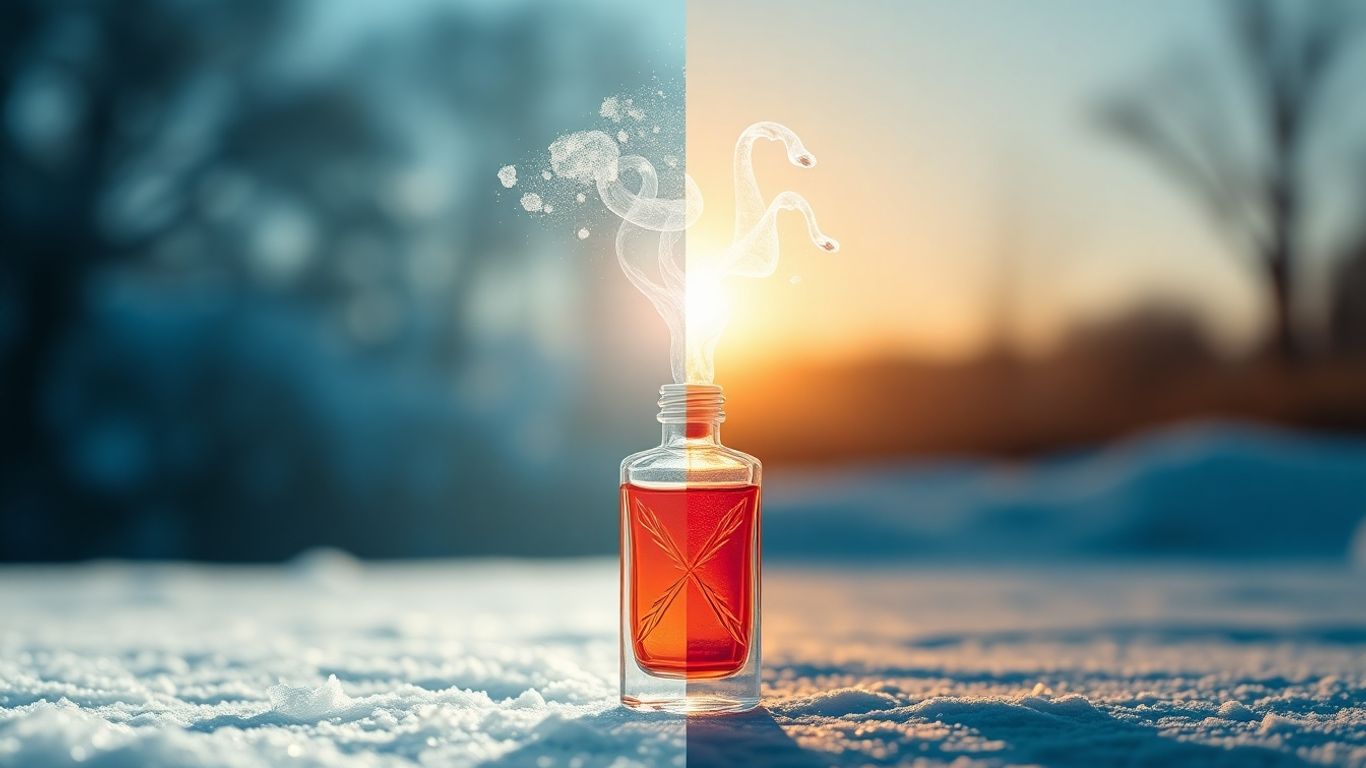
We've all noticed it, haven't we? That favourite perfume that smells a bit different when you pull it out in July compared to when you reach for it in December. It's not just in our heads; the season really does play a part in how a scent behaves. This is largely down to the types of ingredients that tend to work best in different temperatures, creating distinct 'seasonal profiles'.
Characteristics of summer scents
Summer fragrances are all about lightness and refreshment. Think of them as a cool breeze on a hot day. They're typically built using ingredients that are quite volatile, meaning they evaporate easily and give off their scent quickly. This makes them feel bright and uplifting.
- Citrus notes: Zesty lemon, sharp grapefruit, or mellow bergamot.
- Aquatic accords: Smells that remind you of the sea or fresh rain.
- Green notes: Like freshly cut grass or crisp tea leaves.
- Light fruits: Think melon or juicy pear.
- Herbs: A touch of mint or basil can add a cooling effect.
These notes are perfect for warmer weather because they don't become too heavy or cloying. They tend to bloom in the heat, offering a vibrant, energetic aura.
The nature of winter fragrance ingredients
When the temperature drops, our preference often shifts towards scents that feel warmer, richer, and more comforting. Winter fragrances are usually composed of heavier, less volatile ingredients that linger longer on the skin. They create a sense of cosy intimacy.
- Amber: A classic warm, resinous scent.
- Woods: Deep notes like cedar, sandalwood, or patchouli.
- Spices: Think cinnamon, clove, or nutmeg for that festive feel.
- Leather: Adds a sophisticated, earthy depth.
- Vanilla: Sweet, creamy, and universally loved.
These ingredients are designed to project more subtly in the cold, offering a warm embrace rather than a sharp burst. They have a way of wrapping around you, perfect for chilly evenings.
Why lighter scents suit warmer climates
It really comes down to evaporation. In hot weather, your skin temperature rises, which speeds up how quickly perfume molecules turn into vapour and drift away. Lighter, more volatile notes like citrus and fresh florals evaporate quickly but also give off their scent readily, creating that initial bright impression we associate with summer. If you were to wear a heavy, woody scent in intense heat, it might become overwhelming very fast, almost suffocating. Lighter scents, on the other hand, feel airy and pleasant, complementing the warmth without adding to the heaviness. They feel more natural and less intrusive when the mercury climbs.
Environmental factors affecting perfume perception
We often think of perfume as a personal choice, something that just sits on our skin and smells nice. But have you ever noticed how your favourite scent can behave differently depending on where you are? It’s not just in your head; the world around us really does play a part in how our fragrances come across.
How urban environments alter scent
Stepping out into a busy city is a whole different ballgame for your perfume. Think about it: you're surrounded by exhaust fumes, street food smells, maybe even the faint whiff of damp pavement. All these different odours can really mess with the delicate notes of your fragrance. Sometimes, your perfume might just get lost in the noise, becoming barely noticeable. Other times, it might clash with the surrounding smells, creating a rather odd combination. It’s like trying to have a quiet conversation at a rock concert – your scent just can’t be heard properly.
The influence of natural settings on fragrance
Now, contrast that with being out in nature. Imagine spritzing on a fresh, citrusy scent while walking through a pine forest. The crisp, clean air and the natural aroma of the trees can actually complement your perfume, making it smell even better. Or perhaps you're by the sea, and the salty breeze seems to lift and carry a floral fragrance in a way it never does indoors. These natural environments can act like a beautiful backdrop, allowing your perfume to shine and reveal different facets of its character. It’s a much more harmonious experience, where the scent blends with the world rather than fighting against it.
Humidity's role in scent longevity
Humidity is another big player. When the air is thick with moisture, it can actually help to hold onto those scent molecules. This means that on a humid day, your perfume might last a lot longer and feel more intense. On the flip side, if you're in a very dry climate, those same scent molecules can evaporate much faster. This is why a perfume that lasts all day in a tropical place might fade away much quicker in a desert. It’s a simple matter of physics, really – water vapour in the air can act like a little anchor for your fragrance.
So, the next time you're choosing a scent, don't just think about your outfit or your mood. Consider the environment you'll be in. A perfume's performance isn't just down to its ingredients; it's a collaboration between the bottle, your skin, and the world around you.
Adapting your perfume wardrobe
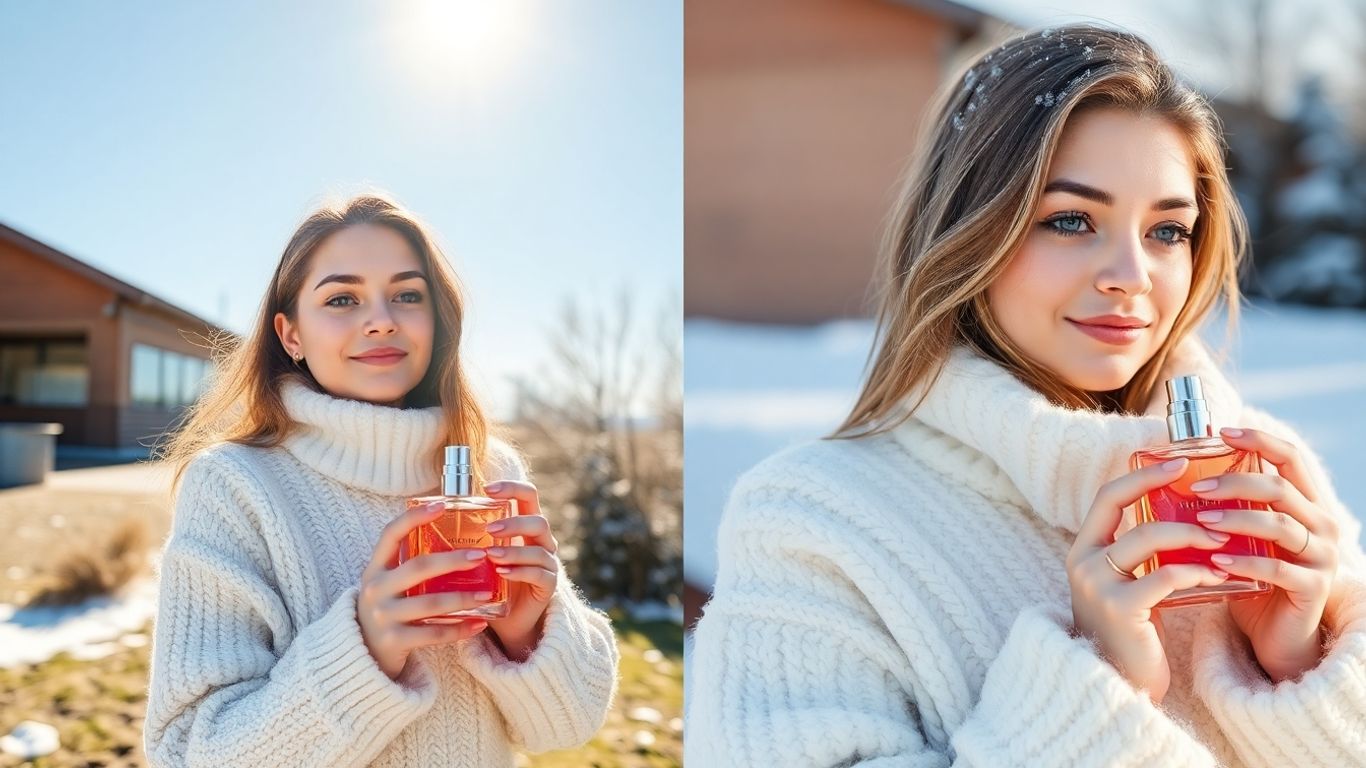
So, we've talked about how temperature messes with our favourite scents. Now, what do we actually do about it? It’s all about having a bit of a seasonal rotation, much like we do with our clothes. You wouldn't wear a heavy wool jumper in July, right? Same idea applies to perfume.
Choosing scents for warmer weather
When it's hot, we tend to want things that feel fresh and light. Think of those zesty citrus notes, like lemon or bergamot, or maybe some watery, aquatic smells. Even light florals can work well, but you want to avoid anything too heavy or cloying. These types of scents evaporate more quickly, but that's part of their charm – they feel uplifting and don't become overwhelming. We find that scents with green notes, like basil or mint, also feel really good when it's warm out. They're invigorating without being too much.
Here’s a quick guide:
- Citrus: Lemon, grapefruit, lime, bergamot.
- Aquatic/Marine: Think sea breeze or ocean spray.
- Light Florals: Jasmine, lily of the valley, orange blossom.
- Green Notes: Basil, mint, cut grass.
Selecting fragrances for colder climates
In the cold, our noses often crave something a bit more comforting and substantial. This is where those deeper, warmer notes come into their own. We're talking about things like amber, vanilla, woods (like sandalwood or cedarwood), and spices such as cinnamon or clove. These scents tend to stick around longer and create a lovely, warm aura. They feel like a cosy blanket for your senses. It’s also a good time to experiment with layering; perhaps a woody base with a slightly sweet, spicy heart. It adds a real depth that just wouldn't work in the heat.
Consider these for winter:
- Warm Spices: Cinnamon, clove, nutmeg, cardamom.
- Rich Woods: Sandalwood, cedarwood, patchouli.
- Sweet & Resinous: Vanilla, amber, tonka bean, frankincense.
- Gourmand Notes: Think baked goods, coffee, or chocolate.
Navigating transitional seasons with versatile perfumes
Spring and autumn can be tricky. One minute it's chilly, the next it's surprisingly warm. For these in-between times, we look for perfumes that have a bit of flexibility. Scents that blend floral or fruity notes with a touch of spice or wood can be perfect. For example, a rose scent with a hint of pepper, or a fruity fragrance with a musky base. These offer enough presence for cooler days but won't feel too heavy if the temperature suddenly climbs. It’s about finding that sweet spot where the scent can adapt with the day.
When the weather is unpredictable, think about fragrances that have a bit of everything. A scent that opens bright but settles into something warmer on the skin can be your best friend during spring and autumn. It’s like having a perfume that understands the mood swings of the weather.
The chemistry of scent in different climates
How skin temperature affects fragrance
We've all noticed it, haven't we? That favourite perfume that smells one way on a sweltering summer afternoon and quite another on a crisp winter morning. It's not just in our heads; the temperature of our skin plays a surprisingly big role in how a fragrance behaves. Think of your skin as a tiny, warm canvas. When it's warmer, those lovely volatile compounds in your perfume get a bit of a boost. They become more energetic, more eager to jump off your skin and into the air. This means you get a stronger, more immediate scent experience. It's like turning up the volume on your fragrance. On the flip side, when your skin is cooler, those scent molecules are more subdued. They don't evaporate as quickly, so the perfume might seem subtler, perhaps even a little shy, especially in the initial stages. This is why a rich, heavy scent might feel overwhelming when you're hot, but just right when you're feeling a bit chilly.
The role of skin chemistry in scent diffusion
Beyond just temperature, our individual skin chemistry is a bit of a wild card. We're all unique, and that includes the natural oils and pH levels on our skin. These factors can interact with the fragrance molecules in fascinating ways. Some people have skin that's naturally more acidic, while others tend to be more alkaline. This can alter how the different notes in a perfume blend and project. It's a bit like adding different ingredients to a recipe – the outcome changes. What smells like a beautiful floral on one person might come across as slightly different on someone else, even if they're wearing the exact same perfume. It’s this personal interaction that makes fragrance so intimate and, well, personal.
Why perfumes smell different on oily versus dry skin
This is a big one, and it ties directly into that skin chemistry we just talked about. Generally speaking, if you have oilier skin, your perfume tends to last longer. Those natural oils act like a bit of a binder, holding onto the fragrance molecules and releasing them slowly over time. It’s a bit like a slow-release system. So, a scent might seem richer and more persistent on someone with oily skin. Now, if your skin is on the drier side, you might find that your perfume evaporates a bit more quickly. The scent might be more noticeable initially, but it might not have the same staying power. Don't despair, though! This is where a good moisturiser or a bit of unscented lotion applied before your perfume can make a real difference. It creates a slightly more receptive surface for the fragrance to cling to, helping it to last longer and smell more consistent throughout the day. It’s all about finding what works for your unique skin type and climate.
The future of perfumery and climate change
Climate's impact on natural ingredient sourcing
We've all noticed how the weather's been a bit all over the place lately, right? Well, it turns out this isn't just messing with our holiday plans; it's also making life tricky for the people who grow the natural ingredients for our favourite perfumes. Things like jasmine, rose, and vetiver, which give many scents their lovely character, rely on very specific growing conditions. Erratic weather patterns, like unexpected droughts or too much rain, can really mess with harvests. This means the quality and even the availability of these precious botanicals can change from year to year. It's like trying to bake a cake when the flour keeps changing its texture. We're seeing a trend where the same plant might smell slightly different depending on the year it was grown, almost like a vintage wine. This unpredictability is forcing perfumers to get really creative.
The rise of climate-adaptive fragrance formulations
Because of these ingredient challenges and the changing way scents behave in different temperatures, perfumers are having to think differently. They're developing what we might call 'climate-adaptive' fragrances. This means creating scents that are designed to perform well no matter the weather. For example, a perfume that might have been too heavy in a heatwave could be reformulated to feel lighter and fresher, or one that disappears too quickly in the cold might be adjusted to last longer. It's all about making sure our perfume still smells great, whether we're experiencing a heatwave or a chilly snap. Some brands are even starting to think about offering different versions of a scent for different climates, or perhaps scents that are meant to evolve with the seasons.
Sustainability in the evolving perfume industry
This whole situation is also pushing the perfume industry towards being more sustainable. With natural ingredients becoming less predictable, there's a growing interest in alternatives. This includes using more synthetic ingredients that are created in labs, which can mimic natural scents without impacting the environment. There's also a big push for ethical sourcing – making sure that where ingredients do come from, they're grown and harvested in ways that are good for the planet and the people involved. We're seeing more focus on things like:
- Using recycled or recyclable packaging.
- Reducing water usage in ingredient production.
- Exploring biodegradable materials.
- Supporting farming practices that help biodiversity.
It feels like the perfume world is waking up to the fact that we can't just keep doing things the old way. The environment is changing, and the industry needs to change with it. This means being smarter about where our ingredients come from and how our perfumes are made, so we can still enjoy beautiful scents without harming the planet.
Ultimately, the future of perfume is going to be about balance – balancing beautiful scents with environmental responsibility, and adapting to a world that's constantly changing.
So, What's the Takeaway?
Well, it turns out our initial hunch was spot on. Perfumes really do behave differently depending on whether it's boiling hot or freezing cold outside. We've seen how the heat can make scents burst out more but fade faster, while the cold seems to hold them back a bit, making them linger longer but perhaps less intensely at first. It's all down to the chemistry, really, and how temperature affects those tiny scent molecules. So, next time you're reaching for your favourite bottle, maybe give a thought to the weather. It might just explain why it smells a bit different today than it did last month. It’s pretty fascinating stuff, and definitely something to keep in mind when picking out your next scent!
Frequently Asked Questions
Can we wear the same perfume all year round?
You absolutely can wear the same perfume all year, but it might smell a bit different depending on the weather. In warmer times, it might be really strong and fade fast, while in colder times, it might seem a bit quieter. Sometimes, adding a bit more or less, or trying to layer it with other scents, can help it fit the season better.
Why does my perfume seem stronger when it's hot?
When it's hot, the warmth makes the tiny scent particles in your perfume jump into the air more easily. This means you get a bigger burst of smell right away, making it seem way stronger. But, because they're flying off so fast, the scent might not stick around for as long as you'd like.
Does heat make perfumes go bad faster?
Yep, it sure can. Heat and direct sunlight are not friends with perfume. They can break down the delicate scent bits, making your favourite smell go a bit flat or even 'off'. It's best to keep your perfumes in a cool, dark spot, like a drawer, to keep them smelling lovely.
I like fresh scents, but it's winter. What should I do?
Don't worry, you can still enjoy fresh vibes in winter! Look for perfumes that have a fresh smell at the start, like a bit of citrus or herbs, but then have warmer, cosier smells underneath, like vanilla, amber, or woody notes. It’s like a fresh scent wrapped in a warm hug.
How should we store our perfumes to make them last?
The best way to keep your perfumes happy is to store them somewhere cool, dark, and dry. Think of a cupboard or a drawer away from windows and radiators. This stops the heat and light from messing with the scent ingredients and keeps them smelling great for ages.
How does humidity change how a perfume smells?
Humidity is like a scent booster! When the air is damp, perfumes tend to hang around longer and can smell a bit more intense. This is why light, airy scents often work well in humid weather because they don't feel too heavy, even when they're being amplified.